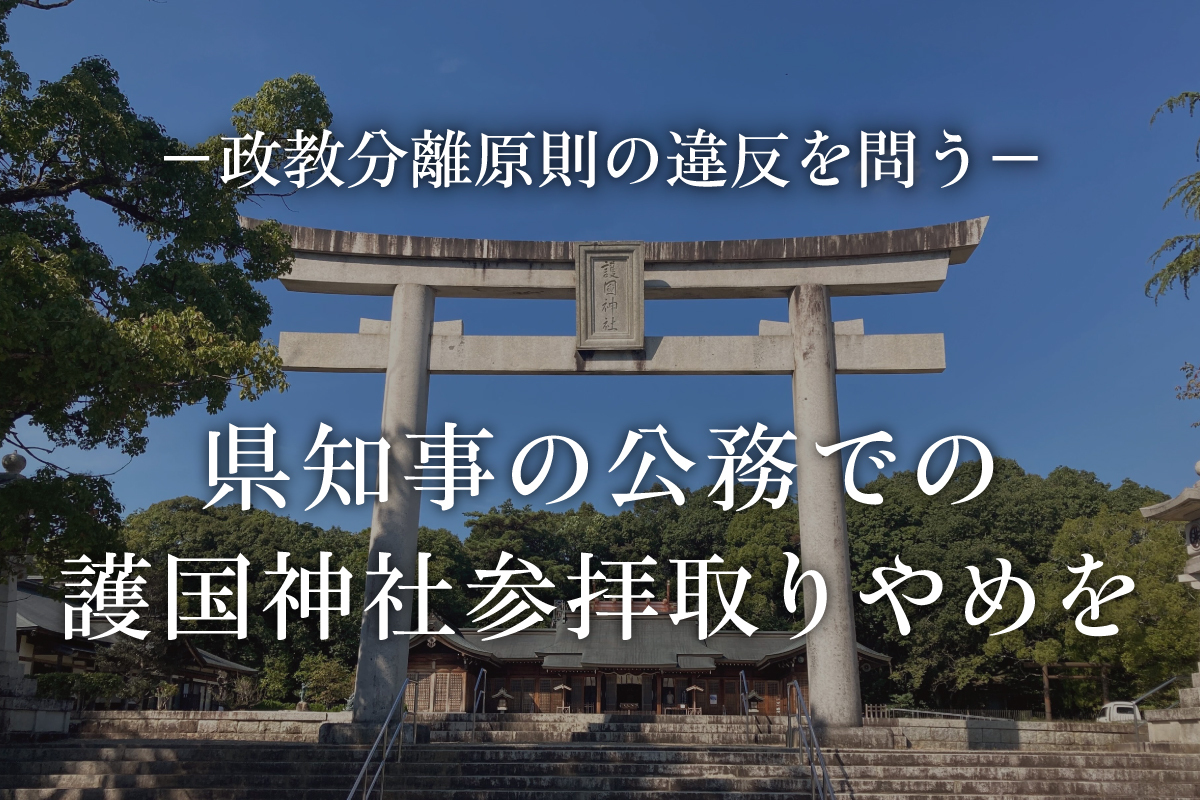
県知事の公務での護国神社参拝取りやめをー政教分離原則の違反を問うー Stopping the Governor’s Official Visits to Gokoku Shrine — Challenging Violations of the Principle of Separation of Religion and State
#公正な手続
#Procedural Justice
#政治参加・表現の自由
#Democracy/Freedom of Expression
現在の寄付総額 Current Total Raised
510,000円 ¥ 510,000
目標金額 Target amount
1,000,000円 ¥ 1,000,000
サポーター Supporter
40 人 40 supporters
 寄付する
Donate Now
寄付する
Donate Now


国と宗教の関わり合いに一定の限度を設ける「政教分離原則」。この訴訟で問う対象は、山口県知事による山口県護国神社の慰霊大祭への公務参拝です。戦前の軍国主義体制を支えていた護国神社に、公費を用いて参拝を行うことが、政教分離原則に反していると問うことで、個人の信仰が抑圧されたり強制されたりしない社会を実現します。 The ”principle of separation of religion and state” establishes a certain limit on the interconnection between the state and religion. The focus of this lawsuit is the official visits by the Governor of Yamaguchi Prefecture to the memorial festivals at Yamaguchi Gokoku Shrine. By questioning the use of public funds for such visits which historically supported the pre-war militaristic regime, this lawsuit contends that it violates the principle of separation of religion and state. This legal action aims at realizing a society where individual freedom of beliefs are not constrained or coerced.
はじめに
日本国憲法
20条
1項 信教の自由は、何人に対してもこれを保障する。 いかなる宗教団体も、国から特権を受け、又は政治上の権力を行使してはならない。
2項 何人も、宗教上の行為、祝典、儀式又は行事に参加することを強制されない。
3項 国及びその機関は、宗教教育その他いかなる宗教的活動もしてはならない。
89条
公金その他の公の財産は、宗教上の組織若しくは団体の使用、便益若しくは維持のため、又は公の支配に属しない慈善、教育若しくは博愛の事業に対し、これを支出し、又はその利用に供してはならない。
国と宗教の関わり合いに一定の限度を設ける「政教分離原則」。
戦前の歴史の反省から取り入れられたこの原則について、日本史や公民などの授業で聞いたことがあるという人も、法学部で判例を勉強したことがある人もいるでしょう。
しかし、身近に感じる人は少ないのではないでしょうか。
この訴訟は、政教分離原則に違反する行為を問うことで、政教分離原則が守られるように、そして、個人の信教、また思想や良心が抑圧されたり強制されたりしないようにするための訴訟です。

事案の概要
山口県知事が山口県護国神社の慰霊大祭に公務として参拝し、公費を費やしていること
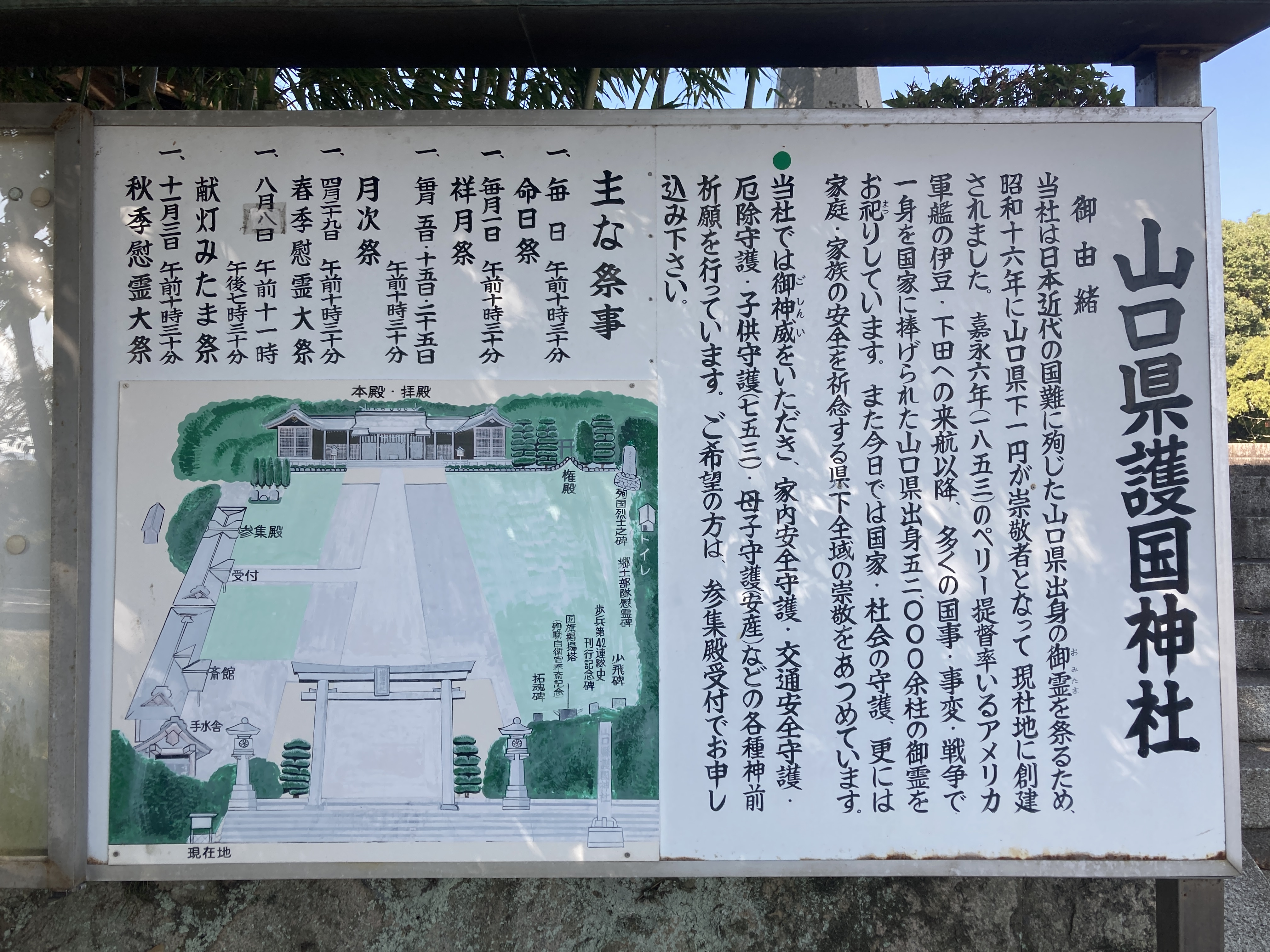
山口県知事は、毎春・毎秋、山口県護国神社の慰霊大祭に、公務として公費を費やして参拝しています。知事らの公務参拝は、年に2回行われ、各4名が参拝しています。昨年、春の1回分の交通費は990円でした。
護国神社は、靖国神社と同じく、国家(天皇)のために亡くなったとする人を祀る神社であり、戦前には、国家神道、すなわち国家と宗教が結びつき軍国主義体制を支えていた宗教的軍事施設です。
その神社に公務、すなわち、私人としての立場ではなく自治体の代表として参拝している点に、政教分離原則違反の問題があります。
また、他の府県に目を向けると、政教分離原則の違反を理由として、護国神社への参拝を行なっていない府県があります。
実際に、2021年に原告が行なった全国調査では、護国神社のある道府県のうち、39道府県が回答、うち参拝していないのは32道府県、更にそのうち参拝要請があるにもかかわらず参拝しない理由として憲法違反の疑いがあると回答したのが7府県でした。
そんな中、山口県では、県民からの公務参拝停止の度重なる要請にも関わらず、護国神社への参拝が違憲であるとの裁判所の判断がないという理由で公務参拝を行っているのです。
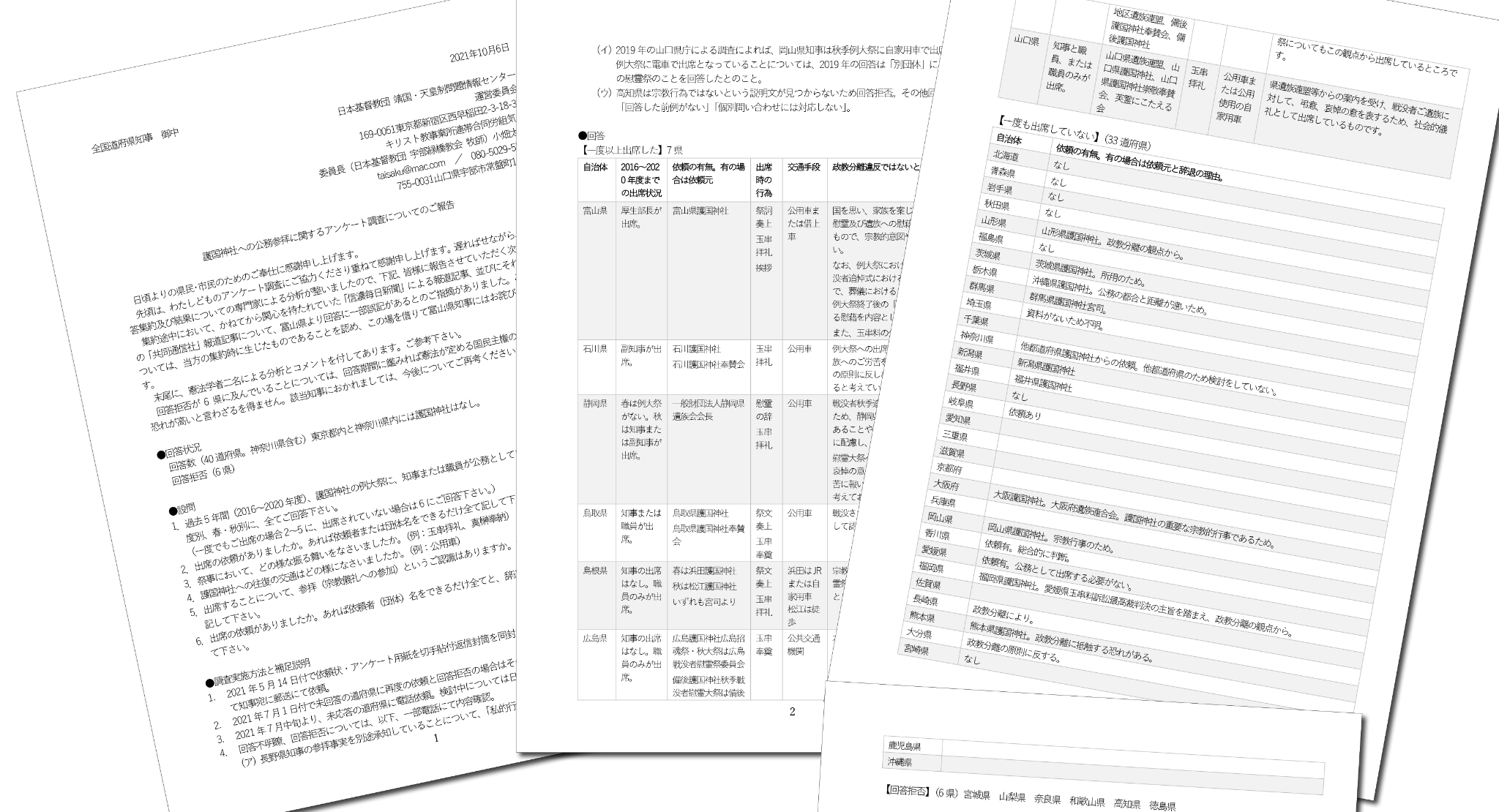
▲原告が2021年に実施した公務参拝に関する全国調査の結果報告書。
訴訟に至る経緯〜信教の自由を求める闘いの歴史〜
上記の山口県知事の行為に対して、訴訟提起に至るには、ある訴訟から続く、信教の自由を求める闘いの歴史がありました。
その訴訟とは、1973年に提訴された、山口自衛官合祀拒否訴訟(以下「合祀拒否訴訟」)です。
合祀拒否訴訟は、公務死した自衛官の、妻の中谷康子さんが拒否したのにもかかわらず、山口県護国神社と自衛隊が共謀し、夫を勝手に合祀したことの違憲・違法を問うた裁判でした。
この訴訟では、1審、2審では中谷さんの宗教上の人格権が認められ勝訴したものの、1988年に最高裁で逆転敗訴しており、中谷さんの夫は合祀されたままとなっていました。
最高裁では、①合祀行為が国の行為とされなかったこと、②自己の信仰生活が害されたことによる不快感に対して損害賠償などを認めることは、かえって相手方の信教の自由を害することになるため、合祀を望んだ別の遺族や山口県護国神社に対して原告は「寛容」であるべきという理由で原告敗訴とされました。
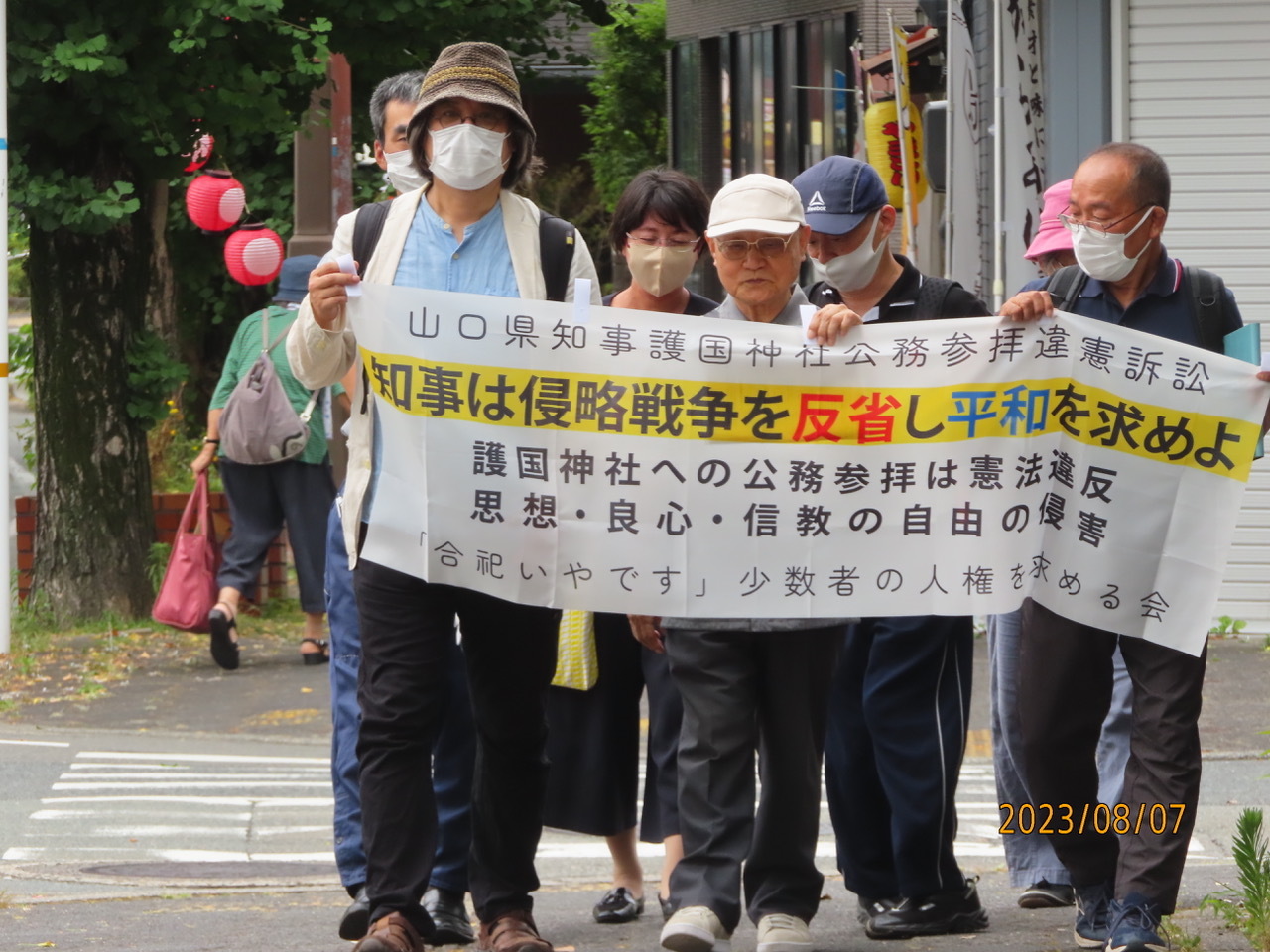
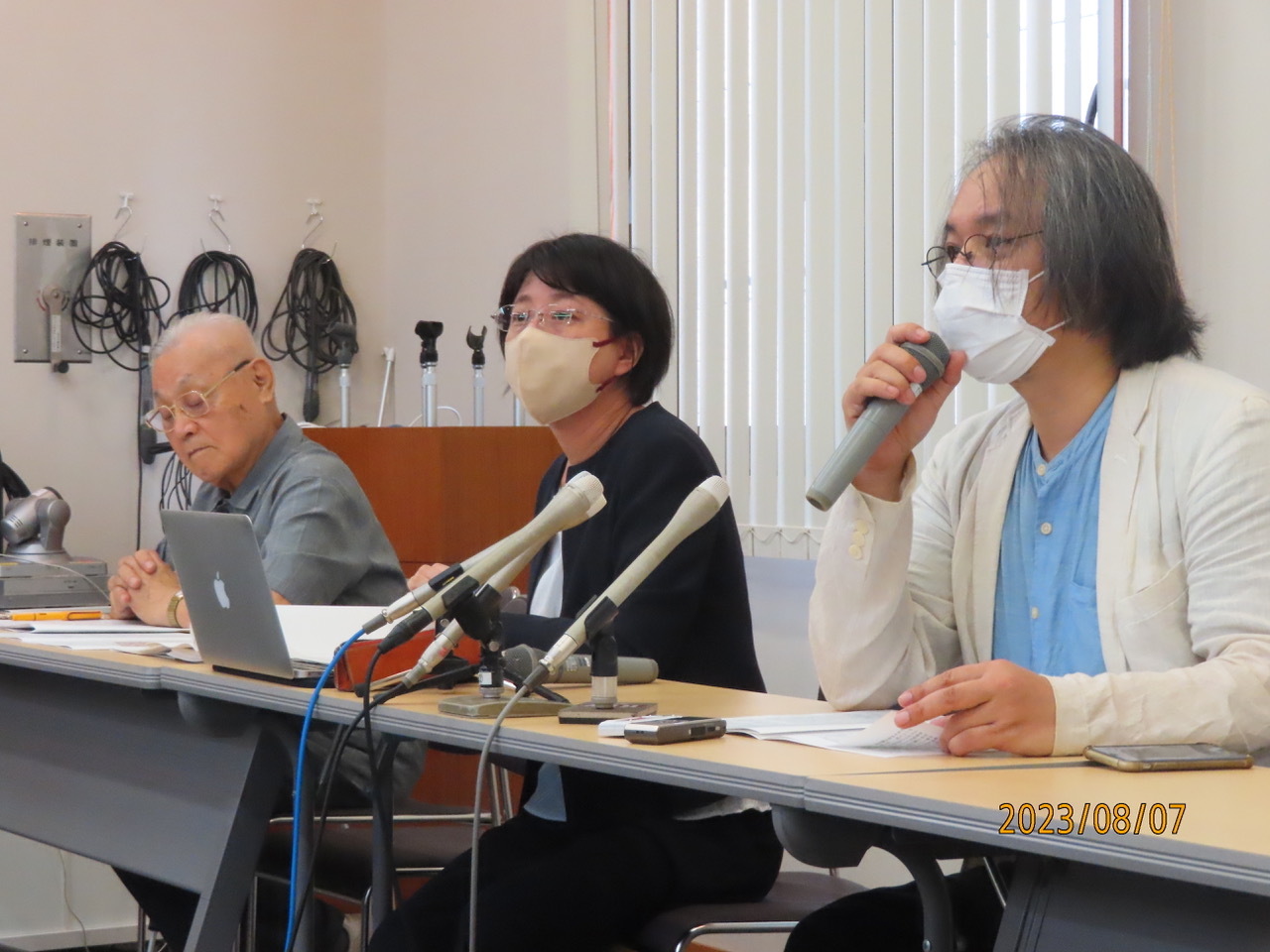
この最高裁の不当敗訴判決を受けて立ち上げられたのが、「『合祀いやです』少数者の人権を求める会」(以下、「求める会」)です。「求める会」は、思想・良心(憲法第19条)と信教(憲法第20条)の自由の実現を期して、毎年、最高裁判決の日近くで「自衛官合祀拒否訴訟最高裁不当判決抗議集会」を開催するとともに、合祀取り下げを求める活動を行なってきました。そして近年は、様々な内心の自由の侵害行為を監視し是正する活動も行っています。
中谷さんの闘いは、山口県が、中谷さんの夫を護国神社に合祀したことが、国による個人の信教の自由の侵害であると訴えるものでした(最高裁では認められず)。
山口県知事の公務参拝行為も、国が宗教との関係性を踏み越えるという点で個人の信教の自由を侵害しうるものであり、加えて、参拝の対象は山口県護国神社によって、中谷さんの夫を含め祀られている英霊であり軍神です。
そのため、知事の公務参拝行為は、中谷さんの闘いと、その後も中谷さんと共に合祀取り下げを求め続けてきた「求める会」の思いを踏みにじるものであり、原告にとって到底放置してはおけないものでした。
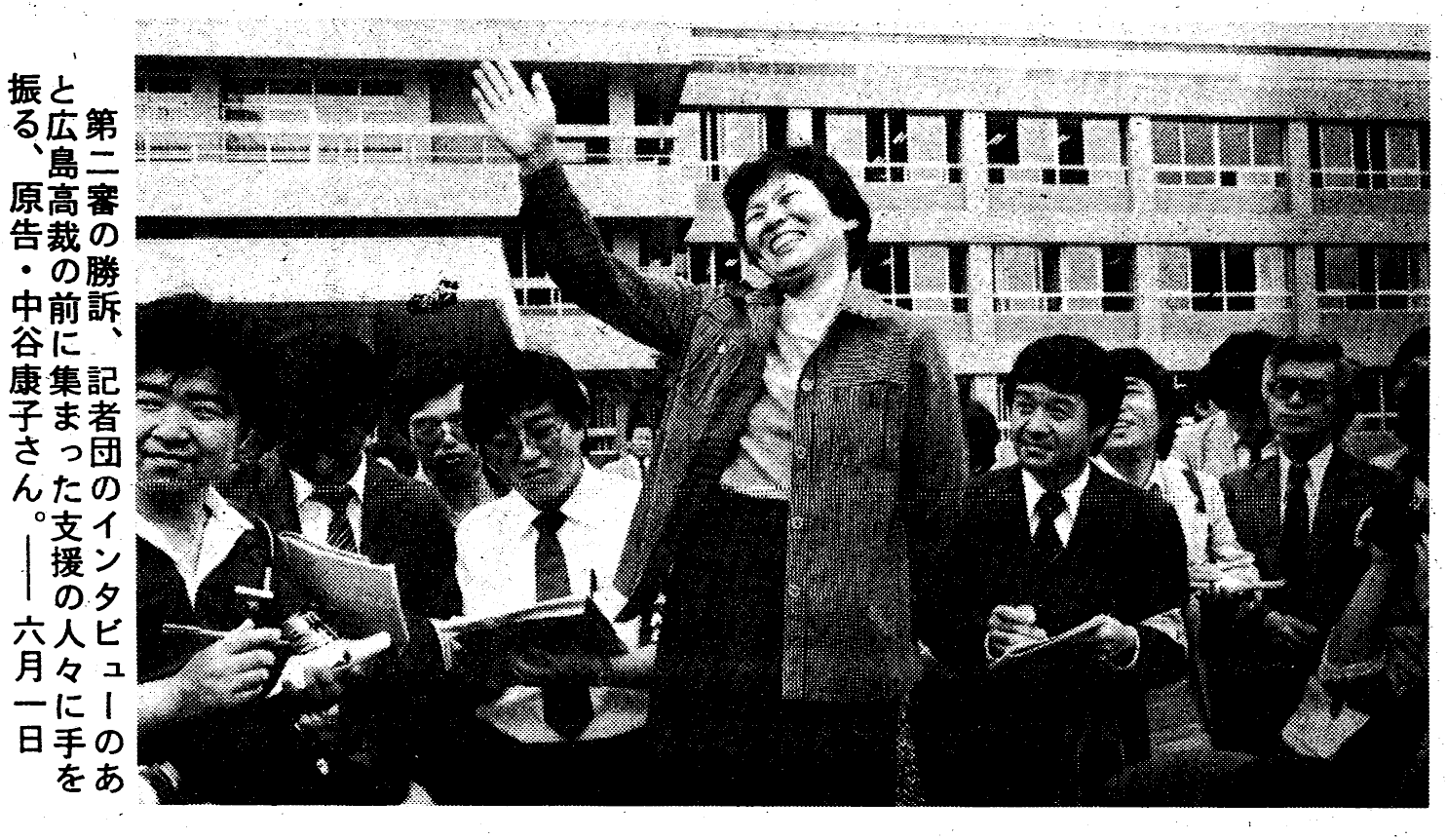
▲『自衛官合祀拒否訴訟全国連絡会ニュース』1982年9月21日
公務参拝行為に対して、原告らは、知事に参拝停止の要望書を出すなど停止に向けた活動を行いましたが、知事が参拝を停止することはなかったので、訴訟に踏み切ることにしたのです。
原告が本訴訟を通じて実現したいこと
訴訟を通して、護国神社や靖国神社の正体を人々に知らせ、内心の自由を考える機会を提供することで、一人ひとりが「自分」を取り戻し、ひいては蔓延している内心の自由の侵害の是正へと繋がっていくことを、そして憲法前文が謳う「平和を愛する諸国民の公正と信義に信頼」をおく「国民」となることを期待しています。
具体的には、「英霊」や「遺族」という縛りによって靖国神社や護国神社に囚われている人々の解放であり、広くは未だ続く各地での自治会による神社費の徴収、また法令よりも職務命令を優先する公務員の有り様の是正です。更にそれは少し大げさに言えば、成功や所有が至上の価値とされる世界に囚われた人々の解放の実現です。
これまでの訴訟
直近の訴訟との違い、本訴訟の意義
政教分離原則違反を問う訴訟はこれまでにも提訴されてきており、愛媛玉串料訴訟、空知太神社事件、孔子廟訴訟で違憲判決が出されています。
これらの訴訟を通して、国または地方自治体の政教分離原則違反行為へのチェックがなされ、適切な距離を保つようにされてきたのです。
直近の政教分離訴訟としては、安倍首相靖国参拝違憲訴訟、天皇代替わりに係る即位・大嘗祭違憲訴訟と主基田違憲訴訟がありますが、一つには被侵害利益の壁、すなわち、行政の行為が憲法や法律に反していることだけではなく、その行為によって自らが身体的・精神的な損害を受けたことを、裁判所が権利侵害として認めないこと、いま一つには裁判例の壁、すなわち、過去に政教分離違反によって個人の権利侵害が判断がされた裁判例が殆どないこと、によって厳しい闘いを強いられています。
一方で、行政の行為の違法性を問う手段としては、地方自治体のお金の使途の違法性を問う住民訴訟という手法があり、この場合、被侵害利益の壁を超えることが出来るのです。
今回、「住民訴訟が提起できる」、「過去に同様の行為の違憲性が争われた裁判例がない」、「過去の政教分離訴訟の判決に照らして違憲判断を裁判所が成し得る可能性が高い」という状況が揃ったため、内心の自由の確立のために有効な訴訟だと考え提訴を決意しました。
寄付の使いみち
① 証人等の交通費 10万円
② 意見書費用 20万円
③ 弁護士費用 50万円
④ その他(訴訟に関連するもの) 20万円
合計100万円
上記は、第一審(山口地裁)の予算概算です。控訴審(広島高等裁判所)は、改めて目標を設定して取り組む所存です。原告は山口県民であるため、控訴審の場合は原告の交通費補助も予算化できれば幸いです。
しかし、それ以前に現在は弁護士支援に当てたく、できれば弁護団も組織したいと考えています。そのための資金繰りを優先します。
原告の思い
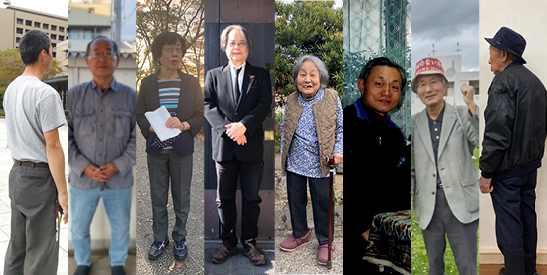
原告8名のうち、わたし(小畑太作)について記します。
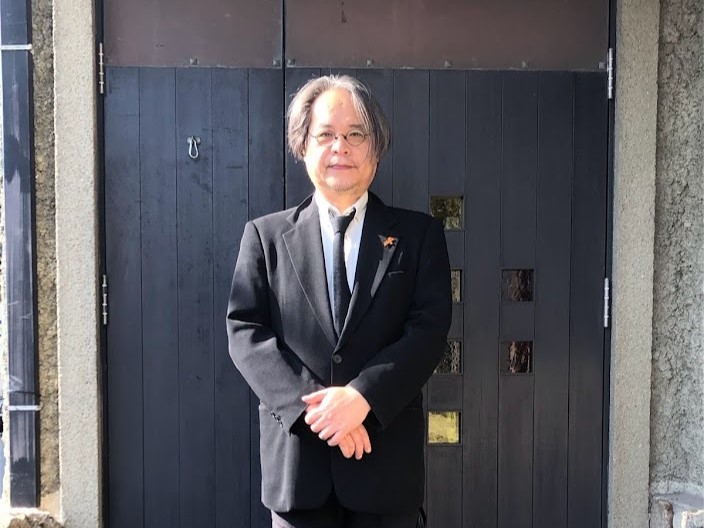
わたしは、子どもの頃から、学校や地域が様々なものを押し付けてくることに疑問と反発を覚えていました。自由を求め続け、紆余曲折ありましたが、キリスト教に道を見出し、1997年に牧師になりました。
2003年に山口県に来て、同信で山口自衛官合祀拒否訴訟(以下「合祀拒否訴訟」)の元原告の中谷康子さん達と出会い、その自由への闘いを知り、関わるようになりました。そして今年2023年から、同訴訟の後を継ぐ「求める会」の代表兼事務局を務めています。
基本的人権である、信教の自由(憲法第20条)と、思想・良心の自由(憲法第19条)は、この国がかつて為した侵略戦争への反省により設置されたものであり、これを侵害する行為は基本的人権の侵害であり憲法違反です。
また、それを侵害することは、かつての侵略戦争を肯定することをも意味します。
靖国神社は、護国神社と同じく、かつての侵略戦争を正当化し美化しています。従って、国会議員らの靖国神社参拝行為に対しては、かつての被侵略国から抗議の声が上げられます。ところが、日本国民の殆どは、自らの代表のその行為を看過しています。その結果、国際社会における日本国民に対する信頼を阻害する行為ともなっています。
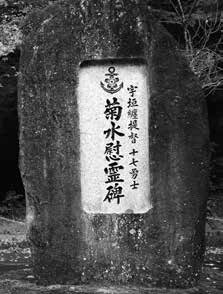
▲「靖国神社に英霊として祀られている宇垣纏(まとめ)中将は「玉音放送」後の8月15日夕刻、「神州の不滅を信じ、気の毒なれど余の供を命ず」と部下を道連れにして大分の海軍飛行場から特攻機で沖縄方面に向けて出撃し死んだ。写真は、そうして死んだ若者を祀る岡山県護国神社参道に建てられた慰霊碑(撮影 難波幸矢)」
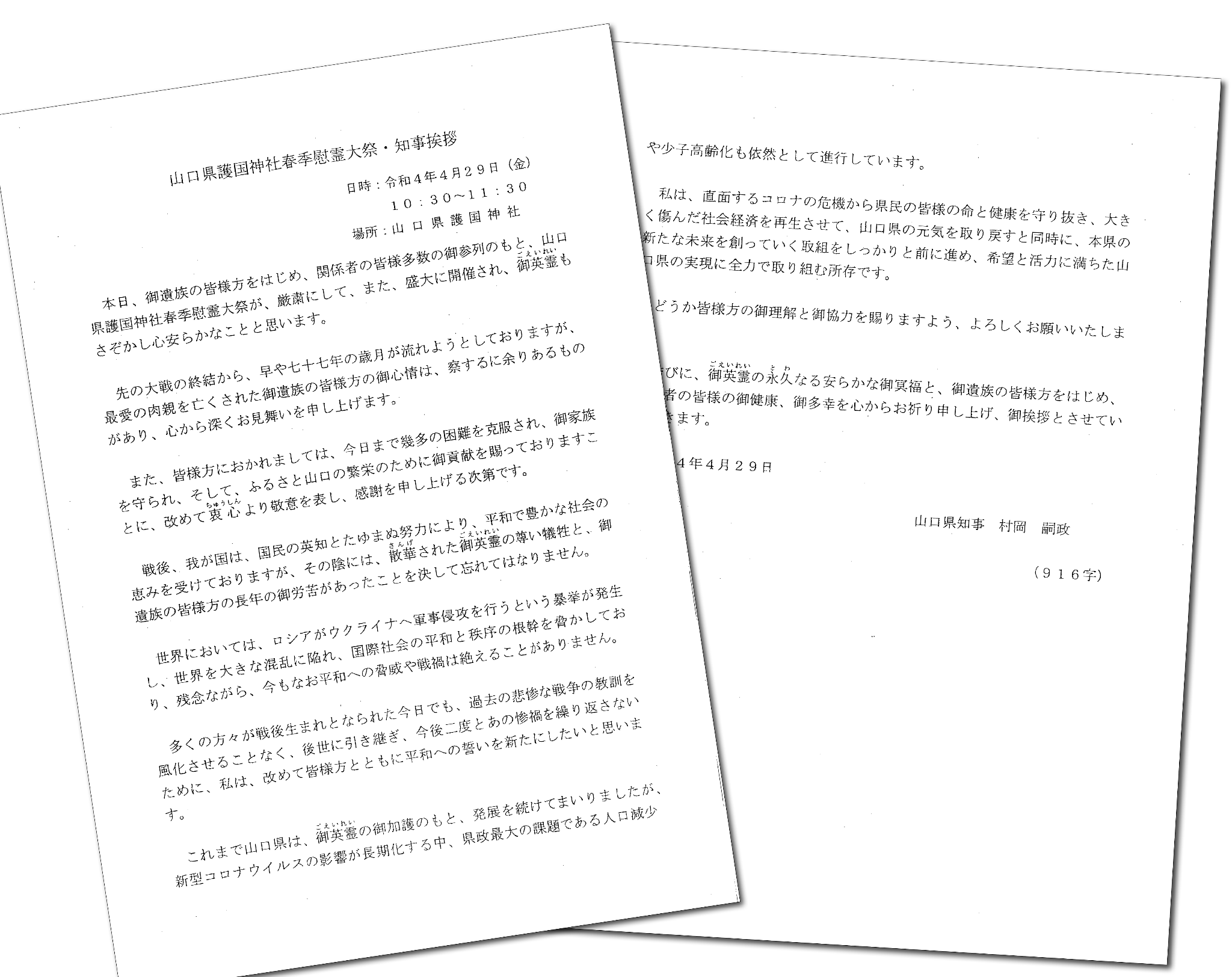
▲山口県護国神社慰霊大祭での山口県知事の挨拶文。戦争被害者を繰り返し「英霊」と呼び顕彰している。
不信は新たな不信を生じ、ついには敵意へと至るのです。その結果が、留まることを知らないこの国の軍事化です。
ところが、繰り返しますが、日本国民の多くは、かつての侵略戦争の正当化と美化を主張する、国会議員らの靖国神社参拝に対して殆ど関心を持たないままです。
また、こうした世情は、これまでも、そして今も、提起されてきたいくつかの政教分離訴訟に対する裁判所の判断にも現れてしまっています。
思想・良心・信教の自由を実現することこそが、真の平和を実現することにつながるのだと思います。実際、戦争とは、その自由が制限されることによってのみ、遂行可能となるのです。
代理人コメント
山口県では、県民からの公務参拝を控える要請にも関わらず、護国神社への参拝が違憲であるとの裁判所の判断がないという理由で公務参拝を行ったため住民訴訟をすることになりました。
明確に違法という裁判所の判断がないからやってもいいという山口県の考えは是正されるべきであり、この訴訟がその一つの契機となってほしいと思い受任しました。
担当弁護士
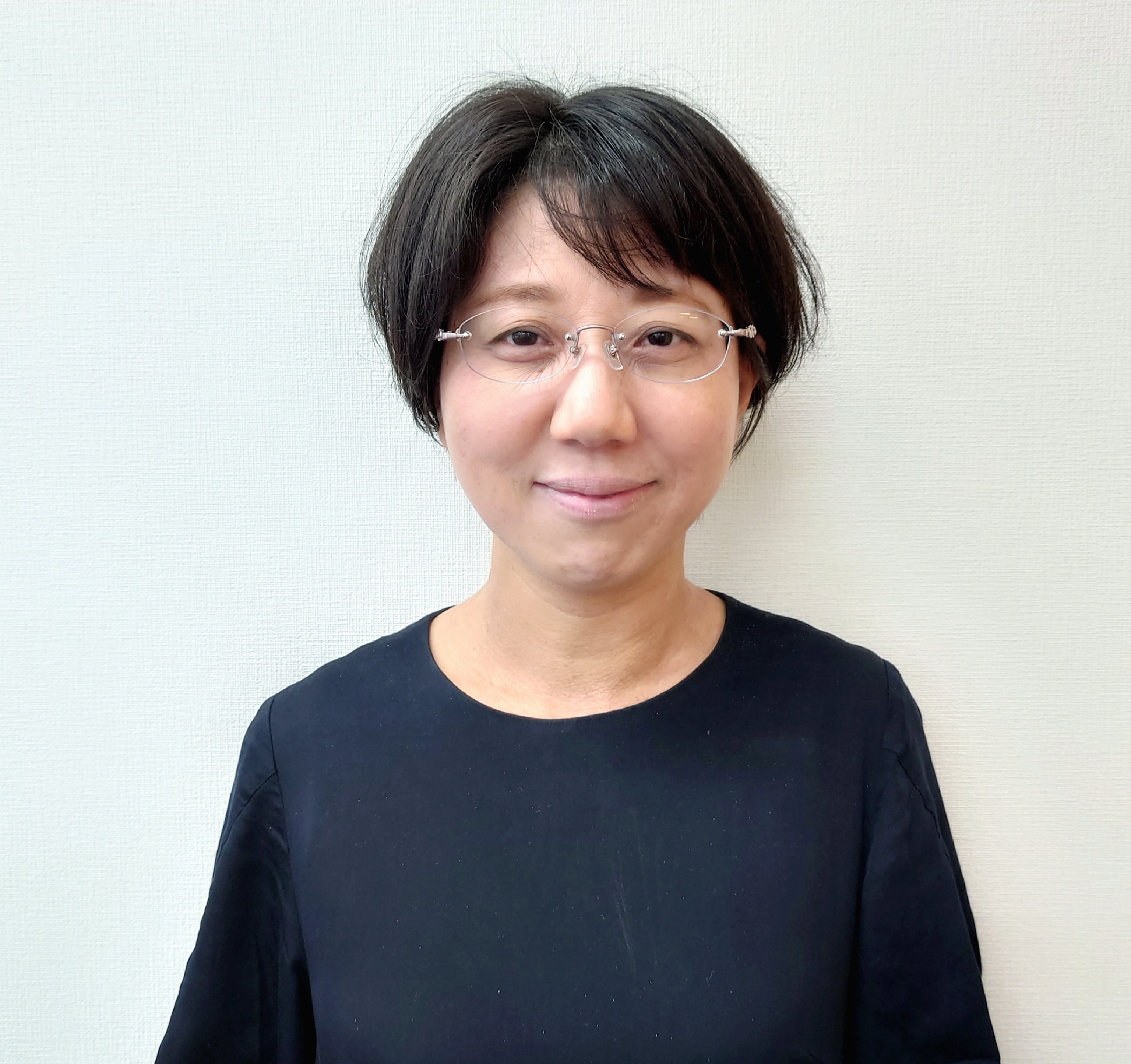
田川 瞳(福岡県弁護士会 弁護士法人ONE 門司オフィス)
内山新吾(山口県弁護士会 弁護士法人山口第一法律事務所)
澤藤統一郎(東京弁護士会 澤藤統一郎法律事務所)
石口俊一(広島弁護士会 石口俊一法律事務所)
加島宏(大阪弁護士会 加島・田中法律事務所)
中島光孝(札幌弁護士会 中島光孝法律事務所)
則武透(岡山弁護士会 岡山合同法律事務所)
おわりに
皆様の支援が、原告や代理人弁護士が活動を継続していく大きな力になります。
内心の自由の侵害は目に見えず分かり難いし、且つ慣らされてしまっているのかもしれませんが、気が付いたときには手遅れなのです。戦争への道を平和への道へと変えましょう。
Introduction
Constitution of Japan
Article 20
Article 1. Freedom of religion is guaranteed to everyone. No religious organization may receive any privileges from the State or exercise any political authority.
2. No person shall be compelled to take part in any religious act, celebration, rite or ceremony.
Article 3 The State and its organs shall refrain from religious education or any other religious activity.
Article 89 <br>Public funds and other public property shall not be expended or appropriated for the use, benefit, or maintenance of any religious institution or association, or for any charitable, educational, or philanthropic enterprise not under public control.
The "principle of separation of church and state" places a certain limit on the relationship between the state and religion.
Some people may have heard about this principle, which was adopted as a result of reflection on prewar history, in classes such as Japanese history or civics, or may have studied case law in law school.
However, I think there are few people who feel that this is something they can relate to.
This lawsuit aims to protect the principle of separation of church and state by prosecuting acts that violate it, and to prevent the suppression or coercion of individual religion, thought, or conscience.
Overview of the case
The Governor of Yamaguchi Prefecture visited the memorial service at Yamaguchi Prefectural Gokoku Shrine as part of his official duties and used public funds.
The Governor of Yamaguchi Prefecture visits the Yamaguchi Prefectural Gokoku Shrine every spring and autumn as part of his official duties, using public funds to pay his respects at the Grand Memorial Ceremony. Official visits by the Governor and other officials are made twice a year, with four people attending each time. Last year, the transportation cost for the spring visit was 990 yen.
Like Yasukuni Shrine, Gokoku Shrine is a shrine that enshrines people who are said to have died for the nation (the Emperor), and before the war it was a religious military facility that supported State Shinto, a system that linked the state and religion and supported the militaristic system.
The fact that he visited the shrine on official business, that is, as a representative of the local government rather than as a private citizen, is a violation of the principle of separation of church and state.
Furthermore, if we look at other prefectures, there are some that do not visit Gokoku Shrines, citing the violation of the principle of separation of church and state.
In fact, in a nationwide survey conducted by the plaintiffs in 2021, 39 prefectures with Gokoku Shrines responded, of which 32 had not visited the shrines, and of those, 7 prefectures cited suspected violations of the Constitution as the reason for not visiting despite requests to do so.
Meanwhile, in Yamaguchi Prefecture, despite repeated requests from the prefecture's residents to stop official visits to the shrine, official visits are continuing on the grounds that there has been no court ruling that visits to Gokoku Shrine are unconstitutional.
▲Report on the results of a nationwide survey on official visits to shrines conducted by the plaintiff in 2021.
The history of the lawsuit: the history of the fight for religious freedom
The lawsuit against the above-mentioned actions of the Governor of Yamaguchi Prefecture was filed following a history of struggle for religious freedom that began with a previous lawsuit.
The lawsuit in question was the Yamaguchi Self-Defense Forces Enshrinement Refusal Lawsuit (hereinafter referred to as the "Enshrinement Refusal Lawsuit"), which was filed in 1973.
The lawsuit over the refusal to enshrine was a trial that questioned whether it was unconstitutional and illegal for Yamaguchi Prefectural Gokoku Shrine and the Self-Defense Forces to conspire to enshrine Yasuko Nakatani, the wife of a Self-Defense Force member who died in the line of duty, despite her refusal.
In this lawsuit, Nakatani's religious personality rights were recognized in the first and second trials, and she won, but in 1988 the Supreme Court overturned the case and she lost, and Nakatani's husband remained enshrined there.
The Supreme Court ruled against the plaintiffs on the grounds that 1) the act of joint enshrinement was not considered an act of the state, and 2) awarding compensation for the discomfort caused by the infringement of one's religious life would infringe on the other party's freedom of religion, and therefore the plaintiffs should be "tolerant" of the other bereaved families and Yamaguchi Prefectural Gokoku Shrine who wanted joint enshrinement.
Following this unjust Supreme Court ruling, the "I Don't Want to Be Enshrined: Association for Minority Human Rights" (hereinafter referred to as "Association for Minorities") was established. Aiming to realize freedom of thought and conscience (Article 19 of the Constitution) and freedom of religion (Article 20 of the Constitution), the Association for Minorities has been holding a "Protest Rally Against the Unjust Supreme Court Ruling in the Lawsuit to Refuse to Enshrine Self-Defense Force Personnel" every year around the date of the Supreme Court ruling, and has been working to demand the withdrawal of the enshrinement. In recent years, the Association has also been monitoring and correcting various violations of freedom of belief.
Nakatani's fight was to argue that Yamaguchi Prefecture's enshrinement of her husband at Gokoku Shrine was an infringement of the individual's freedom of religion by the state (a claim that was not accepted by the Supreme Court).
The Yamaguchi Prefectural Governor's official visit to the shrine could also infringe on the religious freedom of individuals in that it is an overstepping of the state's relationship with religion.In addition, the object of the visit is a heroic spirit and war god enshrined by Yamaguchi Prefectural Gokoku Shrine, including Nakatani's husband.
Therefore, the governor's official visit to the shrine trampled on Nakatani's struggle and the feelings of the "Seek Group," which has continued to work with Nakatani to demand the removal of the enshrinement, and this was something the plaintiffs could not ignore.
▲News from the National Liaison Committee for the Lawsuit Against the Enshrinement of Self-Defense Forces Personnel, September 21, 1982
The plaintiffs took action to stop the official visits, including submitting a letter of request to the governor to stop the visits, but when the governor did not stop the visits, they decided to file a lawsuit.
What the plaintiff wants to achieve through this lawsuit
Through this lawsuit, we hope to inform people of the true nature of Gokoku Shrine and Yasukuni Shrine, and provide them with an opportunity to consider their own inner freedom, thereby enabling each individual to regain their sense of self, which will ultimately lead to the correction of the widespread infringement of inner freedom, and to become ``citizens'' who have ``trust in the fairness and faith of the peace-loving peoples of the world'' as proclaimed in the preamble to the Constitution.
Specifically, it means liberation of those who are held captive by Yasukuni Shrine and Gokoku Shrine due to the constraints of "war heroes" and "surviving families," and more broadly, correction of the practice of collecting shrine fees by local residents' associations, which continues to this day, and correction of the state of civil servants who prioritize work orders over laws and regulations. Furthermore, to put it a little more dramatically, it means the realization of liberation of those who are held captive in a world where success and possessions are considered the highest values.
Previous litigation
Differences from recent lawsuits and the significance of this lawsuit
Lawsuits challenging the principle of separation of church and state have been filed in the past, with unconstitutional rulings issued in the Ehime Tamagushiryo lawsuit, the Sorachi Taisha Shrine incident, and the Confucius Temple lawsuit.
Through these lawsuits, checks have been put on actions by national and local governments that violate the principle of separation of church and state, and an appropriate distance has been maintained.
The most recent lawsuits regarding the separation of religion and state include the lawsuit regarding the unconstitutionality of Prime Minister Abe's visit to Yasukuni Shrine, the lawsuit regarding the unconstitutionality of the enthronement and Daijosai ceremony regarding the succession of the Emperor, and the lawsuit regarding the unconstitutionality of the Sukida.These lawsuits are being fought hard due to two obstacles: first, the barrier of the interests that have been infringed; that is, the courts do not recognize that administrative actions are not only in violation of the Constitution or the law, but also that the actions have caused the individual physical and mental harm, and second, the barrier of precedent; that is, the fact that there are almost no previous cases in which individual rights have been found to have been infringed due to a violation of the separation of religion and state.
On the other hand, one way to question the illegality of administrative actions is through a citizen lawsuit, which questions the illegality of the use of local government funds, and in this case it is possible to go beyond the barrier of infringed interests.
This time, the following conditions were met: "Residents can file a lawsuit," "there is no previous court case in which the unconstitutionality of a similar act has been challenged," and "there is a high possibility that the court will rule it unconstitutional in light of past rulings on the separation of church and state." Therefore, we decided to file the lawsuit, believing it to be an effective lawsuit for establishing freedom of belief.
How donations will be used
① Transportation expenses for witnesses, etc.: 100,000 yen ② Fees for written opinions: 200,000 yen ③ Attorney's fees: 500,000 yen ④ Other (related to the lawsuit): 200,000 yen
Total 1 million yen
The above is a rough budget estimate for the first instance (Yamaguchi District Court). We intend to set new goals for the appeal hearing (Hiroshima High Court). Since the plaintiff is a Yamaguchi Prefecture resident, we would be grateful if we could also budget for travel expenses subsidies for the plaintiff in the appeal hearing.
However, before that, I would like to use the funds to support lawyers and, if possible, organize a legal team. Therefore, I will prioritize raising funds for this purpose.
Plaintiff's thoughts
Of the eight plaintiffs, I (Obata Taisaku) will write about myself.
Ever since I was a child, I have had doubts and rebelled against the various things that were forced upon me by my school and community. I continued to seek freedom, and after many twists and turns, I found my way in Christianity and became a pastor in 1997.
I came to Yamaguchi Prefecture in 2003, and met Yasuko Nakatani and other former plaintiffs in the Yamaguchi Self-Defense Force Enshrinement Refusal Lawsuit (hereinafter referred to as the "Enshrinement Refusal Lawsuit") at the Japan Foundation. I learned about their struggle for freedom and became involved. Since 2023, I have been serving as the representative and secretariat of the "Motokurukai" (We Want to Seek Relief) which continues the lawsuit.
The fundamental human rights of freedom of religion (Article 20 of the Constitution) and freedom of thought and conscience (Article 19 of the Constitution) were established as a reflection on the war of aggression that this country once waged, and any act that violates these rights is a violation of fundamental human rights and a violation of the Constitution.
Furthermore, violating it would mean affirming past wars of aggression.
Yasukuni Shrine, like Gokoku Shrine, justifies and glorifies the wars of aggression of the past. Therefore, visits to Yasukuni Shrine by Diet members have been met with protests from countries that were once invaded. However, most Japanese people turn a blind eye to the actions of their representatives. As a result, this act has also undermined the trust placed in the Japanese people by the international community.
▲ "Vice Admiral Ugaki Matome, who is enshrined as a heroic spirit at Yasukuni Shrine, died on the evening of August 15th, after the "Gyokuon-hoso" broadcast, saying, 'I believe in the immortality of the Divine Lands, and although it is unfortunate, I order you to accompany me,' taking his subordinates with him as he took off in a suicide plane from the Oita Naval Airfield towards Okinawa. The photo shows a memorial monument erected on the approach to Okayama Prefecture Gokoku Shrine, which enshrines the young men who died in this way (photographed by Namba Yukiya)."
▲Governor Yamaguchi's speech at the Yamaguchi Prefectural Gokoku Shrine Memorial Service. He repeatedly honors the war victims by calling them "war heroes."
Distrust breeds more distrust, which eventually leads to hostility. The result is the unrelenting militarization of our country.
However, I repeat that most Japanese people remain largely uninterested in the visits to Yasukuni Shrine by members of the Diet who claim to justify and glorify the past war of aggression.
This state of affairs is also reflected in the court's decisions on several lawsuits regarding the separation of church and state that have been filed in the past and continue to be filed today.
I believe that realizing freedom of thought, conscience, and religion is what leads to true peace. In fact, war can only be waged if these freedoms are restricted.
Agent's comment
In Yamaguchi Prefecture, despite requests from the prefecture's residents to refrain from official visits to Gokoku Shrine, a prefectural official made a visit on the grounds that there had been no court ruling that visits to the shrine were unconstitutional, leading to a lawsuit by residents.
Yamaguchi Prefecture's thinking that it is okay to go ahead with this because there has been no court ruling that it is clearly illegal should be corrected, and I accepted this lawsuit in the hope that it would serve as one opportunity to make that happen.
Attorney in charge
Hitomi Tagawa (Fukuoka Bar Association, ONE Law Firm, Moji Office)
Shingo Uchiyama (Yamaguchi Bar Association, Yamaguchi Daiichi Law Office)
Toichiro Sawafuji (Tokyo Bar Association, Toichiro Sawafuji Law Office)
Shunichi Ishiguchi (Hiroshima Bar Association, Shunichi Ishiguchi Law Office)
Hiroshi Kashima (Kashima & Tanaka Law Office, Osaka Bar Association)
Mitsutaka Nakajima (Sapporo Bar Association, Mitsutaka Nakajima Law Office)
Toru Noritake (Okayama Bar Association, Okayama Joint Law Office)
Conclusion
Your support will be a great help to the plaintiffs and their attorneys in continuing their work.
The violation of our inner freedom is invisible and difficult to understand, and we may become accustomed to it, but by the time we notice it, it is too late. Let us change the path of war to the path of peace.

「合祀いやです」少数者の人権を求める会
1973年の提起された山口自衛官合祀拒否訴訟の意義を継承し、1988年最高裁不当判決に対して抗議を訴え続け、心の自由、少数者の人権の実現を求め続けている市民団体です。
同調圧力が強いと言われる日本社会において、個人の尊厳と権利が、そして自由が確立するために共に歩みましょう!
「合祀いやです」少数者の人権を求める会 代表 小畑太作
事務局:〒755-0031山口県宇部市常盤町1-1-9日本基督教団宇部教会内
https://midoribashi.wixsite.com/5418
同調圧力が強いと言われる日本社会において、個人の尊厳と権利が、そして自由が確立するために共に歩みましょう!
「合祀いやです」少数者の人権を求める会 代表 小畑太作
事務局:〒755-0031山口県宇部市常盤町1-1-9日本基督教団宇部教会内
https://midoribashi.wixsite.com/5418
あなたにおすすめのケース Recommended case for you


- 外国にルーツを持つ人々 Immigrants/Refugees/Foreign residents in Japan
- ジェンダー・セクシュアリティ Gender/Sexuality
- 医療・福祉・障がい Healthcare/Welfare/Disability
- 働き方 Labor Rights
- 刑事司法 Criminal Justice
- 公正な手続 Procedural Justice
- 情報公開 Information Disclosure
- 政治参加・表現の自由 Democracy/Freedom of Expression
- 環境・災害 Environment/Natural Disasters
- 沖縄 Okinawa
- 個人情報・プライバシー Personal information/Privacy
- アーカイブ Archive
- 全てのケース ALL