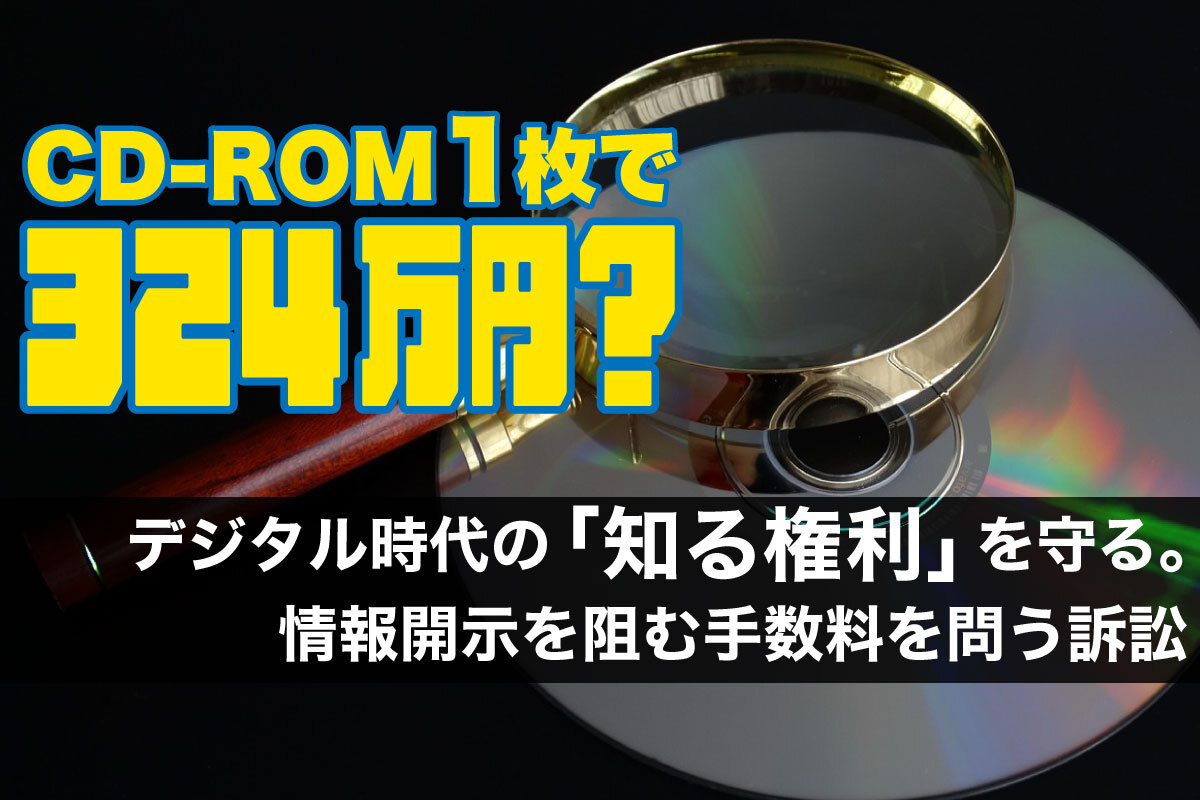
デジタル時代の「知る権利」を守る。情報開示を阻む手数料を問う訴訟 Protect ”the Right to Know” in the Digital Era: Lawsuit Questioning the Fee Obstructing Information Disclosure
#公正な手続
#Procedural Justice
#情報公開
#Information Disclosure
現在の寄付総額 Current Total Raised
126,200円 ¥ 126,200
目標金額 Target amount
1,080,000円 ¥ 1,080,000
サポーター Supporter
24 人 24 supporters
 寄付する
Donate Now
寄付する
Donate Now


国や自治体の入札データは、談合を見つけ、税金の使われ方を検証するための重要な公共情報です。京都大学の中林純教授が、国に10年分のデータをCD-ROMで開示するよう求めたところ、示された手数料は324万5350円でした。この訴訟は、手数料額を裁判で争えることと、市民が実際に利用できる適正な手数料のあり方を求める訴訟です。 The bidding data from the national and local governments is important public information to find illegal collusion and inspect how taxes are used. Prof. Jun Nakabayashi requested that the national government disclose the data via CD-ROM, and the government set the fee at 3,245,350 yen. This lawsuit aims to confirm that the fee is disputable in trials and call for a reasonable processing fee that truly allows people to access the information.
はじめに:「開示されても、受け取れない?」
もし、行政文書の開示が認められても、それを受け取るために数百万円を支払わなければならないとしたら―。そして手数料の算定方法に異議をとなえることもできないとしたら―。情報公開制度があっても、「お金の壁」によって、阻止され、実際に情報を手にすることはできません。
公文書は「国民共有の知的資源」です(公文書管理法1条)。情報公開法は誰にでも行政文書の開示を請求する権利を認めています。しかし、本件では、たったCD-ROM1枚に収まる程度の電子データについて324万5350円もの開示実施手数料が示されました。
この訴訟は、情報公開を「お金の壁」で阻まないために、手数料額を法的に争う道と、利用しやすい手数料のあり方を問うものです。
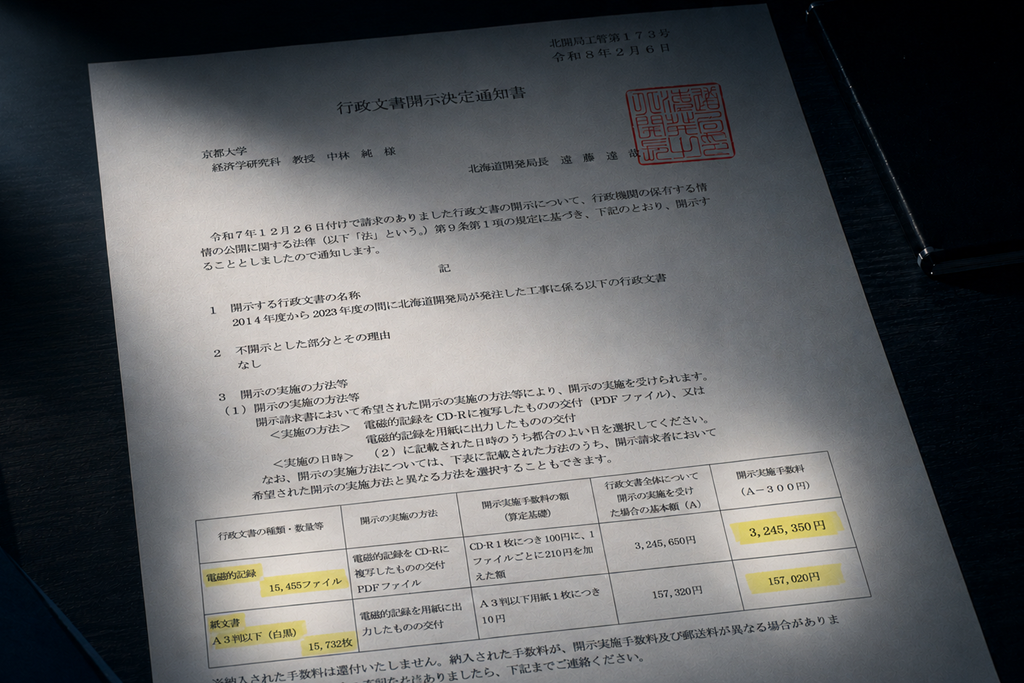
▲行政文書開示決定通知書。開示実施手数料が3,245,350円となっている。
事案の概要
入札データは何に役に立つのか
中林純教授(京都大学大学院経済学研究科)は、国や自治体が公表する大量の公表入札データを統計的に分析し、談合の可能性がある入札を見つけ出す研究を行っています。
その研究の有効性が注目されたのが、2025年2月に明らかになった大分市の官製談合事件です。大分市職員が官製談合事件で逮捕された際の記者会見で、市長が、「事件が発覚する1年前に中林教授の研究グループから『大分市の入札では談合が行われている可能性が高い』との指摘を受けていた」と明らかにしました。
入札データを長期間にわたって分析することは、不自然な入札を発見し、税金の無駄遣いや不正を防ぐことにつながります。
CD-ROM1枚での開示に324万円
こうした研究には少なくとも10年分程度の入札データが必要です。しかし、国や自治体のウェブサイトでデータが公開される期間は1年から3年程度と限られていることが多く、過去の必要なデータを入手するには情報公開請求をしなけれなりません。
今回、中林教授は、 北海道開発局に対し、10年分の工事入札結果データである「入札順位証明書」の開示請求をしました。対象となる情報は、紙に換算するとA4用紙1万5732枚分ですが、PDFデータにすればCD-ROM1枚に収まる程度です。ところが、北海道開発局から示された開示実施手数料は、324万5350円でした。
なぜ、これほど高額になったのでしょうか。
情報公開法施行令の規定では、電子データをCD-ROMで交付する場合、「1ファイルごとに210円」を加算する方式が定められています。しかし、「1ファイル」をどのようにして数えるかについて明確な定義はありません。
ほかの地方整備局では1年分の工事データをまとめて「1ファイル」として扱う例がある一方、北海道開発局は、工事1件につき「1ファイル」として数えました。その結果、10年分のデータが1万5455ファイルとされ、手数料が数百万円に膨れ上がったのです。一方で、紙の交付の場合、手数料は原則用紙1枚あたり10円であり、本件の対象文書で計算すると納付額は15万7020円となります。このように媒体の違いで20倍もの価格差が生まれるわけですが、中林教授の研究にはプログラムで処理できる構造化された電子データが必須になります。
手数料を争う道も閉ざされていた
中林教授は以前にも、同様に示された手数料額について争うため、行政不服審査法に基づく審査請求をしたことがあります。
ところが国は、手数料額の通知は審査請求の対象となる行政処分ではないとして、審査請求を却下しました。
国が示した金額を受け入れて支払うか、情報の開示を諦めるか。手数料の計算がおかしいと考えても、それを法的に争うことができないという状況を変えるため、中林教授は今回、裁判にふみきりました。
裁判の争点
この裁判では、大きく分けて次の2点を争っています。
1. 開示請求者は手数料額が適正かを法的に争うことができるか
これまで国は、開示実施手数料額が適正かどうかについて、情報公開・個人情報保護審査会でも、裁判所でも、請求者が争うことはできない、という立場を貫いてきました。そのため、開示請求者は、国が一方的に通知した額を受け入れて支払うか、情報を受け取ること自体を諦めるしかなかったのです。
この裁判では、 開示請求者に手数料額が適正かを争う権利があることを明らかにすべく、主位的請求として、行政事件訴訟法3条2項に基づく「取消訴訟」を提起しています。取消訴訟は、行政機関の違法・不当な行政処分の取消しを求める訴訟です。国が決定した金額の手数料を支払わなければ情報の開示を受けられない以上、開示実施手数料額の通知は国民(開示請求者)の権利義務に直接影響する行政上の行為(行政処分)であると主張しています。そのうえで、まず、開示実施手数料額の決定を取り消すよう求めています。
もっとも、裁判所がこの手数料額の通知は取消訴訟の対象となる「行政処分」には当たらないと判断した場合に備えた予備的請求として、行政事件訴訟法4条に基づく「当事者訴訟」もあわせて提起しています。当事者訴訟は、行政処分の取消しではなく、公法上の法律関係について裁判所の判断を求める訴訟です。
この予備的請求では、適正価額を超える手数料を支払う義務がないことの確認を求めています。
2. 「利用しやすい手数料」は、どのように決めるべきか
情報公開法は、開示実施手数料を「実費の範囲内」とし、できる限り利用しやすい額になるよう配慮することを求めています。
本件の「10年分の入札順位証明書は15,455工事分で15,455ファイルだから開示実施手数料3,245,350円」という手数料は、次の理由から、この法律の趣旨に反すると主張しています。
◼︎ 行政機関によって「1ファイル」の数え方が異なるのは不合理である
情報公開法や同法施行令には、手数料を計算する際の「1ファイル」の明確な定義規定はありません。しかし、だからといって、行政機関がそれぞれ好き勝手にファイルデータを細分化し、例えば本件のようにA4用紙1枚分の情報を1ファイルと数えることが許されるわけではありません。
公文書管理法5条2項は、相互に密接な関連を有する行政文書を「一の集合物(行政文書ファイル)」にまとめるよう定めています。また同じ年度の入札関係文書は、原則として保存期間が同時に満了します。
公文書管理法5条2項
行政機関の長は、能率的な事務又は事業の処理及び行政文書の適切な保存に資するよう、単独で管理することが適当であると認める行政文書を除き、適時に、相互に密接な関連を有する行政文書(保存期間を同じくすることが適当であるものに限る。)を一の集合物(以下「行政文書ファイル」という。)にまとめなければならない。
こうした文章の性質からすれば、本件では少なくとも「1年度分の入札順位証明書」を1つのファイルとして扱うべきだと主張しています。この基準によれば、1年度分の情報(1ファイル)の開示実施手数料は210円、10年分で2100円(開示請求に際して納付した収入印紙代300円を控除後の金額は1900円)となります。
◼︎ 電子データの複製にかかる実費とかけ離れている
情報公開法16条は、手数料を「実費の範囲内」とし、「できる限り利用しやすい額」とするよう配慮することを求めています。
電子データをCD-ROMに複製するのに要する実費はごく僅かです。紙に印刷して交付する場合の費用が約15万であるのに、電子データで受け取るとその20倍を超える手数料になるのは、明らかに不合理で、情報公開法16条に反します。
行政文書のデジタル化は、本来、行政側の作業だけでなく、開示を受ける側の費用や負担も軽減するはずです。電子データであることによって、かえって手数料が大幅に高くなる運用は、情報公開法が求める「実費の範囲内」「できる限り利用しやすい額」という原則に反します。
情報公開法16条
開示請求をする者又は行政文書の開示を受ける者は、政令で定めるところにより、それぞれ、実費の範囲内において政令で定める額の開示請求に係る手数料又は開示の実施に係る手数料を納めなければならない。
2 前項の手数料の額を定めるに当たっては、できる限り利用しやすい額とするよう配慮しなければならない。
3 行政機の長は、経済的困難その他特別の理由があると認めるときは、政令で定めるところにより、第一項の手数料を減額し、又は免除することができる。
◼︎ 制度改正の趣旨にも逆行している
情報公開法施行令の電子データに関する手数料規定は、データ量に応じた計算では高額になりすぎるとの問題を踏まえ、2006年に改正されました。
それまでは「0.5MBまでごとに220円」と規定されていましたが、その算定では高額になりすぎるとの批判を受けて、現在の規定になったものです。CD-ROM1枚の容量は700MBですから、満タンの情報量でも旧規定に基づく手数料は38万8000円でした。
それにもかかわらず、改正後の規定の運用によって、CD-ROM1枚に収まるデータの手数料が300万円を超えるのであれば、高額な負担を抑えようとした制度改正の趣旨にも反します。 改正後の手数料が旧規定の10倍近くというのは、まさに法外です。
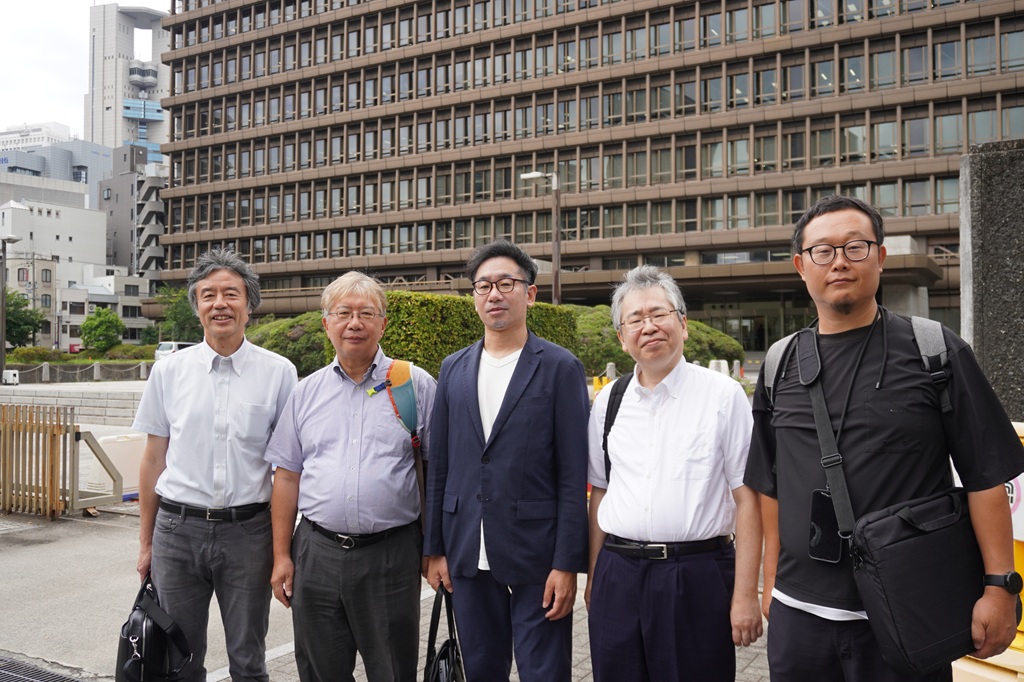
▲初回期日に臨む弁護団、中央は原告 中林 純 教授
社会的意義
情報公開制度は、行政が何を、どのように決め、税金をどのように使っているのかを、市民が確かめるための制度です。
たとえ開示決定が出ても、情報を受け取るために数百万円を支払わなければならないのであれば、研究者、ジャーナリスト、市民団体、そして一般の市民が情報を検証することは困難になります。形式上は情報公開の権利があっても、実際には使えない制度になりかねません。
国は2019年、行政文書につき作成から保存、廃棄・移管までを一貫して電子的に管理する方針を決めました。一連の不適正管理等の不祥事を踏まえての決定ですが、これにより電子データを開示請求する者の費用負担の軽減も期待されました。
しかし、今回の手数料決定は、行政文書のデジタル化の恩恵を開示請求者には与えない、というものです。
情報公開請求権があっても、開示決定がされても、実施手数料がCD-ROM1枚で数百万円というのでは、現実に開示を受けることはできません。
この訴訟は、手数料額を法的に争う道を開き、「実費の範囲内」で「利用しやすい手数料」はどのように算定されるべきかを明らかにしようとするものです。その判断は、本件事案の解決だけでなく、国の情報公開制度や、同様の仕組みを持つ地方公共団体の制度運用にも影響を与える可能性があります。公文書を「国民共有の知的資源」として、誰もが実際に利用できるものにできるか。デジタル時代の情報公開制度の根幹が問われています。
寄付金の使途
手数料額の適否を裁判で争うことができるか、情報公開法の趣旨に照らして適正な手数料はどのように定まるかは、いずれも定説のない争点で、参考となる裁判例も、学説もほとんどありません。そのため、裁判では、研究者に意見書作成を依頼し、書証として提出したいと考えており、意見書依頼費用をはじめとした裁判手続にかかる費用に充てたいと思います。
皆さまからのご寄付は、次の費用に充てさせていただきます。
- 行政法や情報公開制度の研究者に依頼する意見書の作成費用
- 調査、資料収集、出廷などに必要な交通費
- 報告会や情報発信にかかる費用
上記諸費用に充てた上で、あまりが出るようであれば、弁護団の着手金・報酬等に充てさせていただきます。
原告の思い
原告 中林 純 教授
情報公開法は、1999年の制定当時から電磁的記録(データ)を開示対象に含めています。今日のように国や自治体がDXやデジタル化を進めるはるか以前から、行政のもつ大量のデータの活用も見据えて制度がつくられていたことには、先見の明があったと思います。しかし今回の国土交通省への開示請求で明らかになったのは、実際の運用で高額な手数料が課され、電磁的記録が開示の対象となっている意味が損なわれていることです。しかも情報公開の手数料について、処分性の問題から行政訴訟で争う機会がないとなると、電磁的記録の開示には、行政側に大きな裁量が残されることになります。この点に私は強い驚きと危機感を覚え、本件訴訟を提起することにしました。
情報公開制度を通じて行政情報にアクセスし、政策や制度を検証することは、民主主義の根幹を支えるうえで重要な役割を持ちます。しかし情報公開だけが紙を基本とする運用にとどまるのは、時代に合っていませんし、私のような研究者にとっては大きなハードルにもなります。本件をきっかけに、国民の知る権利と、行政情報を研究や政策検証に活かす道が少しでも広がることを願っています。

担当弁護士からのメッセージ
フリーマン魂が怒っている
31年前(1995年)のニューヨークもとても暑かった。まだ我が国に存在しなかった「情報公開法」を正しく作るべく、弁護士会から情報自由法の国、アメリカへ調査の旅に出たのだ。ニューヨークでは情報公開推進のための州の委員会(Committee on Open Government)の事務局長フリーマンさんのお話を伺った。当時、情報公開法の費用については受益者負担として高額の費用が賦課される懸念があったので、我々は、その点についても質問した。フリーマンさんの答えは明快であった。「例えば、河川の汚染度が情報公開請求されることにより、州の環境改善につながるんだ。したがって、情報公開に関する費用はみんなで負担するべきなんだ」
今回、中林さんは、CD1枚を324万円で買わなければ、情報を渡さないと言われている。それを聞いて、31年前に叩き込まれたフリーマンさんの魂が激怒した。以上が、私が弁護団長を引き受けた所以である。
弁護団長 弁護士 畠田 健治
弁護団の紹介
畠田健治(弁護団長) 大阪弁護士会 ミネルヴァ法律事務所
坂本 団 大阪弁護士会 大川・村松・坂本法律事務所
豊永泰雄 大阪弁護士会 岡本・豊永法律事務所
前川拓郎 大阪弁護士会 あさひパートナーズ法律事務所
服部崇博 大阪弁護士会 服部崇博法律事務所
大川隆司 神奈川県弁護士会 大川隆司法律事務所
小沢弘子 神奈川県弁護士会 小沢法律事務所
行政への情報公開請求や、談合による自治体の損害回復のための住民訴訟などに取り組んできた「市民オンブズマン」のメンバーが中心になっています。
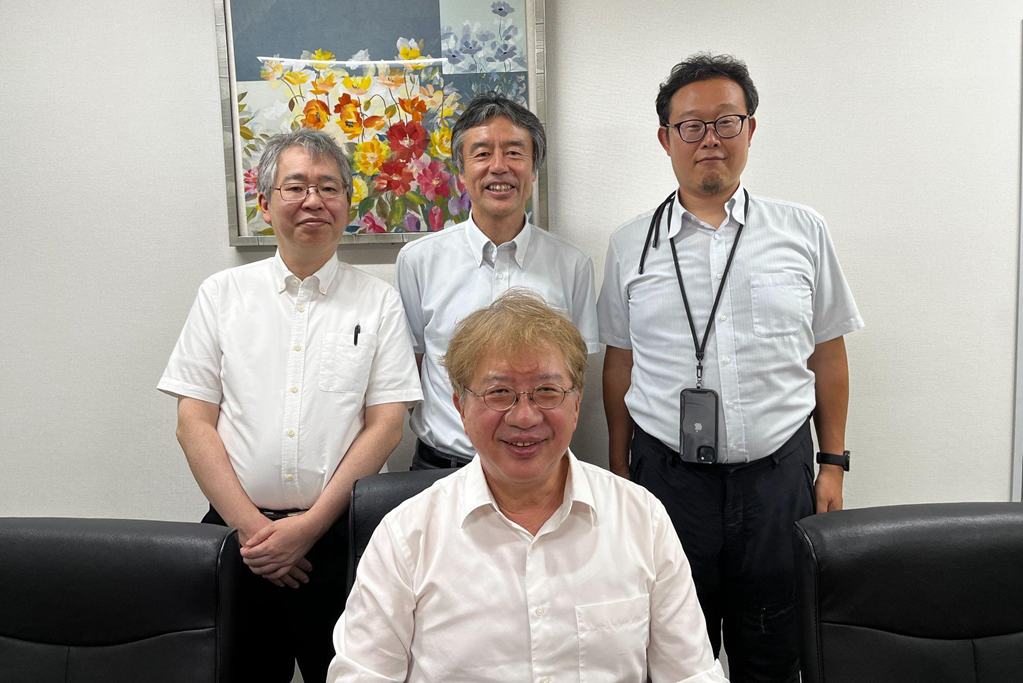
▲大阪の弁護団(前列 畠田健治弁護士 後列左から豊永泰雄弁護士・坂本団弁護士・服部崇博弁護士)
おわりに
談合をなくすための研究と、情報公開請求権の実効的な保障のために大事な訴訟だと思っています。
この問題を多くの方に知っていただくことも、大きな支援になります。訴訟へのご寄付と、情報の共有、今後の裁判へのご注目を、どうぞよろしくお願いいたします。
*Translated by Google Translate
Introduction: "Even if it's disclosed, will I still be unable to accept it?"
What if, even if the disclosure of administrative documents is permitted, you had to pay millions of yen to receive them? And what if you couldn't even object to how the fees were calculated? Even with an information disclosure system in place, it can be blocked by a "money barrier," preventing you from actually obtaining the information you need.
Public documents are "intellectual resources shared by the nation" (Article 1 of the Public Records Management Act). The Information Disclosure Act grants everyone the right to request disclosure of administrative documents. However, in this case, a disclosure fee of 3,245,350 yen was quoted for electronic data that could fit on just one CD-ROM.
This lawsuit seeks to explore legal options for challenging fee amounts and to determine how fees can be made more accessible, in order to prevent information disclosure from being hindered by a "money barrier."
▲Notification of Decision to Disclose Administrative Documents. The disclosure implementation fee is 3,245,350 yen.
Summary of the case
What is the use of bidding data?
Professor Jun Nakabayashi (Graduate School of Economics, Kyoto University) conducts research that statistically analyzes large amounts of publicly available bidding data released by the national and local governments to identify bids that may be rigged.
The effectiveness of that research came to light in February 2025 with the Oita City government-led bid-rigging scandal. At a press conference following the arrest of Oita City officials in connection with the bid-rigging case, the mayor revealed that "a year before the incident came to light, Professor Nakabayashi's research group had pointed out that there was a high possibility of bid-rigging in Oita City's bidding processes."
Analyzing bidding data over a long period of time can help identify unusual bids and prevent wasteful spending and fraud.
Disclosure on a single CD-ROM costs 3.24 million yen.
Such research requires at least 10 years' worth of bidding data. However, the period for which data is publicly available on national and local government websites is often limited to about one to three years, so obtaining the necessary historical data requires filing a request for information disclosure.
This time, Professor Nakabayashi requested the Hokkaido Development Bureau to disclose "bidding ranking certificates," which are construction bidding result data for the past 10 years. The information in question amounts to 15,732 A4 pages in paper form, but if converted to PDF data, it would fit on a single CD-ROM. However, the disclosure fee quoted by the Hokkaido Development Bureau was 3,245,350 yen.
Why did it become so expensive?
The Enforcement Order of the Information Disclosure Act stipulates that when electronic data is provided on a CD-ROM, a fee of "210 yen per file" will be added. However, there is no clear definition of how to count "one file".
While other regional development bureaus treat a year's worth of construction data as a single file, the Hokkaido Development Bureau counted each construction project as a separate file. As a result, 10 years' worth of data was compiled into 15,455 files, causing the fees to balloon to several million yen. On the other hand, for paper documents, the fee is generally 10 yen per sheet, and in this case, the payment would be 157,020 yen. Thus, a 20-fold price difference arises due to the difference in media, but structured electronic data that can be processed by a program is essential for Professor Nakabayashi's research.
The option of competing over fees was also closed off.
Professor Nakabayashi has previously filed an appeal under the Administrative Appeals Act to dispute a similar fee amount.
However, the government dismissed the appeal, stating that the notification of the fee amount was not an administrative disposition subject to review.
Professor Nakabayashi decided to take legal action to change the situation where he had to choose between accepting and paying the amount set by the government, or giving up on disclosing the information, and being unable to legally challenge the calculation of the fees even though he thought it was wrong.
Issues in the trial
This trial revolves around two main points of contention:
1. Can the person requesting disclosure legally challenge whether the fee is appropriate?
Up until now, the government has maintained the position that, regarding whether the disclosure fee is appropriate, the requester cannot challenge it in the Information Disclosure and Personal Information Protection Review Board or in court. As a result, the requester had no choice but to accept and pay the amount unilaterally notified by the government, or to give up on receiving the information altogether.
In this lawsuit, the primary claim is an "annulment lawsuit" based on Article 3, Paragraph 2 of the Administrative Case Litigation Act, in order to clarify that those requesting disclosure have the right to challenge whether the fee amount is appropriate. An annulment lawsuit is a lawsuit seeking the annulment of an illegal or unjust administrative disposition by an administrative agency. The plaintiff argues that since information cannot be disclosed without paying the fee amount determined by the government, the notification of the disclosure fee amount is an administrative act (administrative disposition) that directly affects the rights and obligations of citizens (those requesting disclosure). Based on this, the plaintiff first seeks to have the determination of the disclosure fee amount annulled.
However, as a backup in case the court determines that the notification of the fee amount does not constitute an "administrative disposition" subject to an action for annulment, a "party action" based on Article 4 of the Administrative Case Litigation Act has also been filed. A party action is a lawsuit seeking the court's judgment on a legal relationship under public law, rather than the annulment of an administrative disposition.
This preliminary claim seeks confirmation that there is no obligation to pay fees exceeding the fair value.
2. How should "easy-to-use fees" be determined?
The Information Disclosure Act requires that disclosure fees be "within the scope of actual costs" and that consideration be given to making them as affordable as possible.
The fee for this case, "10 years' worth of bidding ranking certificates for 15,455 construction projects, totaling 15,455 files, therefore the disclosure fee is 3,245,350 yen," is argued to be contrary to the spirit of this law for the following reasons.
◼︎ It is illogical for different government agencies to count "one file" in different ways.
Neither the Information Disclosure Act nor its enforcement regulations provide a clear definition of "one file" when calculating fees. However, this does not mean that administrative agencies are allowed to arbitrarily subdivide file data and count, for example, information on a single A4 sheet of paper as one file, as in this case.
Article 5, Paragraph 2 of the Public Records Management Act stipulates that administrative documents that are closely related to each other should be compiled into a single collection (administrative document file). In addition, as a general rule, the retention period for bidding-related documents from the same fiscal year expires simultaneously.
Public Records Management Act Article 5, Paragraph 2
The head of an administrative agency shall, in order to facilitate the efficient processing of administrative affairs or projects and the proper preservation of administrative documents, consolidate, in a timely manner, all closely related administrative documents (limited to those for which it is appropriate to have the same retention period) into a single collection (hereinafter referred to as an "administrative document file"), except for administrative documents that are deemed appropriate to be managed individually.
Given the nature of these documents, it is argued that in this case, at least one year's worth of "bidding ranking certificates" should be treated as a single file. According to this standard, the disclosure fee for one year's worth of information (one file) would be 210 yen, and 2100 yen for 10 years (1900 yen after deducting the 300 yen in revenue stamp fees paid when requesting disclosure).
◼︎ It is far removed from the actual cost of copying electronic data.
Article 16 of the Information Disclosure Act requires that fees be "within the scope of actual costs" and that consideration be given to making them "as affordable as possible."
The actual cost of copying electronic data onto a CD-ROM is negligible. It is clearly unreasonable and violates Article 16 of the Information Disclosure Act that receiving electronic data incurs a fee more than 20 times the cost of providing a printed copy, which is approximately 150,000 yen.
The digitization of administrative documents should, in principle, reduce not only the workload for the government but also the costs and burdens on those receiving the information. However, a system where fees are significantly higher simply because the information is in electronic format contradicts the principles of the Information Disclosure Act, which require fees to be "within the actual cost" and "as affordable as possible."
Article 16 of the Information Disclosure Act
Those who request disclosure or those who receive disclosure of administrative documents must pay a fee for the disclosure request or a fee for the implementation of the disclosure, respectively, in accordance with the provisions of a Cabinet Order, within the scope of actual costs, as prescribed by Cabinet Order.
2. When determining the amount of the fee referred to in the preceding paragraph, care must be taken to make it as affordable as possible.
3. The head of the administrative body may reduce or waive the fee referred to in paragraph 1 if he or she deems there are economic difficulties or other special circumstances, as prescribed by Cabinet Order.
◼︎ This goes against the purpose of the system reform.
The provisions regarding fees for electronic data in the Enforcement Order of the Information Disclosure Act were amended in 2006 in response to the problem that the fees would become excessively high if calculated based on the amount of data.
Previously, the fee was set at "220 yen for every 0.5 MB," but it was criticized for being too expensive, leading to the current regulations. Since a single CD-ROM has a capacity of 700 MB, even with a full load of information, the fee under the old regulations would have been 388,000 yen.
Nevertheless, if the revised regulations result in fees exceeding 3 million yen for data that fits on a single CD-ROM, it contradicts the purpose of the system reform, which was to reduce the burden of exorbitant fees. The revised fees being nearly ten times higher than those under the old regulations is simply outrageous.
▲The legal team at the first hearing; in the center is the plaintiff, Professor Jun Nakabayashi.
social significance
The information disclosure system is a system that allows citizens to verify what decisions the government makes, how they are made, and how tax money is being used.
Even if a disclosure order is issued, if researchers, journalists, civil society groups, and ordinary citizens have to pay millions of yen to receive the information, it will be difficult for them to verify the information. While the right to information disclosure exists in form, the system could become practically unusable.
In 2019, the government decided on a policy to manage administrative documents electronically from creation to storage, disposal, and transfer. This decision was made in response to a series of scandals involving improper management, and it was also expected to reduce the financial burden on those requesting disclosure of electronic data.
However, this fee decision means that those requesting disclosure will not receive the benefits of digitizing administrative documents.
Even if you have the right to request disclosure of information, and even if a disclosure decision is made, if the implementation fee is several million yen for a single CD-ROM, it's practically impossible to actually obtain the information.
This lawsuit aims to open the door to legally contesting fee amounts and clarify how "affordable fees" should be calculated within the scope of actual costs. The outcome of this case could not only affect the resolution of this particular case but also impact the national information disclosure system and the operation of similar systems in local governments. Can public documents be made into "intellectual resources shared by the public" that everyone can actually use? The very foundation of information disclosure systems in the digital age is being questioned.
Use of Donations
Whether the appropriateness of the fee can be contested in court, and how a fair fee is determined in light of the spirit of the Information Disclosure Act, are both issues for which there is no established theory, and there are very few relevant court precedents or academic theories. Therefore, in court, I would like to request researchers to prepare opinion letters and submit them as documentary evidence, and I would like to use the funds to cover the costs of the court proceedings, including the fees for requesting these opinion letters.
Your donations will be used to cover the following expenses.
- Cost of preparing expert opinions from researchers in administrative law and information disclosure systems.
- Transportation expenses necessary for investigations, document collection, court appearances, etc.
- Costs associated with reporting sessions and information dissemination.
After covering the above expenses, any remaining funds will be used for the legal team's retainer fees, remuneration, etc.
Plaintiff's thoughts
Plaintiff: Professor Jun Nakabayashi
The Information Disclosure Act has included electronic records (data) as items subject to disclosure since its enactment in 1999. I believe it was prescient that the system was created with the utilization of the vast amount of data held by the government in mind, long before national and local governments were advancing DX and digitalization as they are today. However, what has become clear from this disclosure request to the Ministry of Land, Infrastructure, Transport and Tourism is that in actual operation, high fees are imposed, undermining the meaning of making electronic records subject to disclosure. Moreover, if there is no opportunity to contest the information disclosure fees in administrative litigation due to the issue of administrative disposition, then the government will have considerable discretion in disclosing electronic records. I was deeply surprised and concerned about this point, and decided to file this lawsuit.
Accessing administrative information through the information disclosure system and scrutinizing policies and institutions plays a crucial role in supporting the foundations of democracy. However, relying solely on paper-based systems for information disclosure is outdated and presents a significant hurdle for researchers like myself. I hope that this case will serve as a catalyst for expanding the public's right to know and for broadening the ways in which administrative information can be used for research and policy evaluation.
Message from the assigned lawyer
Freeman's spirit is furious.
It was very hot in New York 31 years ago (1995). To properly create a "Freedom of Information Act," which didn't yet exist in our country, I embarked on a research trip to America, the land of freedom of information laws, through the bar association. In New York, we heard from Mr. Freeman, the executive director of the state's Committee on Open Government. At the time, there were concerns that the costs of the Freedom of Information Act would be high, based on a beneficiary pays principle, so we asked about that as well. Mr. Freeman's answer was clear: "For example, requests for information disclosure regarding river pollution levels can lead to environmental improvements in the state. Therefore, the costs related to information disclosure should be borne by everyone."
This time, Mr. Nakabayashi is saying that he won't give us the information unless we buy a single CD for 3.24 million yen. Upon hearing this, Mr. Freeman's spirit, which was instilled in him 31 years ago, became furious. That is why I agreed to take on the role of head of the legal team.
Chief of the legal team: Attorney Kenji Hatakeda
Introduction of the legal team
Kenji Haketada (Chief Attorney) Osaka Bar Association Minerva Law Office
Dan Sakamoto Osaka Bar Association Okawa, Muramatsu & Sakamoto Law Office
Yasuo Toyonaga Osaka Bar Association Okamoto & Toyonaga Law Office
Takuro Maekawa Osaka Bar Association Asahi Partners Law Office
Takahiro Hattori Osaka Bar Association Takahiro Hattori Law Office
Takashi Okawa Kanagawa Bar Association Takashi Okawa Law Office
Hiroko Ozawa Kanagawa Bar Association Ozawa Law Office
The group is primarily composed of members of "citizen ombudsmen" who have worked on issues such as requests for information disclosure from the government and resident lawsuits to recover damages incurred by local governments due to collusion.
▲Osaka legal team (Front row: Kenji Hatakeda, Attorney at Law; Back row from left: Yasuo Toyonaga, Attorney at Law; Dan Sakamoto, Attorney at Law; Takahiro Hattori, Attorney at Law)
In conclusion
I believe this is an important lawsuit for research aimed at eliminating collusion and for effectively guaranteeing the right to request disclosure of information.
Raising awareness of this issue among many people would be a great help. We would greatly appreciate your donations to the lawsuit, sharing information, and following the upcoming court proceedings.

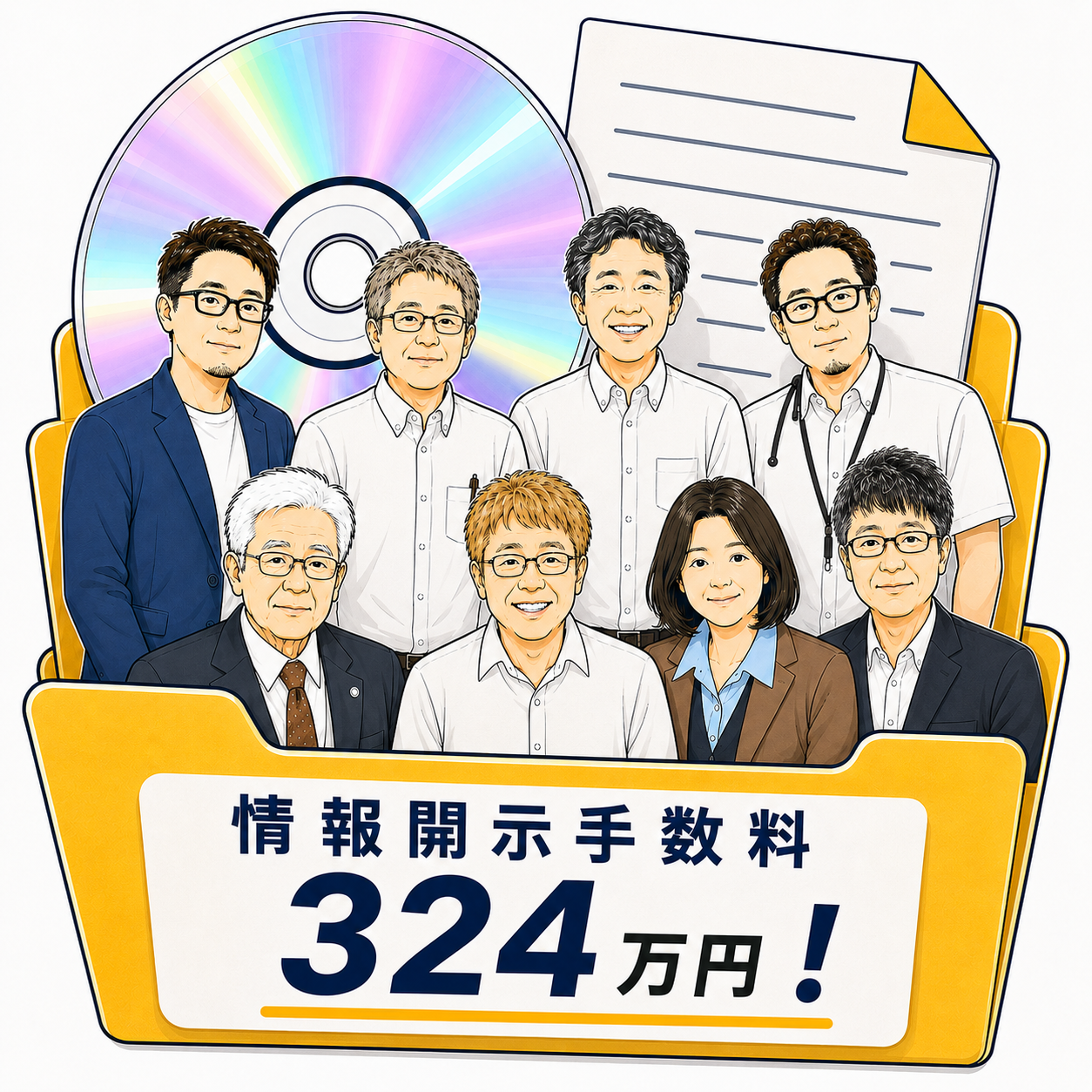
中林訴訟弁護団
中林純教授を原告とする訴訟の弁護団です。高額手数料とたたかい、開示を受ける権利を取り戻すため提訴しました。ご支援をお願いします!
ご連絡先:
〒530-0047
大阪府大阪市北区西天満5-1-9
大和地所南森町ビル9階
ミネルヴァ法律事務所 弁護士 畠田 健治
電話番号06-4709-1233 FAX番号06-4709-1235
ご連絡先:
〒530-0047
大阪府大阪市北区西天満5-1-9
大和地所南森町ビル9階
ミネルヴァ法律事務所 弁護士 畠田 健治
電話番号06-4709-1233 FAX番号06-4709-1235
あなたにおすすめのケース Recommended case for you




- 外国にルーツを持つ人々 Immigrants/Refugees/Foreign residents in Japan
- ジェンダー・セクシュアリティ Gender/Sexuality
- 医療・福祉・障がい Healthcare/Welfare/Disability
- 働き方 Labor Rights
- 刑事司法 Criminal Justice
- 公正な手続 Procedural Justice
- 情報公開 Information Disclosure
- 政治参加・表現の自由 Democracy/Freedom of Expression
- 環境・災害 Environment/Natural Disasters
- 沖縄 Okinawa
- 個人情報・プライバシー Personal information/Privacy
- アーカイブ Archive
- 全てのケース ALL