隠される「国の事故調査」プロセスを明らかに!訴訟 Attempting to force the government to release the details of their investigation into the tragic death at sea of 17 people in 2008
#情報公開
#Information Disclosure
現在の寄付総額 Current Total Raised
542,000円 ¥ 542,000
目標金額 Target amount
500,000円 ¥ 500,000
サポーター Supporter
56 人 56 supporters
 寄付する
Donate Now
寄付する
Donate Now


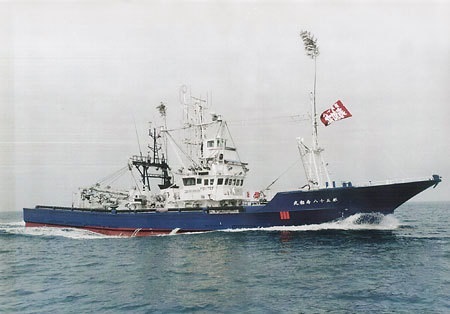
2008年、太平洋上で福島県の漁船・第58寿和丸が沈没し、17人が犠牲になった。「波による転覆、沈没」とした国の運輸安全委員会の結論は、生存者の証言や現場海域の油の状況と大きく食い違う。一部専門家が潜水艦との衝突も疑う中、調査報道グループ・フロントラインプレスは国に情報開示請求したが、調査に使用した資料のタイトルすら非開示になった。なぜ、調査プロセスを隠すのか。公文書の開示を求めて提訴した。 In 2008, a Japanese fishing boat suddenly sank, killing 17 people. Some experts suspected a collision with a submarine, but the government concluded the cause was waves. What is the truth?
第18回口頭弁論期日
18th Oral Argument Date
2025/2/26 22:19
2025年1月27日(月)午前11時30分から東京地裁602号法廷で第18回口頭弁論期日が開かれました。
この裁判はラウンドテーブル法廷で行うのが定着しています。毎回、円形のテーブルを囲んで、裁判長が主に見解を述べ、それに被告代理人、原告代理人が考えを述べるという、地味な事務作業についての意見交換をしているような口頭弁論期日が続いています。
原告から第5、第6,第7準備書面、書証(甲22~35)を提出しました。
準備書面を分けたのは、書いている内容が異なるので別々の準備書面にした方が読みやすいだろうと考えたからです。
第5準備書面では、不開示事由の個人識別情報(1号)の解釈論、モザイクアプローチの考え方、「慣行として公にされている」(情報)の理解の仕方、但書の立証責任を書いたうえで、被告が個人識別情報であることを理由に不開示としているもののうち、開示されるべきものがかなりあることを、個々の文書ごとに検討しました。文書量が膨大なので、4分冊中第1分冊について検討しました。
第6準備書面では、事故調査の透明性のために事故関係資料の公開こそが重要であることを指摘したうえで、第1分冊のなかで、被告が5号(意思形成過程情報)、6号(事務事業情報)に該当すると主張している箇所について個別に反論しました。
第7準備書面では、第2~第4分冊で個人識別情報に該当することを理由に不開示になっている箇所について個別に検討、反論しました。
第2~第4分冊のなかで被告が5号、6号に該当すると主張している箇所について、原告から反論する宿題が残りました。提出期限は3月11日(火)。
被告からは、開示請求対象文書のうちの不開示箇所についてこれまでより詳しい補足説明を書き込んだエクセル表が提出されました。
裁判長から、これまでエクセル表で原告被告の主張を類型化して比較検討してきたが、今回の原告主張を見ると、各文書の個性に応じた主張になっており、これまでの類型化では収まらなくなってきているような感じがしているという指摘がありました。
原告代理人から解説。
最初に裁判所が類型化を提案したときは、被告が対象文書を一切開示しておらず、抽象的な主張しかしていなかったので、裁判所が考える類型が抽象的になるのは仕方なかった。いまは個別の文書ごとに文書の表題が半分以上は明らかになり、内容面でも墨塗だらけではあるが少し部分開示されたことで、全くわからないときよりはマシになってきた。これまでの類型化を維持するのは無理。さらに細分化するか、新たな分類をするか検討が必要だろう。
裁判長から、原告第7準備書面15頁の求釈明で乙④6の墨塗の※部分についてどのようなことが書かれているか全く推測できないという指摘があるが、説明できますか。
被告代理人から、提出者の氏名と所属先「等」。乙④6の※部分の説明のほか、乙①93及び94についても、※についての説明を補充する。乙④6について、エクセル表の不開示情報の部分を補足する。提出期限は2月12日。
原告代理人が墨塗箇所を指差して、「ここには何が書かれているのですか」と質問すると、被告代理人が即座に、「言えるわけないじゃないですか!」と感情的に言い返してきました。原告代理人としては、文書を開示したに等しいほど詳しく内容を説明してもらいたいわけでなく、どのような種類の情報が書かれているのですかと質問したつもりだったのですが、被告代理人はそうは受け止めなかったようです。
次回期日は3月18日(火)午後4時、602号法廷
The 18th oral argument hearing was held on Monday, January 27, 2025 from 11:30 a.m. in Courtroom 602 of the Tokyo District Court.
This trial has become a tradition to be held in a round table courtroom. Each oral argument session is held around a round table, with the presiding judge expressing his/her views, followed by the defendant's and plaintiff's attorneys expressing their views, in a manner that feels like an exchange of opinions on mundane administrative tasks.
The plaintiff submitted the fifth, sixth and seventh preparatory documents and documentary evidence (Exhibits 22 to 35).
The preparatory documents were separated because, since the contents are different, it was thought that it would be easier to read if they were separate documents.
In the fifth preparatory brief, I wrote about the interpretation of the personal identification information (item 1) as a reason for non-disclosure, the concept of the mosaic approach, how to understand "publicly known as a practice" (information), and the burden of proof for the proviso. I then examined each individual document and found that among the information that the defendant has withheld due to the fact that it is personal identification information, there are quite a few that should be disclosed. Since the amount of documents is huge, I examined only the first volume out of four volumes.
In the sixth preparatory document, we pointed out that it is important to make the accident-related materials public in order to ensure transparency in the accident investigation, and then we individually refuted the points in Volume 1 that the Defendant claimed to fall under items 5 (information on the decision-making process) and 6 (information on administrative operations).
In the seventh preparatory document, we individually examined and refuted the parts of Volumes 2 to 4 that were not disclosed because they constitute personal identification information.
The plaintiff now has the task of refuting the points in volumes 2 to 4 that the defendant alleges fall under items 5 and 6. The deadline for submission is Tuesday, March 11th.
The defendant submitted an Excel spreadsheet containing more detailed supplementary explanations about the parts of the documents that were not disclosed and were subject to the disclosure request.
The presiding judge pointed out that until now the claims of the plaintiff and defendant have been categorized and compared in Excel spreadsheets, but looking at the plaintiff's claims this time, he felt that they were being made according to the characteristics of each document, and that the previous categorizations no longer fit them.
Explanation from the plaintiff's attorney.
When the court first proposed the classification, the defendant had not disclosed any of the documents in question and had only made abstract claims, so it was inevitable that the classification the court came up with would be abstract. Now, more than half of the titles of each individual document have been made clear, and although the contents are mostly blacked out, some of them have been disclosed, so it is better than when they were completely unknown. It is impossible to maintain the classification up to now. It will be necessary to consider whether to further subdivide the documents or to create new classifications.
The presiding judge pointed out that in the request for clarification on page 15 of Plaintiff's Seventh Preparatory Document, it is impossible to guess what is written in the blacked-out * part of Exhibit ④6. Can you explain?
The defendant's attorney will provide the name and affiliation of the submitter. In addition to the explanation of the * part of Otsu ④ 6, we will also supplement the explanation of * for Otsu ① 93 and 94. Regarding Otsu ④ 6, we will supplement the non-disclosure information part of the Excel spreadsheet. The deadline for submission is February 12th.
When the plaintiff's attorney pointed to the blacked-out portion and asked, "What's written here?", the defendant's attorney immediately and emotionally retorted, "I can't tell you!" The plaintiff's attorney did not want the contents to be explained in detail, which would be tantamount to disclosing the document, but rather intended to ask what type of information was written there, but the defendant's attorney did not seem to take it that way.
The next hearing will be held on Tuesday, March 18th at 4pm in Courtroom 602.
第17回口頭弁論期日
17th Oral Argument Date
2024/11/7 17:48
2024年11月6日(水)午前11時から東京地裁602号法廷で第17回口頭弁論期日が開かれました。
被告から準備書面(12)と乙第18号証、乙第19号証の1,2(いずれも写し)が提出されました。
準備書面(12)は、これまでの準備書面に比べると、不開示部分と不開示理由の対比がかなりわかりやすくなっていました。
不開示になった文書がどういう文書でどういう内容が書いてあるか、不開示部分はどういうことが書かれているかという説明があって、それが情報公開法で定める不開示事由の何号に当たるか、なぜそのように言えるかということが、割と詳しめに書かれていたのです。
原告が最初に情報公開請求した時にこういう不開示処分の文書をくれれば、その後の審査請求や裁判はずっと楽になったのになあと溜息が出ます。
被告が新たに提出した書証は的外れの印象を受けました。
乙第18号証はIMO海難調査官マニュアル(抜粋)
国際的な海難事故の調査に関する手順では一国の判断で勝手に調査報告書案などを公表しないようにと書かれています。国際的な海難事故だと関係各国の利害対立が生じる可能性があるからこういう調整が必要になるのは当然でしょうね。
でも、第58寿和丸沈没事件の関係国は日本だけのはず。ならば、このマニュアルは関係ないのではないかと思います。被告は日本以外に関係国があると考えているのだろうか。
乙第19号証の1は国際民間航空条約第13付属書、2は訳文
これも国際民間航空に関するオーダーです。
そこには「事故又はインシデントの調査実施国は、次の記録を事故又はインシデント調査以外の目的に利用してはならない。」として、「事故調査当局が保管又は管理している次の記録」として、「調査当局が調査の過程で入手したすべての口述」「事故又はインシデント調査の最終報告書案」を挙げています。
第58寿和丸沈没事故でも多くの人の口述調書があります。また、最終報告書の案も複数あります。これらを開示しない理由に挙げているのでしょうが、国際的でも民間航空でもない第58寿和丸沈没事件にはこの条約は関係ないのではないかと思います。
裁判所でのやりとりは以下のような経過でした。
裁判長「被告準備書面(11)と(12)で個別的な主張全体が被告から出されました。裁判所では今回の被告書面を踏まえて一覧表の類型化を検討している。」
原告代理人「今回の書面で被告の主張がだいぶよくわかるようになったので、反論書面は書きやすくなったが、主張書面だけだと分量が多くなるので双方の主張の対比がやりにくくなりそう。一覧表がある方がわかりやすいと考えている。」
裁判長「裁判所でも過去の例に倣って類型化ができるかを考えているところです。
一覧表の※4(不開示情報の性質・種類)に書き込む類型について、裁判所の方で引き続き考えるとして、一覧表の※7(不開示事由の補足)をどうするかはもう少し考えたい。
原告からは、一旦、準備書面の形で被告準備書面(11)(12)に対する反論を出していただけたらと思う。
一覧表の※5(不開示情報の補足説明)や※6(不開示事由の条文)について、被告準備書面(12)の説明で、例えば乙①1について、今回の書面で、調査委託先候補であったことがわかった。この点を補足として入れ込んでいただくのがよいかなと。
被告準備書面(11)(12)には一覧表の※6(不開示事由の条文)には載っていなかった不開示事由が追加されたものや、逆に一覧表にある不開示事由が今回の書面には主張がないものもある。そこはどう考えればよいのか。
原告代理人「被告書面(12)について、それぞれの資料がどこから提供されたかについて、「酢屋商店の関係者」はわかるが、「関係者」「情報提供者」だけの記述があり、どういう立場が想像がつかない。誰から提供されているかは内容の信用性を考える上で重要な要素ので、せめてどのような書き分けなのかを教えてもらいたい。
被告代理人「情報提供者は明らかにできないもの。不開示事由該当性がわからないのであれば、原告書面でご指摘いただければ、こちらでも検討する。」
裁判長「「酢屋商店の関係者」「関係者」「情報提供者」を意識して書き分けをしていることはわかる。この点は原告書面の中でご指摘いただければと思う。
原告代理人「準備書面の形で、被告書面(11)(12)の反論を提出する。」
➡ 2025年1月10日提出〆切
被告代理人「年明けまでに表の埋め込みをする。」
➡ 2025年1月10日提出〆切
裁判長「双方が提出したものを検討する期間があった方がいいだろう」
次回期日:2025年1月27日(月)午前11時 602号法廷
The 17th oral argument hearing was held on Wednesday, November 6, 2024 at 11:00 a.m. in Courtroom 602 of the Tokyo District Court.
The defendant submitted preparatory brief (12) and Exhibit B-18 and Exhibit B-19-1 and -2 (all copies).
In preparatory document (12), compared to previous preparatory documents, the contrast between the parts that will not be disclosed and the reasons for not disclosing them is much easier to understand.
There was an explanation of what kind of document the withheld document was, what it contained, and what was written in the withheld parts.It also went into quite a bit of detail about which of the reasons for withholding information stipulated in the Information Disclosure Act it fell under, and why it could be said that way.
I can't help but sigh and think that if the plaintiffs had been given this kind of document of non-disclosure when they first made their request for disclosure of information, their subsequent review requests and trials would have been much easier.
The new documentary evidence submitted by the defendant seemed irrelevant.
Exhibit B No. 18 is the IMO Marine Accident Investigator Manual (excerpt)
The procedure for investigating international maritime accidents states that no one country should make public a draft investigation report or other information at its own discretion. In the case of an international maritime accident, there is a possibility that conflicts of interest may arise between the countries involved, so it is only natural that such coordination is necessary.
However, the only country involved in the sinking of the 58th Suwa Maru is Japan. In that case, I think this manual is irrelevant. I wonder if the defendant thinks there are other countries involved besides Japan.
Exhibit B No. 19, No. 1 is Annex 13 to the Convention on International Civil Aviation, No. 2 is the translation
This is also an order concerning international civil aviation.
It states that "Any country conducting an investigation into an accident or incident must not use the following records for any purpose other than the accident or incident investigation," and lists the following records as "records in the custody or control of the accident investigating authority" as "all statements obtained by the investigating authority in the course of the investigation" and "draft final report of the accident or incident investigation."
There are many oral statements from people involved in the sinking of the 58th Jyuwa Maru. There are also several draft final reports. I believe these are cited as reasons for not disclosing them, but I believe that the sinking of the 58th Jyuwa Maru, which was neither an international nor a civil aviation incident, is not related to this treaty.
The court proceedings went as follows:
The presiding judge said, "The defendant has presented its individual arguments in their entirety in the defendant's preparatory briefs (11) and (12). The court is considering categorizing the list in light of the defendant's preparatory briefs."
Plaintiff's attorney: "The defendant's arguments have become much easier to understand from this document, so it will be easier to write the rebuttal document. However, if we only had the written argument document, it would be too long and it would be difficult to compare the arguments of both sides. I think it would be easier to understand if there was a table."
"The court is also considering whether it is possible to create a categorization following past examples," the judge said.
While the court will continue to consider the types of information to be entered in *4 (nature/type of non-disclosure information) of the list, we would like to give further thought to what to do about *7 (additional information on reasons for non-disclosure).
We would like the Plaintiff to first submit a rebuttal to Defendant's Preparatory Briefs (11) and (12) in the form of a preparatory brief.
Regarding *5 (supplementary explanation of non-disclosure information) and *6 (provision of reasons for non-disclosure) in the table, the explanation in the defendant's preparatory brief (12) states that, for example, in regard to B-1-1, this brief revealed that the company was a candidate for the investigation contractor. I think it would be good to include this point as a supplementary explanation.
Defendant's preparatory briefs (11) and (12) contain additional reasons for non-disclosure that were not included in the table (Article on reasons for non-disclosure) (※6), and conversely, there are reasons for non-disclosure that are included in the table but are not asserted in the present documents. How should we think about this?
Plaintiff's attorney: "Regarding the defendant's document (12), we can see that "people related to Suya Shoten" were mentioned as sources of each document, but there is only mention of "people related to Suya Shoten" and "information providers," so we cannot imagine what position they were in. Who provided the documents is an important factor in considering the credibility of the contents, so we would like to know at the very least how they are differentiated.
Defendant's attorney: "We cannot reveal the source of the information. If you are unsure whether the information is subject to non-disclosure, please point it out in the plaintiff's written statement and we will consider it."
Presiding Judge: "I understand that you have consciously differentiated between 'a person affiliated with Suya Shoten,' 'a person affiliated with Suya Shoten,' and 'an informant.' I would like you to point this out in the plaintiff's written statement.
Plaintiff's Counsel: "We will submit a rebuttal to Defendant's Briefings (11) and (12) in the form of a preparatory brief."
→ Submission deadline: January 10, 2025
Defendant's attorney: "We will fill in the table by the new year."
→ Submission deadline: January 10, 2025
"It would be better if there was a period of time to consider what both sides submitted," the judge said.
Next hearing date: Monday, January 27, 2025, 11:00 a.m., Courtroom 602
第16回口頭弁論期日
16th Oral Argument Date
2024/11/1 15:32
2024年7月24日午後3時から東京地裁602号法廷で第16回口頭弁論期日が開かれました。
被告から準備書面(11)と乙③4の1(転覆沈没事故報告書)(差し替え版)を提出しました。
この書証では船長と機関長の個人情報を墨塗にし、その不開示事由を※4、※5に分けて説明しているのですが、住所・氏名を※4、海技免状を※5とすべきところを、船長を※4、機関長を※5としたために不開示事由の説明が意味不明のものになってしまっていました。そのため原告側では反論が書けませんでした。被告は、住所・氏名は※4、海技免状は※5に書き分けるという訂正をしました。形が整っただけのことで、正しい法解釈かどうかは別です。
準備書面(11)で、被告は、原告の1号該当性(個人情報)の主張について1つ1つ悉く反論してきました。特徴的なのは、1号カッコ書き(「他の情報と照合することにより、特定の個人を識別することができることとなるものを含む。」)を最大限に広げて解釈するというものです。例えば、勤務先法人名を墨塗にしている理由として、勤務先法人名がわかれば、その関係者が入手可能な当該法人の組織構成等の他の情報と照合すれば個人が識別することが可能になるからだとしています。この理屈が通るなら、情報公開される文書は墨塗だらけです。そういう事態を情報公開法が想定しているとはとても考えられません。
2号該当性については、第五十八寿和丸の所有者である株式会社酢屋商店関係の情報が公開されると、同社のノウハウが流出し競走上不利益を受けると書いているのですが、どういう発想なのか理解不能です。
5号該当性、6号該当性については、依然として、なになにのおそれがあるという主張を繰り返しているだけで、「独立行政法人(運輸安全委員会)の内部又は相互間における審議、検討又は協議に関する情報」(5号)への該当性、「独立行政法人(運輸安全委員会)が行う事務又は事業に関する情報」(6号)への該当性の説明がありません。
裁判所でのやりとりは以下のような経過でした。
裁判長から原告側に「進行についてご意見は?」という意向確認がありました。被告側の主張はかなり雑だと感じていましたが、被告側から書面が出ている以上次は原告側から反論書面を出す順番かと考え、「反論します」と答えました。
しかし、裁判長は「では、そうしてください」と言いませんでした。被告側に向かって「被告側で反論しているが、2号について、原告書面(4)の反論と思われるが、各論的な原告主張についての反論がない。5号及び6号も同様である。この点は反論しないということなのか。」と指摘しました。1号該当性の反論は個別にしているのに、2号、5号、6号については大雑把な主張しかしていないので、このような指摘になったものと考えられます。裁判長の「反論しないのか」という言い方は、反論しなければ被告側はこれ以上反論しなかったと裁判所は受け止めていいのか、というサインです。
被告代理人「2号について原告の各論の主張に反論する。」
裁判長「5号、6号については、原告第3準備書面で求釈明がなされているところでもある。文書ごとに説明していただけるなら。」
被告代理人「釈明部分について前向きに検討する。」
裁判長はさらに突っ込んだ発言をした。
裁判長「2号該当性について、原告第4準備書面10頁(は)以下の各論についての反論を被告にお願いしたい。1号のところは詳細に被告に書いていただいた。個人識別性について、勤務先の法人名であるとか、名字だけでも開示されるという主張があったが、法人名や役職を明らかにすると個人が特定されるというのは、法人の規模によっても異なるところである。役職についても同様である。この点もご検討いただきたい。」
被告代理人「一般に手に入る情報ではなく、近親者でも特定できるというスタンスなので、法人の規模ではないとは考えているが。」と反論。
裁判長「そのスタンスであることはわかるが、他の情報との照合については高裁判決もあるところなので。2号、5号、6号について被告から反論を補充していただくとともに、1号についてこの点をご検討いただければ。」
被告代理人「書面提出まで3か月いただきたい。」
被告の書面提出期限は10月23日になました。
今回も裁判長と被告代理人のやりとりが主でした。
次回期日は11月6日午前11時、602号法廷
The 16th oral argument hearing was held at 3:00 p.m. on July 24, 2024 in Courtroom 602 of the Tokyo District Court.
The defendant submitted a preparatory document (11) and Exhibit ③4-1 (Report on the capsizing and sinking accident) (replacement version).
In this document, the personal information of the captain and chief engineer is blacked out, and the reasons for non-disclosure are explained in *4 and *5. However, instead of the address and name being *4 and the seaman's license being *5, the captain was written as *4 and the chief engineer as *5, making the explanation for non-disclosure unclear. Therefore, the plaintiff side was unable to write a rebuttal. The defendant made the correction by writing the address and name as *4 and the seaman's license as *5. This merely puts the document in order, and whether it is a correct legal interpretation is another matter.
Contents of the Preparatory Documents (11)
We have refuted the plaintiff's claims of applicability of item 1 (personal information) one by one. What is notable is that the parenthetical part of item 1 ("including information that can identify a specific individual by comparing it with other information") is interpreted as broadly as possible. For example, the reason for redacting the name of the company where one works is that if the name of the company where one works is known, it would be possible to identify the individual by comparing it with other information available to the person involved, such as the organizational structure of the company. If this logic were to hold, documents that are made public would be full of redacted content. It is hard to imagine that the Freedom of Information Act anticipates such a situation.
Regarding the applicability of item 2, it is written that if information related to Suya Shoten Co., Ltd., the owner of the 58th Suwamaru, were to be made public, the company's know-how would be leaked and it would suffer a disadvantage in terms of competition, but I cannot understand what kind of thinking this is.
Regarding the applicability of items 5 and 6, the government continues to repeat its assertion that there is a risk of this or that, but gives no explanation as to whether the information falls under "information relating to deliberations, considerations or consultations within or between the independent administrative agency (Japan Transport Safety Board)" (item 5) or "information relating to the affairs or business conducted by the independent administrative agency (Japan Transport Safety Board)" (item 6).
The court proceedings went as follows:
The presiding judge asked the plaintiffs, "What are your thoughts on the proceedings?" I felt that the defendants' arguments were quite rough, but since the defendants had already submitted a written statement, I thought it would be the plaintiffs' turn to submit a written rebuttal, so I answered, "I will refute it."
However, the presiding judge did not say, "Well, please do so." He pointed out to the defendants, "The defendants are arguing, but regarding item 2, it seems to be a rebuttal to the Plaintiff's Document (4), but there is no rebuttal to the specifics of the Plaintiff's allegations. The same goes for items 5 and 6. Does this mean that you will not refute this point?" Although the defendants have individually refuted the applicability of item 1, they have only made general claims regarding items 2, 5, and 6, so it is likely that this was the reason for the criticism. The way the presiding judge said, "Are you not going to refute?" was a sign that the court could take it that the defendants would not refute any further if they did not refute.
Defendant's attorney: "We refute the plaintiff's arguments regarding item 2."
Presiding Judge: "Numbers 5 and 6 are also requested in the plaintiff's third preparatory brief. Could you please explain each document separately?"
Defendant's attorney: "We will positively consider the explanation."
The judge went even further.
Presiding Judge: "Regarding the applicability of item 2, I would like to ask the defendant to refute the details on page 10 of the Plaintiff's Fourth Preparatory Briefing. I have already asked the defendant to write in detail about item 1. Regarding personal identifiability, it has been argued that the name of the corporation where an individual works or even just their surname can be disclosed, but the fact that revealing the name of the corporation or job title can identify an individual differs depending on the size of the corporation. The same is true for job titles. I would like you to consider this point as well."
The defendant's attorney countered, "This is not information that is publicly available, and our stance is that even close relatives could be identified, so we don't think it's a matter of the size of the corporation."
Presiding Judge: "I understand that this is your stance, but there is already a high court ruling on the matter of comparing the information with other information. I would like the defendant to supplement his rebuttals with respect to items 2, 5, and 6, and I would like you to consider this point regarding item 1."
Defendant's attorney: "We would like three months to submit the documents."
The deadline for defendants to submit written submissions is October 23rd.
This time too, the main focus was on exchanges between the judge and the defendant's attorney.
The next hearing will be held on November 6th at 11:00 a.m. in Courtroom 602.
第15回口頭弁論期日
15th Oral Argument Date
2024/11/1 13:13
2024年5月17日午後4時から東京地裁602号法廷で第15回口頭弁論期日が開かれました。
3人の裁判官のうち裁判長以外の2人、右陪席裁判官と左陪席裁判官が交替しており、弁論手続を更新しました。原告被告の主張は従前どおり、という確認をするだけの手続です。
原告は第4準備書面(別紙一覧表あり)を陳述、証拠(甲第21号証)を提出しました。
準備書面の内容は、被告が不開示事由の根拠にしている情報公開法5条1号、2号、5号、6号該当性に対する反論です。
1号(個人情報)については、個人名だけでなく肩書や役職まで墨塗にしているので、これらすべてが個人情報として不開示事由に該当するという判断は誤りだと指摘しました。
2号(法人情報)については、「法人ノウハウ」「法人労務管理」を理由に墨塗にしていますが、同号は「正当な利益を害するおそれがある」ことを条件としており、被告はこの点について説明していません。
そのうえ、被告は2号該当性を主張しながら、同時に5号(独立行政法人内部の審議情報)や6号(独立行政法人の事務事業情報)にも該当すると主張していますが、同じ墨塗箇所が2号、5号、6号どれにも該当するというのは理解に苦しみます。
5号の対象になる文書は「国の機関、独立行政法人等、地方公共団体及び地方独立行政法人の内部又は相互間における審議、検討又は協議に関する情報」です。
6号の対象となる文書は「国の機関、独立行政法人等、地方公共団体又は地方独立行政法人が行う事務又は事業に関する情報」です。
どちらでも保護されるべきは行政機関等の事務運営の安定であり、そこで扱われる外部から取得した情報ではありません。
被告は5号「情報」、6号「情報」への該当性を示していません。これらの「情報」に該当しなければ、なになにのおそれがある、と主張しても5号や6号に該当する説明にはなりません。
国の主張はこのようなものです。
原告が甲第21号証として提出したのは、公表されている国立研究開発法人海上技術安全研究所が作成した『漁船転覆事故に係る解析調査報告書』です。被告は依然として第五十八寿和丸の重量重心計算結果等を不開示にしているのですが、2014年12月に山陰沖で発生した巻き網漁船の転覆事故について作成された調査報告書では、その付表1ないし3で重量重心計算結果等を公表しているのです。この海難事故では公表しておきながら第五十八寿和丸の海難事故では公開しないというのは恣意的としか言いようがありません。運輸安全委員会では他の海難事故の場合との比較検討をしていないのかもしれません。
裁判所でのやりとりは以下のような経過でした。
原告代理人「5号・6号について、被告からおそれについての主張があるが、前提として各号が定める「情報」に該当する必要がある。この点について吟味していただきたいと考えている。」
裁判長「2号・5号・6号は、おそれについても具体的なものが必要という主張もあるが、求釈明的な点もあると理解している。原告において一通り反論があったので、これについて、被告から反論していただければ。どのような形で書面を出すかについて、良い案はないが、1号は書面に反論する形でよく、他の不開示事由については「各論の中の総論」という位置付けだと思うので、まずは第4準備書面の反論について、準備書面の形で反論していただくことでよいのではないかと考えている。」
原告代理人「ヴォーンインデックス的なものにまでまだ至っていない」
1ページの一部に墨塗箇所があり、その前後の文章から墨塗箇所にどのようなことが書かれているかが、原告側にも裁判所にも同一内容のものとして認識できるまでになっていれば、不開示事由該当性の理解や的確な反論が可能になるのですが、本件の現状は全面墨塗が何ページにもわたって続くというものが多く、各ページに何が書いてあるのか全くわからない状態です。原告代理人が「ヴォーンインデックス的なものにまでまだ至っていない」と言ったのはこのような事情からです。
裁判長「まずは原告第4準備書面について反論していただくとして、このままでは抽象度が高く、蓋然性についても見えてこないところがある。真に該当する部分がどこなのか、がわかればなお良いと思う。」
被告代理人「2ヶ月後の7月17日までに準備書面を提出する。乙③4※印部分に一部修正があるので追って修正する。」
これは誤記の訂正。
次回期日は7月24日午後3時、602号法廷
The 15th oral argument hearing was held at 4:00 p.m. on May 17, 2024 in Courtroom 602 of the Tokyo District Court.
Of the three judges, the two other than the presiding judge, the right-hand associate judge and the left-hand associate judge, have been replaced, and the oral argument procedure has been updated. This is a procedure to simply confirm that the claims of the plaintiff and defendant remain the same as before.
The plaintiff presented the fourth preparatory document (see attached list ) and submitted evidence ( Exhibit A-21 ).
The contents of the preparatory documents are a rebuttal to the applicability of Article 5, Items 1, 2, 5, and 6 of the Information Disclosure Act, which the defendant uses as the basis for non-disclosure.
Regarding item 1 (personal information), we pointed out that since not only personal names but also titles and positions have been redacted, it is incorrect to conclude that all of this constitutes personal information that warrants non-disclosure.
Regarding item 2 (corporate information), it has been blacked out on the grounds of "corporate know-how" and "corporate labor management," but item 2 requires that there be a "risk of harming legitimate interests," and the defendant has not explained this point.
Furthermore, while the defendant asserts that the information falls under item 2, it also asserts that it falls under item 5 (information on deliberations within independent administrative agencies) and item 6 (information on the business operations of independent administrative agencies). However, it is difficult to understand how the same blacked-out areas can fall under items 2, 5, and 6.
Documents covered by item 5 are "information concerning deliberations, considerations or consultations within or between national government agencies, independent administrative agencies, local governments and local independent administrative agencies."
Documents covered by item 6 are "information concerning the affairs or business conducted by national government agencies, independent administrative agencies, local governments, or local independent administrative agencies."
In either case, what needs to be protected is the stability of the administrative operations of government agencies and other organizations, not the information obtained from outside that is handled there.
The defendant has not demonstrated that the information falls under item 5 "information" or item 6 "information." If the information does not fall under these items, even if the defendant claims that there is a risk of something, it will not be an explanation that falls under item 5 or 6.
This is the state's argument.
The plaintiff submitted as Exhibit 21 the published "Analysis and Investigation Report on the Fishing Boat Capsizing Accident" prepared by the National Maritime Research and Development Agency, National Institute of Maritime Science and Technology. The defendant continues to withhold the results of the weight and center of gravity calculations for the Gohachi Suwa Maru, but in the investigation report prepared for the capsizing accident of a purse seine fishing boat that occurred off the coast of San'in in December 2014, the results of the weight and center of gravity calculations are published in Appendix 1 to 3. It can only be said that it is arbitrary to publish the results of this marine accident but not the Gohachi Suwa Maru marine accident. The Japan Transport Safety Board may not have compared this with other marine accidents.
The court proceedings went as follows:
Plaintiff's attorney: "The defendant has made a claim regarding items 5 and 6, but as a prerequisite, the information must meet the criteria for each item. We would like you to examine this point carefully."
Presiding Judge: "There is an argument that specific details are required for the fears of items 2, 5, and 6, but I understand that there are also points that require clarification. The plaintiff has made a full rebuttal, so I would like the defendant to refute this. I do not have a good idea of what form the document should take, but I think that a rebuttal to item 1 would be sufficient, and that the other grounds for non-disclosure should be positioned as a "general argument within the specific arguments," so I think that it would be fine to first have the defendant refute the rebuttal to item 4 in the form of a preparatory document."
Plaintiff's attorney: "We haven't yet reached a point where it's like the Vaughan Index"
If there was a part of a page that was blacked out, and the plaintiff and the court could recognize what was written in the blacked-out part from the text before and after it, it would be possible to understand whether the reason for non-disclosure applies and to make an appropriate counterargument, but in this case, many pages are completely blacked out, and it is completely unclear what is written on each page. This is why the plaintiff's attorney said, "We haven't yet reached the stage of something like a Vaughn Index."
Presiding Judge: "First, I would like you to refute the Plaintiff's fourth preparatory document. As it stands, it is highly abstract, and the probabilities are unclear. It would be better if we could clarify which parts are truly relevant."
Defendant's attorney: "We will submit the preparatory documents by July 17th, two months from now. There are some corrections to be made to the part marked with * in B34. We will make the corrections at a later date."
This is a correction of a typo.
The next hearing will be held on July 24th at 3pm in Courtroom 602.
第14回口頭弁論期日
14th Oral Argument Date
2024/11/1 12:31
2024年3月15日午前11時から東京地裁602号法廷で第14回口頭弁論期日が開かれました。
期日前に被告から書証として第3分冊、第4分冊も送られてきました。これで情報公開請求対象の文書全部について写しが提供されました。
期日では被告から準備書面(10)が提出されました。
内容は調査資料・第3分冊の不開示事由一覧表3枚、第4分冊の不開示事由一覧表2枚。
原告側からは2022年12月以来に第3準備書面を提出しました。1年以上原告側から主張書面を出すまでもない、裁判所から被告に対する説得交渉が続いていたということです。
以下で第1分冊と第2分冊の不開示の実態を少し説明します。
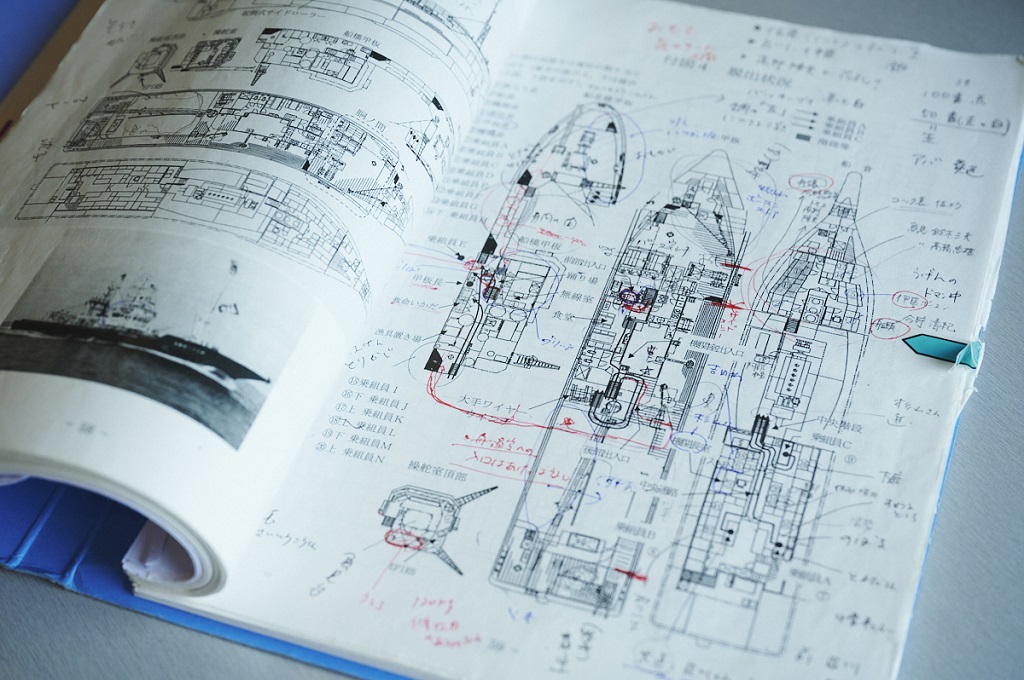
第1分冊(乙①1~102)の内容は口述を含む本件事故関係者からの聞き取り等に関する資料で、厚さ約8cm
・「■■■調査について」(乙①1)は、8頁のうち「改」「調査」「実施機関」「調査方法」だけが開示され、他はすべて墨塗。
・「■■■の手引き」(乙①2~6)は、「改訂」「目次」だけが開示され、他はすべて墨塗。だれがどのような項目について書いたのかさえわからない。
・横浜地方海難審判理事所宛ての「第58寿和丸の■■について(回答)」(乙①8)は回答日も回答者も回答内容もすべて墨塗。
・第58寿和丸と「他の船」の船舶国籍証書、船舶国籍証書検認期限指定書、船舶検査証書、船舶検査手帳、動力漁船登録票(乙①9~61)は数字部分がほぼすべて墨塗。
・第58寿和丸の完成重心試験成績書及び復元性報告書、漁船原簿抹消謄本、乗組員名簿、■■数量表、機関室所管系統図、サウンディングテーブル、排水量等曲線図、試運転成績書、完成要目表、管記号・略号表、機関室全体装置図、一般配置図■■■、等々(乙①62~102)はほぼ全部墨塗。
第2分冊(乙②1~55)の厚さは約9cm
・事故の聞き取り内容はすべて墨塗、誰から聞き取ったのかもわからない。
・「■■■に関するアンケート」(乙②1)とあって、何に関するアンケートかわからないようになっているが、「本アンケートは、・・・事故の原因調査のために行うものです。」と書かれているから、「■■■」を隠すのは無意味のような気がする。
・鑑定書はほぼ墨塗。だれが何のためにどのような鑑定をしたかがわからないようになっている。
・23通の問答式の聞き取りメモ(乙②5~27)は聞き取りをした相手と問答の内容がすべて墨塗。
・捜索協力船名簿(乙②41)は「寿和丸」以外すべて墨塗。
・「■■■リスト」(乙②43)は何のリストかを隠しているが、すぐ下の表には「回収物」「備考」「数量」とあるから、回収物のリストに違いない。表題を隠す意味があるだろうか。
・証拠説明書には「論文***」(乙②45)とあるが、対応する証拠をみると、完全墨塗なので、何の論文なのかどころか本当に論文なのかという疑問さえ生じる。
・太平洋の気象に関する論文の抜粋(乙②49)全部開示になっていた。墨塗箇所を探したが、ない。それはよかったのだが、論文書籍の奥付がついてないので、書籍のタイトルもいつだれが書いたものかもわからない。これも一部不開示か。
・第82寿和丸・第22寿和丸・第2寿和丸・第31寿和丸の航海日誌・機関日誌(乙②55)
何も出てこなかった時期に比べれば、どのような箇所が不開示なのかが具体的にわかって来たので、不開示事由該当性を考える上ではだいぶやりやすくなってきました。
原告の主張書面では、被告の不開示事由のあてはめがあまりにも大雑把だったことから、情報公開法5条各号の(不開示事由)の意義や判断枠組み、1号(個人情報)、2号(法人情報)、5号(国の期間等の内部等審議検討情報)6号(事務事業情報)の解釈をして、あてはめがなってないと書きました。
これに対して、裁判長から、同じことの繰り返しになってもいいので、個々の文書ごとに不開示事由該当性を検討して、被告が作成した一覧表に原告の主張を組み入れてほしいと求められました。
膨大な文書の墨塗一ヵ所一ヵ所をみてその不開示事由該当性を説明する書面を書くのはかなりの時間を要する力仕事だなあと想像しながらも、一覧表で文書のタイトルを見る限り割と類型的ではあるので、何とかできそうとも思え、引き受けることにしました。
次回期日は5月17日午後4時、602号法廷。
The 14th oral argument hearing was held at 11:00 a.m. on March 15, 2024 in Courtroom 602 of the Tokyo District Court.
Prior to the hearing, the defendant sent the third and fourth volumes as documentary evidence. This provided copies of all documents subject to the disclosure request.
At the hearing, the defendant filed a brief (10) has been submitted.
The contents are three pages listing the reasons for non-disclosure in Volume 3 of the investigation materials, and two pages listing the reasons for non-disclosure in Volume 4.
The plaintiffs submitted the third preparatory brief since December 2022. The court has been continuing persuasive negotiations with the defendant for more than a year without the plaintiffs even having to submit a written statement of claim.
Below, we will briefly explain the actual situation regarding non-disclosure in Volumes 1 and 2.
The first volume (Part 1, No. 1-102) contains materials related to interviews with people involved in the accident, including oral statements, and is approximately 8cm thick.
- Regarding "■■■ Survey" (Otsu ①1), of the eight pages, only "Revised", "Survey", "Implementing agency", and "Survey method" are disclosed; everything else has been blacked out.
・For the "■■■'s Guide" (Part 1, 2-6), only the "Revision" and "Table of Contents" have been disclosed, and everything else has been blacked out. It is not even clear who wrote what items.
- The "Response regarding ■■ of the 58th Juwa Maru" (Otsu ①8) addressed to the Yokohama Regional Marine Accident Tribunal has the response date, respondent, and response content all redacted.
- Almost all of the numbers on the ship's nationality certificate, ship's nationality certificate verification deadline designation, ship inspection certificate, ship inspection booklet, and powered fishing vessel registration slip (B①9 to 61) of the 58th Suwamaru and "other ships" have been blacked out.
- The completion centre of gravity test report and stabilisation report for the No. 58 Suwa Maru, certified copy of the erasure from the fishing vessel register, crew list, ■■ quantity table, engine room jurisdiction system diagram, sounding table, displacement curve diagram, trial run report, completion details table, pipe symbol and abbreviation table, engine room overall equipment diagram, general arrangement diagram ■■■, etc. (Otsu ① 62-102) have almost all been ink-washed out.
The thickness of the second volume (Part 2, No. 1 to 55) is approximately 9 cm.
- All interviews about the accident have been redacted, and it is not clear who interviewed them.
・It says "Survey regarding ■■■" (Otsu ②1), making it unclear what the survey is about, but since it says "This survey is being conducted to investigate the cause of the accident..." it seems pointless to hide the "■■■."
・The appraisal certificate is almost completely blackened out, making it impossible to tell who did the appraisal, why, or what kind of appraisal it was done.
- All 23 question-and-answer style interview notes (Otsu②5-27) have been redacted, including the people who were interviewed and the contents of the questions and answers.
- The list of ships assisting in the search (Bulk ②41) has all the names of the ships blacked out except for the "Juwamaru."
・The "■■■ List" (Otsu②43) hides what the list is for, but the table directly below it has "Recovered Items," "Notes," and "Quantity," so it must be a list of recovered items. Is there any point in hiding the title?
- The evidence explanation statement states "Paper ***" (Otsu ② 45), but when you look at the corresponding evidence, it is completely blacked out, which raises questions not only about what paper it is, but even whether it is really a paper at all.
・Excerpts from a paper on the weather in the Pacific Ocean (Part 2 49) were fully disclosed. I looked for the blacked-out parts, but they weren't there. That was fine, but the colophon of the paper book was not included, so I don't know the title of the book or when or who wrote it. Is this also partially withheld?
・Logbooks and engine logs of the 82nd Suwa Maru, the 22nd Suwa Maru, the 2nd Suwa Maru, and the 31st Suwa Maru (Otsu②55)
Compared to the time when nothing came up, we now have a clearer idea of exactly what aspects have not been disclosed, so it has become much easier to consider which reasons for non-disclosure apply.
In the plaintiff's written argument, the plaintiff wrote that the defendant's application of the reasons for non-disclosure was too broad, and that after interpreting the meaning and judgment framework of each item of Article 5 of the Information Disclosure Act (grounds for non-disclosure), including item 1 (personal information), item 2 (corporate information), item 5 (information for internal deliberation and consideration of government organizations, etc.), and item 6 (administrative and business information), the defendant's application did not match the stated criteria.
In response, the presiding judge asked that the defendant consider whether each document was a reason for non-disclosure, even if it meant repeating the same thing, and that the plaintiff's claims be incorporated into the list prepared by the defendant.
I imagined that it would be a time-consuming and physically demanding job to go through each and every blacked-out part of the enormous number of documents and write a document explaining why each one was grounds for non-disclosure, but looking at the titles of the documents in the list, they seemed fairly typical, so I thought it would be doable and decided to take on the job.
The next hearing will be at 4:00 p.m. on May 17th in Courtroom 602.
第13回口頭弁論期日
13th Oral Argument Date
2024/11/1 11:50
2023年12月1日午後2時から東京地裁602号法廷で第13回口頭弁論期日が開かれました。
被告から準備書面(9)が提出されました。
内容は調査資料(第2分冊)の不開示事由一覧表10枚。
前回期日に裁判長からの「不開示箇所の「※部分」は何か」という質問に、被告代理人が「後日、証拠として出したものを見てもらえばわかります。」と説明があり、第分冊と第2分冊がところどころ、ものによっては何ページにもわたって全面墨塗の文書が証拠として提出されました。
以下で不開示の実態を少し説明します。
第1分冊(乙①1~102)の内容は口述を含む本件事故関係者からの聞き取り等に関する資料で、厚さ約8cm
・「■■■調査について」(乙①1)は、8頁のうち「改」「調査」「実施機関」「調査方法」だけが開示され、他はすべて墨塗。
・「■■■の手引き」(乙①2~6)は、「改訂」「目次」だけが開示され、他はすべて墨塗。だれがどのような項目について書いたのかさえわからない。
・横浜地方海難審判理事所宛ての「第58寿和丸の■■について(回答)」(乙①8)は回答日も回答者も回答内容もすべて墨塗。
・第58寿和丸と「他の船」の船舶国籍証書、船舶国籍証書検認期限指定書、船舶検査証書、船舶検査手帳、動力漁船登録票(乙①9~61)は数字部分がほぼすべて墨塗。
・第58寿和丸の完成重心試験成績書及び復元性報告書、漁船原簿抹消謄本、乗組員名簿、■■数量表、機関室所管系統図、サウンディングテーブル、排水量等曲線図、試運転成績書、完成要目表、管記号・略号表、機関室全体装置図、一般配置図■■■、等々(乙①62~102)はほぼ全部墨塗。
第2分冊(乙②1~55)の内容は約9cm
・事故の聞き取り内容はすべて墨塗、誰から聞き取ったのかもわからない。
・「■■■に関するアンケート」(乙②1)とあって、何に関するアンケートかわからないようになっているが、「本アンケートは、・・・事故の原因調査のために行うものです。」と書かれているから、「■■■」を隠すのは無意味のような気がする。
・鑑定書はほぼ墨塗。だれが何のためにどのような鑑定をしたかがわからないようになっている。
・23通の問答式の聞き取りメモ(乙②5~27)は聞き取りをした相手と問答の内容がすべて墨塗。
・捜索協力船名簿(乙②41)は「寿和丸」以外すべて墨塗。
・「■■■リスト」(乙②43)は何のリストかを隠しているが、すぐ下の表には「回収物」「備考」「数量」とあるから、回収物のリストに違いない。表題を隠す意味があるだろうか。
・証拠説明書には「論文***」(乙②45)とあるが、対応する証拠をみると、完全墨塗なので、何の論文なのかどころか本当に論文なのかという疑問さえ生じる。
・太平洋の気象に関する論文の抜粋(乙②49)全部開示になっていた。墨塗箇所を探したが、ない。それはよかったのだが、論文書籍の奥付がついてないので、書籍のタイトルもいつだれが書いたものかもわからない。これも一部不開示か。
・第82寿和丸・第22寿和丸・第2寿和丸・第31寿和丸の航海日誌・機関日誌(乙②55)
何も出てこなかった時期に比べれば、どのような箇所が不開示なのかが具体的にわかって来たので、不開示事由該当性を考える上ではだいぶやりやすくなってきました。
第3、第4分冊は、2024年2月末までに証拠として提出予定とのことでした。当然、これもあちこち墨塗で出てくるはずです。
適否を的確に判断できるかどうかを検討し、判断できなければその原因について求釈明することになりました。
次回期日は3月15日午前11時、602号法廷。
The 13th oral argument hearing was held at 2:00 p.m. on December 1, 2023 in Courtroom 602 of the Tokyo District Court.
The defendant has submitted brief (9).
The contents are 10 pages listing reasons for non-disclosure of investigation materials (volume 2).
At the previous hearing, in response to a question from the presiding judge asking "What is the '※ part' of the undisclosed portions?" the defendant's attorney explained, "You will understand when you look at the evidence we will submit at a later date." Parts of Volume 1 and Volume 2 were then submitted as evidence, with some documents completely blacked out in places, and in some cases spanning several pages.
Below, we briefly explain the reality of non-disclosure.
The first volume (Part 1, No. 1-102) contains materials related to interviews with people involved in the accident, including oral statements, and is approximately 8cm thick.
- Regarding "■■■ Survey" (Otsu ①1), of the eight pages, only "Revised", "Survey", "Implementing agency", and "Survey method" are disclosed; everything else has been blacked out.
・For the "■■■'s Guide" (Part 1, 2-6), only the "Revision" and "Table of Contents" have been disclosed, and everything else has been blacked out. It is not even clear who wrote what items.
- The "Response regarding ■■ of the 58th Juwa Maru" (Otsu ①8) addressed to the Yokohama Regional Marine Accident Tribunal has the response date, respondent, and response content all redacted.
- Almost all of the numbers on the ship's nationality certificate, ship's nationality certificate verification deadline designation, ship inspection certificate, ship inspection booklet, and powered fishing vessel registration slip (B①9 to 61) of the 58th Suwamaru and "other ships" have been blacked out.
- The completion centre of gravity test report and stabilisation report for the No. 58 Suwa Maru, certified copy of the erasure from the fishing vessel register, crew list, ■■ quantity table, engine room jurisdiction system diagram, sounding table, displacement curve diagram, trial run report, completion details table, pipe symbol and abbreviation table, engine room overall equipment diagram, general arrangement diagram ■■■, etc. (Otsu ① 62-102) have almost all been ink-washed out.
The contents of the second volume (Part 2 1-55) are approximately 9 cm
- All interviews about the accident have been redacted, and it is not clear who interviewed them.
・It says "Survey regarding ■■■" (Otsu ②1), so it is unclear what the survey is about, but since it says "This survey is being conducted to investigate the cause of the accident...", it seems pointless to hide the "■■■."
・The appraisal certificate is almost completely blackened out, making it impossible to tell who did the appraisal, why, or what kind of appraisal it was done.
- All 23 question-and-answer style interview notes (Otsu②5-27) have been redacted, including the people who were interviewed and the contents of the questions and answers.
- The list of ships assisting in the search (Bulk ②41) has all the names of the ships blacked out except for the "Juwamaru."
・The "■■■ List" (Otsu②43) hides what the list is for, but the table directly below it has "Recovered Items," "Notes," and "Quantity," so it must be a list of recovered items. Is there any point in hiding the title?
- The evidence explanation states "Paper ***" (Otsu ② 45), but when you look at the corresponding evidence, it is completely blacked out, which raises questions not only about what paper it is, but even whether it is really a paper at all.
・Excerpts from a paper on the weather in the Pacific Ocean (Part 2 49) were fully disclosed. I looked for the blacked-out parts, but they weren't there. That was fine, but the colophon of the paper book was not included, so I don't know the title of the book or when or who wrote it. Is this also partially withheld?
・Logbooks and engine logs of the 82nd Suwa Maru, the 22nd Suwa Maru, the 2nd Suwa Maru, and the 31st Suwa Maru (Otsu②55)
Compared to the time when nothing came up, we now have a clearer idea of exactly what aspects have not been disclosed, so it has become much easier to consider which reasons for non-disclosure apply.
The third and fourth volumes are scheduled to be submitted as evidence by the end of February 2024. Naturally, these will also be blacked out in places.
We will consider whether it is possible to accurately judge the appropriateness of the decision, and if we are unable to do so, we will request an explanation for the reason.
The next hearing will be held on March 15th at 11:00 a.m. in Courtroom 602.
第12回口頭弁論期日
12th Oral Argument Date
2024/7/2 12:44
2023年9月8日午後2時から東京地裁602号法廷で第12回口頭弁論期日が開かれました。
被告から準備書面(8)が提出されました。
内容は調査資料(第1分冊)の不開示事由一覧表20枚です。21枚目は裁判所が示した書式。これに沿って不開示情報の説明が一覧になっています。
本体の文書が証拠として出て来ていないので、裁判長から「不開示箇所の「※部分」は何か」という質問があり、被告代理人から「後日、証拠として出したものを見てもらえばわかります。」との説明がありました。
原告から「文書の章ごとのタイトルくらいは開示していただきたい」と言うと、被告代理人は「タイトルや内容が推知できる部分はできるだけ開示するつもりだ。」という回答。
裁判長から「文書の標目もまだ出ていない状況なので、文書の内容を推知するのが難しい状況だ。」と指摘。
すると被告代理人から「8月31日付けの部分開示決定(第Ⅰ分冊)を原告宛に出している。今回の表は打ち直した処分に対応する形になっている。部分開示した文書では、「※部分」の不開示理由と、「その余」の不開示事由を書き分けている。書式等の枠の部分は基本的に開示するようにしている。」という説明。
全部不開示だったのに比べると格段の進歩とは言える・・・
被告代理人「今後、第2、3も同じくらいの量で、第4分冊は第1分冊より少し少ないくらい。」
裁判長「第2分冊の不開示理由一覧についても作成中だと思うが、11月初旬にできるか?」
被告代理人「処分打ち直し後、書証として出すのに1週間ほどのタイムラグが出る」
裁判長「次回期日は書証も出た後に入れた方がよさそう」
原告代理人「次回までに開示文書を見て反論の仕方を検討するが、実際に書面提出するのは期日で議論してからがよいと思う」
裁判長「調査資料一式について一通り処分の打ち直しをしてもらった後で、文書の標目の検討に戻ることになるだろう」
被告代理人「第1分冊の書証は9月20日くらいに提出する見込み。第2分冊の表は11月8日まで、第2分冊の書証は11月20日まで」
次回期日は12月1日午後2時、602号法廷。
The 12th oral argument hearing was held at 2:00 p.m. on September 8, 2023 in Courtroom 602 of the Tokyo District Court.
The defendant has submitted a brief (8) .
The contents are 20 pages of a list of reasons for non-disclosure of the investigation materials (volume 1). The 21st page is a format specified by the court. Following this, an explanation of the non-disclosure information is listed.
Since the main documents had not been presented as evidence, the presiding judge asked, "What is the '※ part' that has not been disclosed?" The defendant's attorney explained, "You will understand if you look at the evidence presented at a later date."
When the plaintiff said, "We would like you to disclose at least the titles of each chapter of the document," the defendant's attorney responded, "We intend to disclose as much as possible from which the titles and contents can be inferred."
The presiding judge pointed out, "Since the document's heading has not yet been revealed, it is difficult to infer its contents."
The defendant's attorney then explained, "We have issued a partial disclosure decision (Volume 1) dated August 31st to the plaintiff. The current table corresponds to the retyped disposition. In documents that have been partially disclosed, we have written separate reasons for not disclosing the "※ part" and the "remainder." We generally try to disclose the parts that are boxed in formats, etc."
This is a big improvement over when everything was withheld...
Defendant's attorney: "The second and third volumes will be about the same amount, and the fourth volume will be a little less than the first volume."
Presiding Judge: "I believe you are also currently compiling the list of reasons for non-disclosure in Volume 2. Can you complete it by early November?"
Defendant's attorney: "After the disposition is retyped, there will be a time lag of about one week before it can be submitted as documentary evidence."
Presiding Judge: "It would be better to set the next hearing after the documentary evidence is released."
Plaintiff's attorney: "We will look at the disclosure documents before the next hearing and consider how to refute them, but I think it would be best to submit written documents after the arguments at the hearing."
The presiding judge said, "After we have had the entire set of investigation materials retyped, we will return to examining the document headings."
Defendant's attorney: "The documentary evidence for the first volume is expected to be submitted around September 20th. The front pages for the second volume are due by November 8th, and the documentary evidence for the second volume by November 20th."
The next hearing will be held on December 1st at 2:00 p.m. in Courtroom 602.
第11回口頭弁論期日
11th oral argument date
2023/12/24 13:26
2023年5月29日午後2時から東京地裁602号法廷で第11回口頭弁論期日が開かれました。
裁判所の構成が変わったので、原告被告とも従前に主張を維持するとして、弁論手続を更新しました。
原告は、訴えの一部取り下げ、補充書を陳述し、被告は訴えの一部取下げに同意しました。原告が訴えの一部取り下げをしたのは被告がこれまで不開示にしていた箇所の一部を開示したことで訴訟で争う意味がなくなったからで、実質的な一部勝訴です。これで裁判での争いの範囲が手続上少し狭くなりました。
被告からは準備書面(7)が提出されました。
対象文書は第1分冊(船舶関係)、第2分冊(口述メモ、質問調書など)、第3分冊(海技免状、小型船舶操縦免許証など)、第4分冊(審議報告書(案)、関係者の意見など)に分類されており、そのうち第2分冊と第3分冊の文書の標目が以前より少し開示される内容になっていました。
裁判長から原告側にこれで原告側から個別の反論ができるようになったかという質問があり、原告側からはこの程度の開示度では具体的な主張はできないと説明しました。「例えば、第2分冊4番以降について、個人識別できても会社代表者であれば、慣行として公にされているので、公務員でなくても開示されるはずです。第1分冊の「手引き」についても、何の手引なのかわからないので、墨塗り部分の違法性を具体的に主張することはできません。第1分冊14番以降についても、船の名前ではないかと思いますが、よくわかりません。このままでは、こちらはざっくりとした主張しかできません。不開示事由につながる具体的な理由の説明がないと、検討が難しいです。」
ということは、原告側と同じ書面しかみていない裁判所にとっても不開示処分が「適法だ」という判断ができないはずだということです。
すると、被告代理人から「文書の標目と並行して、調査資料一式の主張と対応についても宿題になっていましたが、これについて処分の変更を検討しています。中身の分類を進めて、それについて見ていただければ、ある程度わかるかもしれません。」
これは、調査資料の内容についても開示を考えているという説明です。
裁判長「不開示情報の説明の補足の問題ということになりますね。標目だけ議論しても行き詰まる気はたしかにします。」
被告代理人「調査資料一式について進めます。」
原告代理人「調査資料一式が一定程度開示されるのであれば、タイトルについても検討しやすくなります。」
裁判長「標目自体の説明は少し置いておき、調査資料一式について被告にご準備いただきましょう。」
被告代理人「基本的には分冊ごとに進めますが、第3分冊の量は少ないので、そこは他とまとめてやります。第1分冊に3ヶ月。あとは2ヶ月くらいで、年内に終わらせることができればと思います。」
裁判長「夏季休廷もあるので、8月までに第1分冊をやり、これについて原告側が反論をしている間に、他の分冊のほうを進める、という進め方になりますか。」
被告代理人「第1分冊から順に、順次、変更していきます。
裁判長「処分のやり直しに応じて、原告側で順次、訴え変更等の必要な対応をしてください。」
原告代理人「墨塗りだけが多数枚続くものがあれば、その部分は何枚不開示という書き方をしてもらって構いません。」
被告代理人「そういう箇所はないと思います。8月31日までに第1分冊について表を作成し、書証として提出します。」
次回期日は9月8日午後2時、602号法廷。
The 11th oral argument hearing was held at 2:00 p.m. on May 29, 2023 in Courtroom 602 of the Tokyo District Court.
Because the composition of the court has changed, the plaintiff and defendant have agreed to maintain their previous positions and have updated the oral argument procedure.
The plaintiff withdrew part of the lawsuit and filed a supplementary statement, and the defendant agreed to the partial withdrawal. The plaintiff withdrew part of the lawsuit because the defendant disclosed some of the information that had not been disclosed until then, making it pointless to continue the lawsuit, and thus the plaintiff essentially won a partial victory. This narrowed the scope of the dispute in court procedurally a little.
The defendant submitted brief (7).
The documents in question are classified into Volume 1 (ship-related), Volume 2 (oral memos, question records, etc.), Volume 3 (maritime competency licenses, small boat operating licenses, etc.), and Volume 4 (deliberation reports (draft), opinions of related parties, etc.), and the headings of documents in Volumes 2 and 3 are now slightly more disclosed than before.
The presiding judge asked the plaintiffs whether they were now able to make individual counterarguments, and the plaintiffs explained that with this level of disclosure they could not make specific arguments. "For example, regarding items 4 and onwards in Volume 2, even if the individual can be identified, if the person is a company representative, it is customarily made public, so even if the person is not a public official, it should be disclosed. As for the "Guide" in Volume 1, we do not know what the guide is, so we cannot specifically argue that the blacked-out parts are illegal. As for items 14 and onwards in Volume 1, we think they are the names of ships, but we are not sure. As things stand, we can only make rough arguments. It is difficult to consider this without an explanation of the specific reasons for non-disclosure."
This means that even a court that has only seen the same documents as the plaintiff would not be able to determine that the non-disclosure decision was "lawful."
The defendant's attorney responded, "In addition to the headings of the documents, we were also given the task of determining the claims and responses to the set of investigation materials, and we are considering changing the disposition of this. If you could continue to classify the contents and take a look at them, we may be able to understand to some extent."
This is an explanation that they are considering disclosing the contents of the investigation materials as well.
Presiding Judge: "This is a question of supplementing the explanation of non-disclosure information. I certainly feel that we will reach a dead end if we only discuss the headings."
Defendant's attorney: "We will proceed with the complete set of investigation materials."
Plaintiff's attorney: "If the full set of investigation materials is disclosed to a certain extent, it will be easier to consider the title."
Presiding Judge: "Let's put aside the explanation of the heading itself for now and ask the defendant to prepare a set of research materials."
Defendant's attorney: "Basically we will proceed with each volume separately, but since the third volume is small, we will do it together with the others. The first volume will take three months. The rest will take about two months, so we hope to finish by the end of the year."
Presiding Judge: "There will be a summer recess, so will we proceed with the first part by August, and then while the plaintiffs are refuting it, we will proceed with the other parts?"
Defendant's attorney: "We will make the changes one by one, starting from the first volume.
The presiding judge said, "In accordance with the re-imposition of the disposition, the plaintiff side should take the necessary measures, such as changing the complaint."
Plaintiff's attorney: "If there are many pages that are just blacked out, you can write that those pages will not be disclosed."
Defendant's attorney: "I don't think there is any such section. I will prepare a table for Volume 1 by August 31 and submit it as documentary evidence."
The next hearing will be held on September 8th at 2:00 p.m. in Courtroom 602.
第10回口頭弁論期日
10th oral argument date
2023/12/20 18:29
2023年3月22日午後2時から東京地裁602号法廷で第10回口頭弁論期日が開かれました。
この日もラウンドテーブルで裁判官3人、原告代表の高田、原告代理人弁護士、被告代理人で“鼎談”が続きました。と言っても、相変わらず、ほとんどが裁判長から被告への確認と提案で、原告代表と原告代理人はその推移を見守っている感じでした。
裁判長から被告側に「従前の被告書面(6)添付の一覧より文書の標目の開示範囲が広がったので、これに合わせて不開示事由に関する主張を出してください。改訂した表はteamsにアップしてください。書面はいつ頃出せますか」
被告代理人「表の改訂と主張する不開示事由にも変更があるので、5月中旬に提出します。」
被告の開示範囲が広がったことを受けて、原告側は訴えの変更をすることになりました。少しずつではありますが、闘いの土俵が狭くなって来ているということです。
文書の標目は徐々に開示されて来ましたが、調査資料のなかみは全く開示されていません。裁判所としては調査資料の内容が全くわからないままでその不開示処分が適法かどうかの判断ができません。
そこで、裁判長はいくらかでも判断できるようにするために被告側に「不開示事由の主張はまだ抽象的な整理しかできていません。文書の標目の開示が進んだことに伴い、調査資料一式についての主張整理を表でできないかと考えて、teamsにアップしました。」と提案しました。
被告代理人は「ご提示いただいた方向で主張する方針で考えていますが、文書の量が多いので分割して段階的に提出させていただければと考えています。例えば、まず第1分冊について出すとか。次回期日までに、どのくらいのスケジュール感で提出できるかを説明できるようにします。」と答えました。
裁判長が「調査資料一式についても処分の変更をする意向はありますか」と探りを入れると、被告代理人は「現時点では予定はありません。」と拒絶しました。原告代理人が「文書の標目も調査資料内容も墨塗りでは文書の標目の不開示が適法なのかどうか判断できません。調査資料の内容でも文章の小見出しくらい出しても内容はわからないから出せるはずです。」と裁判長を援護し、裁判長が「タイトルが開示されたのだから、もう少し、調査資料についても一部開示されるようにも思うのですが。」と言い、被告代理人は「一覧表を作りながら、その点も含めて検討します。」と少し折れて来ました。
裁判長「仮に分冊毎になるとしても、主張に時間を要することは相当では無いと考えています。2ヶ月くらいでどうでしょうか」
被告代理人「文書数だけでなく、一つの文書だけで分量があるものもあるので。2ヶ月ではちょっときついと考えています。」
原告代理人「不開示部分とその理由は当初処分のときにやっているはずなので、普通はそんなにかかることではないはずです。担当者が苦労するのはわかりますが。」
原告は3月中に訴え変更を提出することにし、被告は5月22日までに書面を提出することになりました。
次回期日は5月29日午後2時、602号法廷。
The 10th oral argument was held on March 22, 2023 at 2:00 pm in Courtroom No. 602 of the Tokyo District Court.
On this day, "discussion" continued at the round table between the three judges, Takada, the plaintiff's representative, the plaintiff's attorney, and the defendant's attorney. However, as always, most of the proceedings were confirmations and suggestions from the presiding judge to the defendant, and the plaintiff representative and the plaintiff's attorney were watching the progress.
The presiding judge said to the defendant, ``The scope of disclosure of document headings has expanded from the list attached to the previous defendant's document (6), so please submit your argument regarding the reasons for non-disclosure accordingly.The revised table will be uploaded to teams. Please. When can you send me the written document?”
Defendant's attorney: ``There has been a change in the table revisions and the reasons for non-disclosure, so we will submit it in mid-May.''
In response to the defendant's expanded scope of disclosure, the plaintiff decided to change its complaint. The playing field is becoming narrower, albeit little by little.
Although the headings of the documents have been gradually disclosed, the contents of the research materials have not been disclosed at all. Without knowing the contents of the investigation materials, the court cannot determine whether the non-disclosure of the materials is legal.
Therefore, in order to be able to reach some degree of judgment, the presiding judge advised the defendant, ``The arguments for reasons for non-disclosure have only been summarized in an abstract way. I thought it would be possible to organize my arguments in a table, so I uploaded it to teams.''
The defendant's attorney said, ``We are planning to argue in the direction you have presented, but since there is a large amount of documents, we would like to divide them up and submit them in stages.For example, we would like to submit the first volume first. I will be able to explain how much of a schedule it will take to submit it by the next deadline.''
When the presiding judge asked, ``Do you have any intention to change the disposition of the set of investigation materials?'', the defendant's attorney refused, saying, ``We have no plans at this time.'' The plaintiff's attorney said, ``If you redact both the document headings and the contents of the investigation materials, it is impossible to judge whether the non-disclosure of the document headings is legal.Even if you only include subheadings of the contents of the investigation materials, you will not be able to understand the content, so you should be able to do so.'' '', the presiding judge said, ``Now that the title has been disclosed, I think some of the investigation materials will also be disclosed.'' The defendant's attorney replied, ``A list.'' I'll take this into consideration while making the project.'' I was a little disappointed.
Presiding Judge: “Even if it were divided into separate volumes, I don’t think it would take a considerable amount of time to make the argument. How about two months?”
Defendant's attorney: ``It's not just the number of documents, but also the amount of time that can be spent on just one document.I think two months is a little too long.''
Plaintiff's attorney: ``The non-disclosure portion and the reason for it should have been done at the time of initial disposition, so it shouldn't normally take that long.I understand that the person in charge would have a hard time.''
The plaintiff decided to file a change of complaint in March, and the defendant had until May 22nd to submit a written statement.
The next date is May 29th at 2:00 pm in courtroom 602.
第9回口頭弁論期日
9th oral argument date
2023/11/18 16:57
2023年2月1日午前11時30分から東京地裁601号法廷で第9回口頭弁論期日が開かれました。
前回期日のやりとりを踏まえて、被告が第1分冊から第4分冊の分類整理をしてくることになっていました。
前回期日に原告が指摘した個人識別情報に公務員氏名があるかどうかについては、公務員氏名はなし、一覧表には1号前段・後段の区別を書き込んできました。
裁判長から被告代理人に「文書の標目について一定程度開示する内容の準備書面を出していることからして、現在の不開示処分をやり直すことになるのではないか」という質問があり、被告代理人は「1カ月半程度で処分ををやり直す」と回答しました。
原告代理人は「事故報告書のたぐいであれば、評価の部分はともかく、事実関係の部分は相当程度開示できるはずだ。そうすれば、不開示部分について原告として反論する」と意見を述べました。
裁判長は「文書の標目さえ開示されない状況では、噛み合う議論はむずかしいと考えている」と、暗に、いや、かなり露骨に、文書の標目くらい全部開示しなければだめ
だろうという趣旨のことを言いました。
次回期日は3月22日午後2時、602号法廷。
The 9th oral argument session was held at 11:30 a.m. on February 1, 2023 in Courtroom 601 of the Tokyo District Court.
Based on the exchange on the previous date, the defendant was to sort and organize Volumes 1 to 4.
Regarding whether the personal identification information pointed out by the plaintiff on the previous date included the names of public servants, the names of public servants were not included, and the distinction between the first part and the second part of Item 1 was entered in the list.
The presiding judge asked the defendant's attorney, ``Since you have submitted a preliminary document that discloses a certain amount of the heading of the document, will the current non-disclosure disposition be reconsidered?'' The agent replied, ``The punishment will be redone in about a month and a half.''
The plaintiff's attorney opined, ``If it's an accident report, apart from the evaluation part, it should be possible to disclose a fair amount of the facts.Then, as the plaintiff, we can refute the parts that are not disclosed.'' Ta.
The presiding judge said, ``I believe that it is difficult to have a coherent argument in a situation where even the headings of the document are not disclosed,'' implicitly, or rather explicitly, saying that the entire heading of the document must be disclosed.
I said something to that effect.
The next date is March 22nd at 2:00 pm in courtroom 602.
調査報道グループ「フロントラインプレス」
■調査報道グループ「フロントラインプレス」
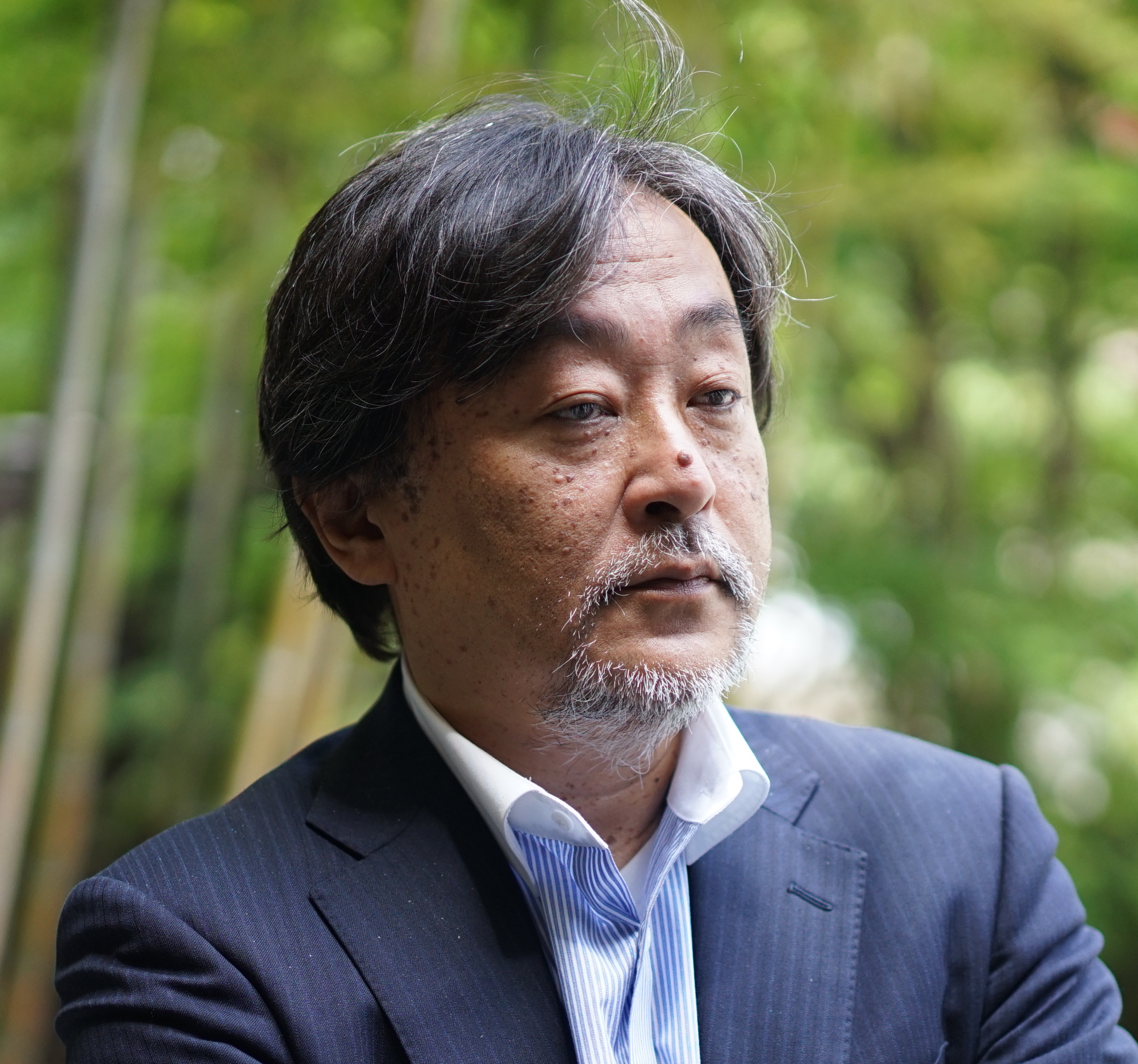
調査報道を専門とする独立系のグループ。2019 年5月から本格的な活動を始めた。グループには、フリージャーナリストや写真家、ドキュメンタリー映像作家、研究者、編集者、新聞社・テレビ局の記者ら30人余りが参加。調査報道の実践や取材ノウハウの研究・公開などを続けている。グループを束ねるのは、フロントラインプレス合同会社(本社所在地:高知県高知市、2019年4月設立)
連絡先:info★frontlinepress.jp (ご利用の際は★を@に変えてください)
■代表は高田昌幸。略歴は以下。
(たかだ・まさゆき)東京都市大学メディア情報学部教授/ジャーナリスト。1960年、高知県生まれ。高知追手前高校卒業、法政大学法学部政治学科卒業。1986年、北海道新聞社入社。小樽支社報道部、経済部(主に金融担当)、社会部(警察・司法、遊軍)、東京政治経済部(日銀・財務省、東証、外務省など担当)、報道本部次長(警察・司法、遊軍担当)、国際部ロンドン支局長、運動部次長などを経て2011年退社。2012年、高知新聞社入社。社会部副部長、報道部副部長。2017年3月退社。記者歴通算30年。北海道新聞社時代、北海道警察の裏金問題取材で取材班代表として日本新聞協会賞、日本ジャーナリスト会議大賞、菊池寛賞を受賞。2017年4月から東京都市大学メディア情報学部教授、2019年4月にフロントラインプレス合同会社を設立し、代表社員に。
著書・共著・編著に「権力VS調査報道」「権力に迫る『調査報道』」(いずれも旬報社)、「真実ー新聞が権力に跪いた日」(角川文庫)、「メディアの罠ー権力に加担する新聞・テレビの深層」「@Fukushimaー私たちの望むものは」(いずれも産学社)、「わたしと平成」(フィルムアート社)、「希望」「伝える技法」(旬報社)、「日本の現場ー地方紙で読む」(旬報社)ほか。部分執筆に「現代ジャーナリズム事典」(三省堂)ほか。
連絡先:masayuki_100★hotmail.com (ご利用の際は★を@に変えてください)
調査報道を専門とする独立系のグループ。2019 年5月から本格的な活動を始めた。グループには、フリージャーナリストや写真家、ドキュメンタリー映像作家、研究者、編集者、新聞社・テレビ局の記者ら30人余りが参加。調査報道の実践や取材ノウハウの研究・公開などを続けている。グループを束ねるのは、フロントラインプレス合同会社(本社所在地:高知県高知市、2019年4月設立)
連絡先:info★frontlinepress.jp (ご利用の際は★を@に変えてください)
■代表は高田昌幸。略歴は以下。
(たかだ・まさゆき)東京都市大学メディア情報学部教授/ジャーナリスト。1960年、高知県生まれ。高知追手前高校卒業、法政大学法学部政治学科卒業。1986年、北海道新聞社入社。小樽支社報道部、経済部(主に金融担当)、社会部(警察・司法、遊軍)、東京政治経済部(日銀・財務省、東証、外務省など担当)、報道本部次長(警察・司法、遊軍担当)、国際部ロンドン支局長、運動部次長などを経て2011年退社。2012年、高知新聞社入社。社会部副部長、報道部副部長。2017年3月退社。記者歴通算30年。北海道新聞社時代、北海道警察の裏金問題取材で取材班代表として日本新聞協会賞、日本ジャーナリスト会議大賞、菊池寛賞を受賞。2017年4月から東京都市大学メディア情報学部教授、2019年4月にフロントラインプレス合同会社を設立し、代表社員に。
著書・共著・編著に「権力VS調査報道」「権力に迫る『調査報道』」(いずれも旬報社)、「真実ー新聞が権力に跪いた日」(角川文庫)、「メディアの罠ー権力に加担する新聞・テレビの深層」「@Fukushimaー私たちの望むものは」(いずれも産学社)、「わたしと平成」(フィルムアート社)、「希望」「伝える技法」(旬報社)、「日本の現場ー地方紙で読む」(旬報社)ほか。部分執筆に「現代ジャーナリズム事典」(三省堂)ほか。
連絡先:masayuki_100★hotmail.com (ご利用の際は★を@に変えてください)
関連コラム
-
2023. 10. 24