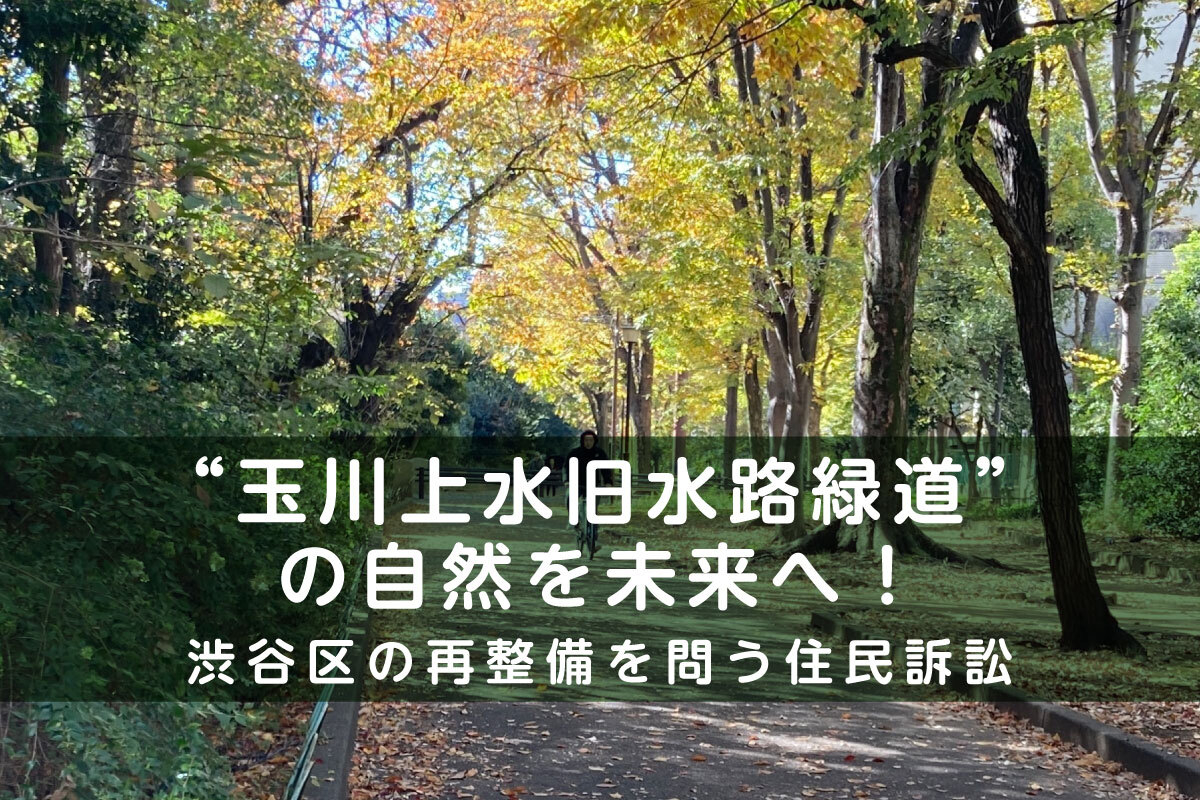
“玉川上水旧水路緑道”の自然を未来へ!渋谷区の再整備を問う住民訴訟 Preserve the Nature of the Former Tamagawa Josui Aqueduct Greenway for the Future! A Resident Public Litigation Challenging Shibuya’s Redevelopment Project
#公正な手続
#Procedural Justice
#環境・災害
#Environment/Natural Disasters
現在の寄付総額 Current Total Raised
0円 ¥ 0
目標金額 Target amount
1,000,000円 ¥ 1,000,000
サポーター Supporter
0 人 0 supporters
 寄付する
Donate Now


渋谷区の玉川上水旧水路緑道は、40年以上にわたり地域住民から親しまれてきました。渋谷区は緑道の老朽化を理由に再整備を計画しましたが、きわめて高額な舗装材の使用や不透明な業務委託により、この工事には113億円を超す莫大な税金が投じられています。本件は、渋谷区が地方財政の原則に反して不要かつ過大な費用を再整備工事にかけていることを不当とし、地域住民の立場から「合理的な税の使用」を求める訴訟です。 For over 40 years, the Former Tamagawa Josui Aqueduct Greenway in Shibuya City has been cherished by local residents. Citing aging infrastructure, Shibuya Ward planned a redevelopment project. However, the project’s use of exorbitantly priced paving materials and opaque outsourcing contracts has pushed spending above 11.3 billion yen in taxpayer money. This lawsuit, brought by local residents, argues that the city office is spending unnecessary and excessive sums on the project in violation of the principles of local public finance, and seeks the reasonable use of tax money.
はじめに
あなたは、400年の時の重みを感じることがありますか?
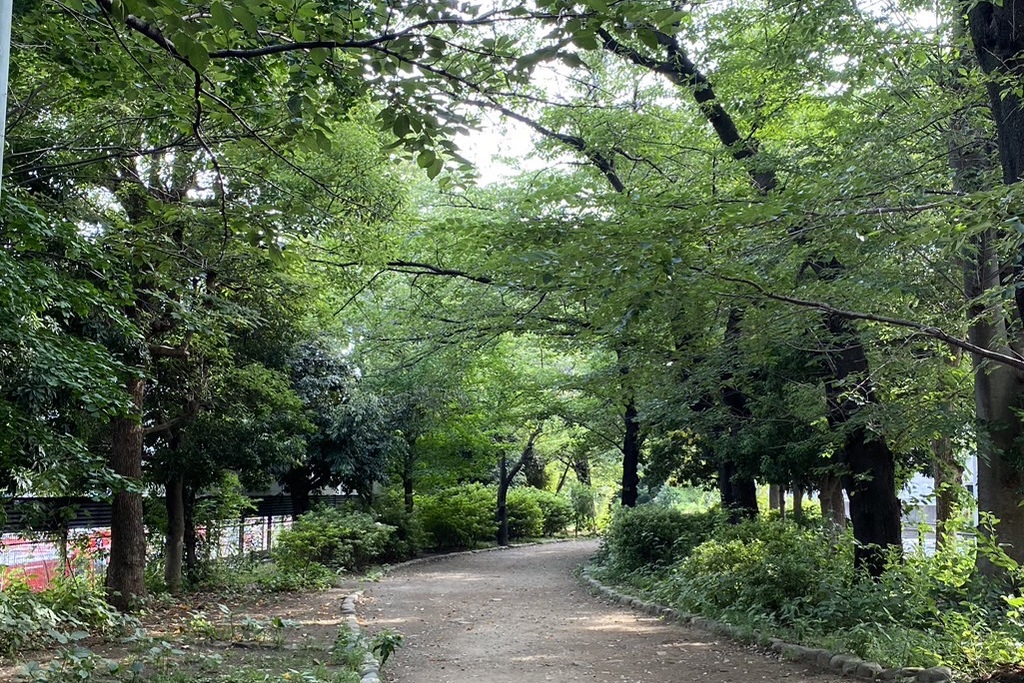
17世紀に作られ、江戸の人々に恵みの水を運んだ玉川上水は、20世紀後半に暗渠(あんきょ)となり、その上に緑の道が作られました。私たち住民は、夏の暑さを和らげ、憩いを与えるこの緑道を、先人からの贈り物として大切にし、誇りにしてきました。
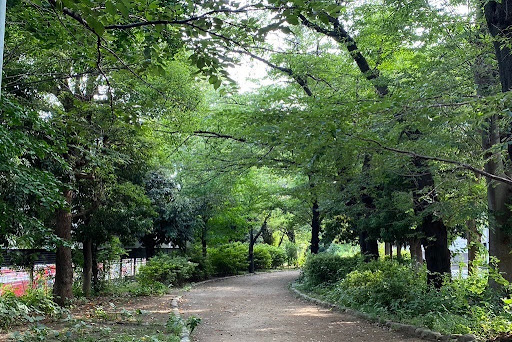
▲かつての緑道
渋谷区は、老朽化を理由にこの緑道の再整備を進めており、緑道を「世界的な名所」にすることを目的に、「世界的に著名なランドスケープアーキテクト等と連携」することを計画しています。その結果、設計を委託する契約の金額は、先行工事区間だけで3億6990万円、テラゾ材を用いたベンチは1基で264万円と、高額なものとなっています。また特筆すべきは工事費の半分近くをテラゾ舗装材が占める点です。
こうした過大な費用の支出は必要最低限とはいえず、地方財政の基本原則に反しています。また、町会はこの工事を承認しておらず、住民説明会でも反対意見が大多数でした。つまり、この工事に住民の合意はありません。
私たち原告は、渋谷区による上記支出に納得できず、住民監査請求を経て、この訴訟を提起しました。
地方自治法2条14号
地方公共団体は、その事務を処理するに当つては、住民の福祉の増進に努めるとともに、最小の経費で最大の効果を挙げるようにしなければならない。
地方財政法4条1項
地方公共団体の経費は、その目的を達するための必要且つ最小の限度をこえて、これを支出してはならない。
これまでの経緯
私たち「渋谷区玉川上水旧水路緑道 緑道の会」は、2023年に、渋谷区が緑道の街路樹を不当に伐採したことを受けて結成されました。
渋谷区は、この時点で、街路樹が枯れていることなどを理由に、189本の街路樹の伐採を計画していました。しかし、私たちが樹木研究者に外観診断を依頼したところ、枯れている樹木はごく一部であることがわかりました。また、私たちは、伐採反対の署名活動を行い、多くの住民の賛同を得ました。その結果、渋谷区は再度の樹木診断を行い、伐採本数を減らしました。これらの活動によって、健康な街路樹を保全することができました。
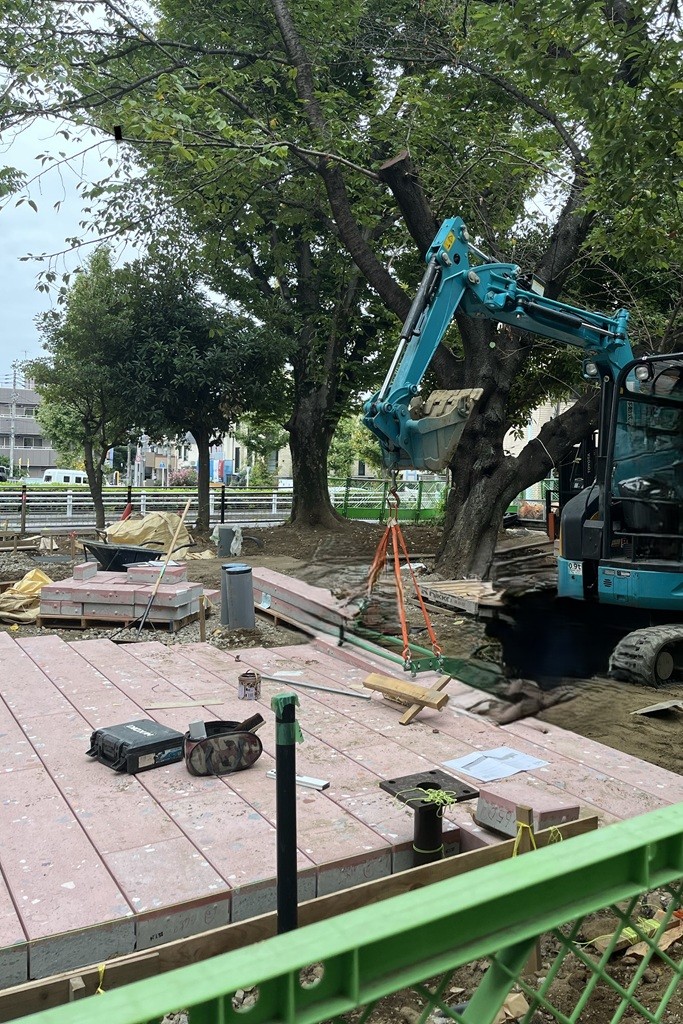
▲再整備の工事が進められている玉川上水旧水路緑道
しかしその後、渋谷区が、環境に負荷をかけ、かつ著しく高額な舗装材であるテラゾ材の使用を計画していることが判明し、私たちは活動を続けることになりました。
テラゾ材は、非常に厚く、重く、内部に水を通しにくいので、土壌の呼吸を妨げ、樹木を傷め、ヒートアイランド現象を加速させる素材です。環境への負荷が大きく、時代に逆行したものと言わざるを得ません。
※ ヒートアイランド現象:都市の気温が周囲よりも高くなる現象のこと
(国土交通省 気象庁 ヒートアイランド現象の「知識・解説」)
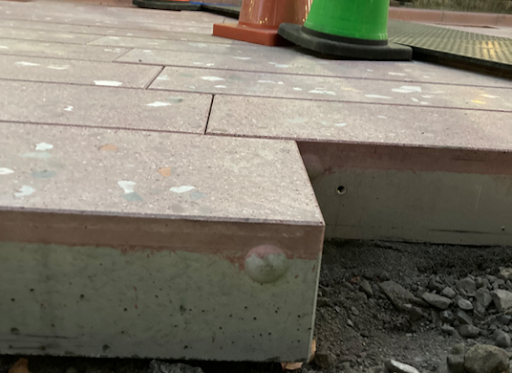
▲本工事に使用されることになった、非常に厚く、重く、水を通しにくいテラゾ材
私たちは、専門家からの意見書や、市民からの3000筆以上の反対署名を集め、渋谷区に再考を申し入れてきました。2026年1月には、文化遺産保護に関わるNGOである一般社団法人 日本イコモス国内委員会より、「江戸・東京 400 年の文化資産である「玉川上水」の歴史と文化の保全と継承に向けた提言」が発出され、既存樹木の保全と回復の必要性が説かれています。
また、この舗装材が著しく高額なことも、大きな問題です。通常、緑道の舗装で使用される素材としては、環境や歩行者に優しい素材である透水性インターロッキングブロックなどが想定されます。テラゾ材は、インターロッキングブロックと比較して、その価格が約32倍にもなるものです。渋谷区が、環境負荷が高く、高額な素材を用いる理由は、どこにあるのでしょうか。
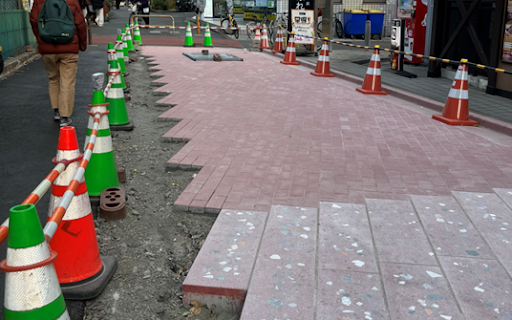
▲写真手前がテラゾ材、奥がインターロッキングブロック
渋谷区議会でも、舗装材が高額である点は何度も問題とされてきました。委員会・定例会などで私たちと意見を共にする議員が理由の説明を求めましたが、選定過程や理由についての説明や整合性のある回答は得られていません。
また、決議状況としても、賛成と反対が拮抗する状況にありましたが、十分な議論がなされないまま、2025年3月、再整備計画が議会で採決されました。現在、緑道の一部では工事が強行されています。
こうした経緯を経て、私たちは玉川上水旧水路緑道の再整備事業のあり方、進め方を問うために、渋谷区監査委員に対し住民監査請求を行いました。そして、監査請求が棄却され、住民訴訟を提起しました。
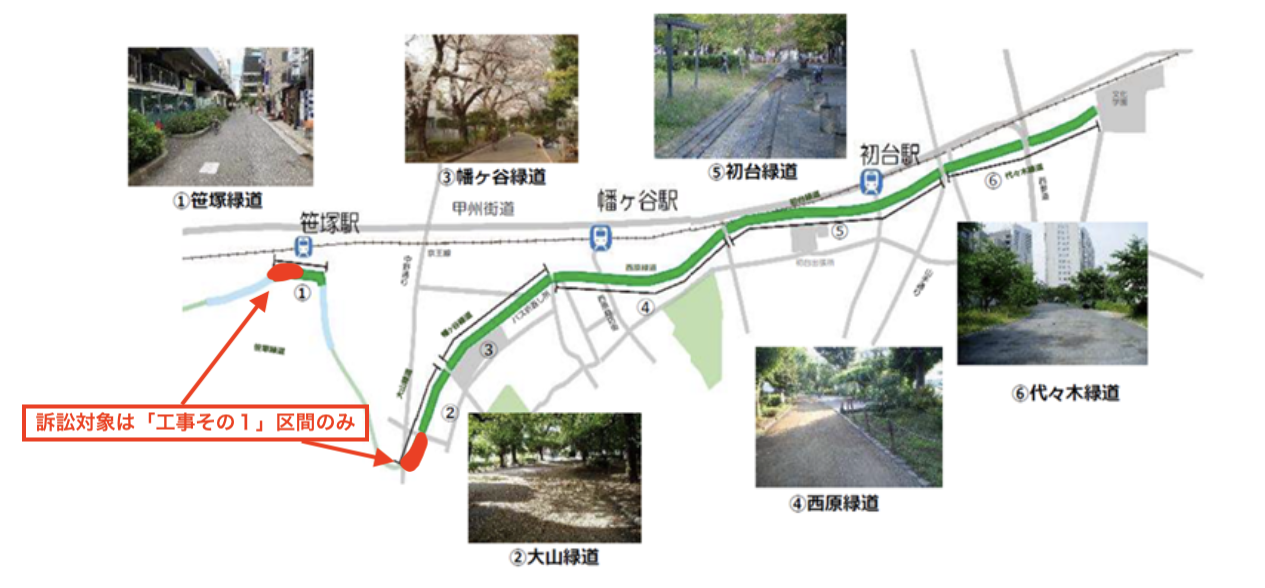
※なお、本訴訟は、緑道再整備の中で先行して工事が完了している笹塚緑道及び大山緑道に関する工事その1のみが対象です。
裁判の争点
本件の争点は、渋谷区が計画した再整備事業への支出が「最少経費・最大効果」という地方財政の原則に反しているかどうかという点にあります。具体的には、①設計の委託、②テラゾ材という舗装材の使用、③ 積算補助や施工管理の委託が問題となっています。
この訴訟では、再整備事業への支出について、「現状の豊かな資源を活かしながら、地域の方々に一層親しまれるようなリニューアル」という緑道再整備の本来の目的との関係で、過大な支出であることを主張しています。
1. 設計の委託について
渋谷区は、緑道の設計を3億6990万円という高い金額で委託しています。さらに、委託された設計業務の一部は、委託先の会社から別の会社に対して2億2600万円という金額で再委託されています。
渋谷区と委託先の設計委託契約の内訳を見ると、「設計」と名のつく費目への支出は約2300万円であり、全体の7%弱にとどまります。内訳の中で金額が突出している費目は「直接経費」と「一般管理費」です。その金額は合計で約2億9000万円と、全体の9割弱を占めています。
そして、事前に行われた住民監査請求において、渋谷区は再委託契約について、以下のような見解を示しています。
委託先の会社から別の会社への再委託契約については、金額を含めて、渋谷区は直接関与していない。しかし渋谷区が委託先に支払う「直接経費」や「一般管理費」の費用を元に再委託先に支払うものと認識している。
この見解は、実質的な設計を担う再委託先に支払う金額が妥当か否か、渋谷区は全く精査していないことを示しており、不合理であると言わざるを得ません。
2. テラゾ材の使用について
前述の整備でテラゾ材を使用したことなどにより、通常の整備事業よりも高額な費用が計上されています。また、「現状の豊かな資源を活かしながら、地域の方々に一層親しまれるようなリニューアル」という再整備の本来の目的や、再整備の内容に照らしても、高額なテラゾ材を使用する合理的な理由はありません。
3. 積算補助や施工管理の委託について
渋谷区は、本来は委託の必要がない積算補助(整備事業の見積もり計算の補助)や、工事を行う業者に委託するべき施工管理についても、業務を委託しており、これらの支出も必要最小限とはいえません。
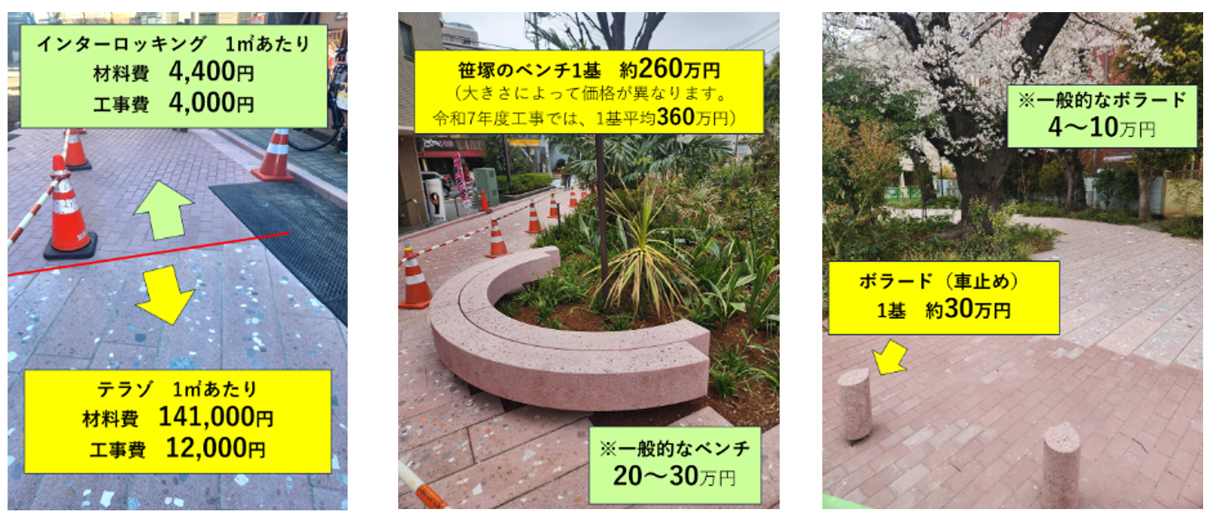
▲玉川上水緑道再整備 高額な材料費
社会的意義
本訴訟は、渋谷区玉川上水の再整備事業に対する支出が緑道再整備の費用としては過大であると訴え、その見直しを求めるものです。しかし、この訴訟の社会的意義は、一地域の一工事に限るものではありません。この訴訟には、三つの社会的意義があります。
第一の意義は、住民の合意なしに「まちづくり」が進められる現状を訴え、行政による再開発手続きのあり方を問うことです。
渋谷区は、2017年から議論を行ってきた旨を主張していますが、住民会議の名称が地域に定着していないものであり参加が困難であったこと、議論状況の報告が適切に行われていないことなど、オープンな議論が行われてきたとは言えないものでした。本訴訟は、このような手法の問題性を明らかにするという意義を有するものです 。
第二の意義は 、文化資産をどのように整備、継承するべきかを問うことです。
玉川上水は渋谷区だけのものではなく、旧水路緑道は単なる空き地ではありません。
日本イコモスの提言に「江戸・東京400年の文化資産」とあるように、玉川上水は、全長42キロにも及ぶ、歴史的・環境的に重要な社会の文化資産です。その玉川上水の一部である旧水路緑道の再整備は、本来、各分野の専門家の知見を取り入れ、住民に十分に情報を提供し、合意を得た上で行うべきものです。緑道の価値が広く共有されてこそ、再整備のための適切な支出が算出されるのではないでしょうか。本訴訟は、行政の文化資産への向き合い方を問いかけるものです。
第三の意義は、過大な税金の支出に対して、住民訴訟を通じ、異議を唱えること自体にあります。
本件をはじめ、行政事業では、住民の声が十分に反映されないまま、行政の長や議会の多数派の意向で事業に関する決定がなされることがあります。そういった場合、議会では、渋谷区議会のように、支出の適正さに関する説明が十分に果たされないことがあります。
しかし、訴訟では、行政が支出の根拠を明らかにし、説明することが求められ、裁判書により、「最小経費最大効果」という原則に照らして、その支出が違法かどうかの判断がなされます。私たち住民が、訴訟というプロセスを通じて行政のあり方を問うことは、渋谷区だけでなく、課題を抱えた全国の地方行政の現場にインパクトを与えるものと考えます。
以上のように、本訴訟は、住民と十分に対話し、税金を無駄遣いしない地方行政の実現を目的とするものです。
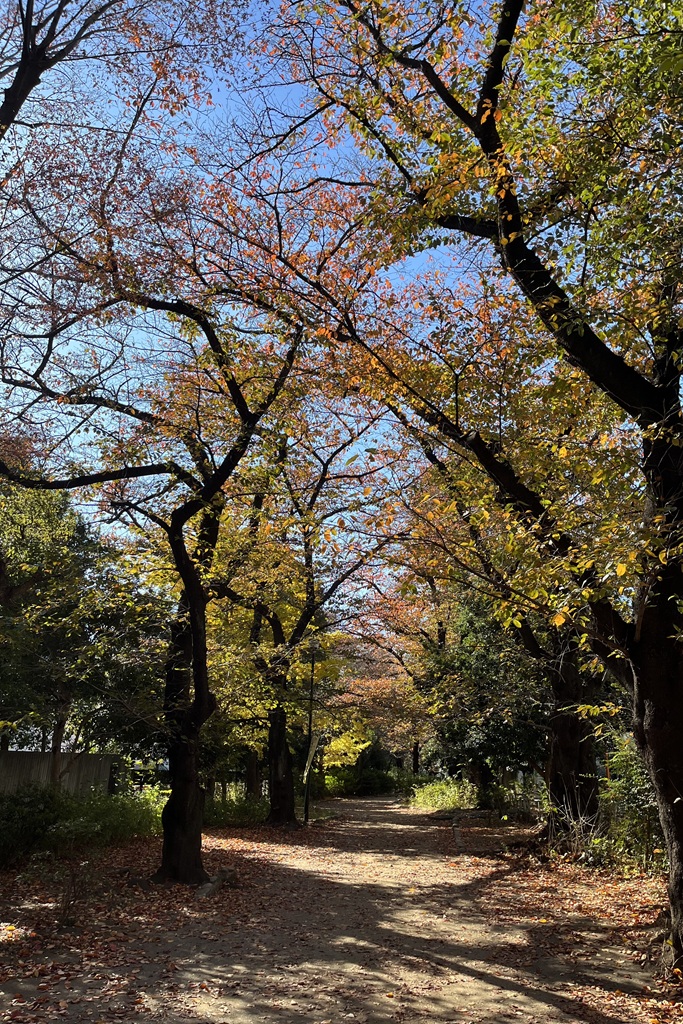
▲かつての緑道(左:2023年11月30日撮影)と工事が進む緑道(右:2025年10月7日撮影)
寄付金の使途
①訴訟提起のための経費(弁護士費用含む)
2025年3月に監査請求、6月に住民10名が原告となり、住民訴訟を提起しました。
②意見書費用等:専門家からの意見書
舗装材が樹林に与える影響、住民不在の行政への懸念等に関するものを想定しています。
③交通費
④広報活動費:地域へのチラシ配布等
地域の方々へこの訴訟の進捗についてなどを知って頂きたく、広報活動を検討しております。
原告からのメッセージ
原告 高尾典子さん
コロナがようやく落ち着いた2023年の4月、犬の散歩で利用している緑道で再整備計画を知りました。散歩中に会う人に聞いても、近所の人に聞いても、町会にも確認しましたが、その4ヶ月後から工事が始まることや再整備内容について知る人はいませんでした。しかも再整備計画は、住民の利用実態や閑静な住宅地とはかけ離れたイベント会場利用を目的としたものであり、その計画を知った時のショックは今でも忘れられません。
再整備をするのなら、2008年に施行された生物多様性基本法にも則り、舗装は透水性舗装、植栽は在来種にし、歴史ある玉川上水の遺構に相応しい武蔵野の散歩道にして頂きたいと思います。
原告 東治彦さん
私は玉川上水の沿道に住んでおります。毎日、緑道(私たちは「遊歩道」と呼び習わしてきました)」とその周辺の樹木や草本類、たくさんの生き物たちを見守ってまいりました。春には桜を始めたくさんの花が咲き、命の息吹を感じます。季節が進む中で四季折々の良さがあります。ところが急に沸いた緑道の整備と樹木の伐採計画にとても驚きました。
一度壊した自然は都会のなかでは容易にもとには戻りません。去ってしまう生き物もたくさんいるでしょう。世界の先進的な大都市では高木を始め都市の中の自然を守ることがとても大切なことだと認識されているようです。渋谷区の考え方はそういう流れと逆行していると思いました。木々や土が開発の邪魔者と考えているように感じました。 樹木伐採について見直しがあったものの、とても納得できる計画ではありません。この問題に対する皆さんのご理解とご協力を切にお願い申し上げます。
原告 久下千代さん
私は初台に住んで 50 年、玉川上水緑道ができて 40 数年、小さな苗木が立派な樹林に成長するのを楽しみに見守ってきました。保育士をしていたころ、「早く大きくなって涼しい木陰をつくってね!」と子どもたちと楽しみに散歩していました。ところが初台のカツラの木は乾燥に耐えられず枯死して 10 本も伐採されました。渋谷区は都会の暑さと乾燥に耐えられる樹木に植え替えることもなく枯れて危ないと強剪定と伐採を繰り返すのみです。根も成長して道がでこぼこになってもこれも対策せず放置です。
今回の再整備では舗装材とベンチのテラゾに超高額予算を計上していますが、何の根拠もなく、税金の無駄遣いで絶対反対です!生きている樹木の保全にこそ、丁寧な見守りケアのための予算をまわすべきです。
支援者からのメッセージ
水野誠一さん(株式会社IMA代表取締役、元西武百貨店社長、元参議院議員)
40年前に私が大山町に転居してきたきっかけは、素晴らしい緑道があったからだ。人が作り込んだ公園ではなく、自然な樹木を大切に生かしたこの緑道は、当時飼っていた犬たちにとって格好の散歩道あった。その緑道が人工的な公園に生まれ変わるという。歩道にはテラゾーというピンク色の人工大理石が敷き詰められるとも聞く。「豊かさ」とは、決して数百万もするベンチを置くことではない。自然を愛でることができる「豊かな心」を取り戻すことだ。
許瑛子さん(作詞家)

渋谷の玉川上水旧水路緑道は、子ども時代から私たちに寄り添ってきた命の通り道です。木々が酸素を生み、落ち葉が土に還り、鳥や昆虫が息づく静かな生態系がここにあります。巨額の再整備計画が進む中、自然の循環を守り、歴史と生命が息づく緑道を未来へ手渡したい——原告の皆さんの活動を心から応援します。
後藤陽次郎さん(デザインプロデューサー)
玉川上水は400年前に庶民の生活に潤いと豊かさを与えるものとして作られたもので、決して豪華な商業施設ではない。自然との共生で心の豊かさを醸成するもの。この再整備に自然には融合しない「テラゾー風コンクリートブロック」を採用しして120億を超える事業費に3,500名を超える反対署名があるにもかかわらず住民の声を無視する渋谷区政は誰のための政治か、甚だ疑問である。

担当弁護士のメッセージ
渋谷区には、長いあいだ地域の人たちに親しまれてきた玉川上水旧水路緑道があります。この緑道を、より安全で使いやすく、地域にとって大切な場所として整備していくこと自体は、とても重要なことです。
しかし、その整備のために使われるのは、区民の税金です。今回の再整備では、高額な舗装材などが採用されていますが、なぜその方法でなければならないのか、より費用を抑えた他の方法では足りないのか、住民に分かるように十分に説明されているとはいえません。
この裁判は、緑道の整備そのものに反対するものではありません。地域の人たちにとって本当に使いやすく、長く大切にされる緑道にするために、税金の使い方や、公共事業の進め方の透明性を問うものです。
自治体の公共事業では、「よいものをつくる」という目的があっても、そのためにどれだけのお金を使うのか、なぜその方法を選ぶのかを、住民に対して丁寧に説明することが必要です。身近な公園や道路、緑道の整備は、私たちの暮らしに直接関わる問題だからです。
この裁判を通じて、渋谷区だけでなく、全国の自治体で、公共事業がより透明で、住民に開かれた形で進められるようにしたいと考えています。ぜひ、多くのみなさまのご関心とご支援をお願いいたします。
弁護団の紹介
大城聡 東京千代田法律事務所
熊澤美帆 東京千代田法律事務所
おわりに
本訴訟は、これまで述べてきたように、住民との十分な対話、税金を無駄遣いしない行政の実現を求めて、過大な税金の支出に対する住民訴訟という形で、渋谷区における玉川上水の再整備事業、そして地方行政のあり方を問うものです。
これまでも、署名などの形で多くのご支援をいただいてまいりました。
訴訟の提起や、充実した訴訟活動のためには、前述の費用がかかります。多くの方にこの問題に関心を持っていただき、ご寄付やご支援であったり、周囲の方々への共有であったりで、ぜひ本訴訟を見守っていただければと思います。
どうぞよろしくお願いいたします。
<オンライン署名もお願いします>
再整備の再考を求めるオンライン署名を集めています:
https://www.change.org/p/玉川上水旧水路緑道の歴史-文化-自然環境を未来に手渡そう
| これまでの主要な出来事 | |
|---|---|
| 2003年8月 | 玉川上水、国指定の史跡に(文部科学省告知137号) |
| 2017年9月 | ササハタハツまちづくり(笹塚・幡ヶ谷・初台地区)開始 |
| 2019年5~7月 | 渋谷区、公募型プロポーザル方式により、緑道基本設定の業務委託先を決定 |
| 2019年10月 | 渋谷区、緑道基本設計等の業務委託 |
| 2020年6月 | 渋谷区、第1回ササハタハツ会議(住民説明会)において、緑道整備の方針を発表 |
| 2022年6月 | 渋谷区、第6回ササハタハツ会議において、テラゾ材の使用を提案(住民の参加は僅少) |
| 2023年6月 | 渋谷区、区議会において、189本の樹木を伐採する予定を公表 |
| 2023年6月 | 住民ら、環境植栽学の専門家に依頼し、緑道の樹木診断を実施 渋谷区に対して、専門家からの意見書を提出 (なお、この時点で既に31本が伐採) |
| 2024年4月 | 渋谷区、造園コンサルタント会社との間で、設計委託契約を締結 (同月、渋谷区、設計委託に関する再委託申請を承諾) |
| 2024年4月 | 渋谷区、第9回ササハタハツ会議(住民説明会)において、伐採対象の189本のうち134本を残す方針を説明 |
| 2024年6月 | 渋谷区、工事請負契約を締結 (契約書の記載より、テラゾ材の使用を予定していることが判明) |
| 2024年8月 | 笹塚工区(本訴訟の対象)の工事が開始される |
| 2025年2月 | 住民らが、渋谷区に対して、3,000筆以上の署名とともに反対要望書を提出 |
| 2025年3月28日 | 住民らが、渋谷区監査委員に対して、住民監査請求 |
| 2025年5月20日 | 渋谷区監査委員、住民らの住民監査請求を棄却 |
| 2025年6月9日 | 原告ら、渋谷区に対して住民訴訟の提起 |
| 2026年1月 | 日本イコモス国内委員会より、渋谷区に対して、「江戸・東京400年の文化資産である『玉川上水』の歴史と文化の保全と継承に向けた提言」 |
*Translated by Google translate
Introduction
Do you ever feel the weight of 400 years of time?
Built in the 17th century, the Tamagawa Aqueduct, which supplied the people of Edo with vital water, was converted into an underground culvert in the latter half of the 20th century, and a greenway was built above it. We residents have cherished and taken pride in this greenway, which alleviates the summer heat and provides a place of relaxation, as a gift from our ancestors.
▲Former greenway
Shibuya Ward is proceeding with the redevelopment of this greenway due to its aging infrastructure, and plans to "collaborate with world-renowned landscape architects and others" with the aim of making the greenway a "world-class landmark." As a result, the contract for commissioning the design is quite expensive, with 369.9 million yen for the initial construction section alone, and 2.64 million yen for each bench made of terrazzo material. What is particularly noteworthy is that terrazzo paving material accounts for nearly half of the construction cost.
Such excessive expenditures cannot be considered necessary and violate the fundamental principles of local finance. Furthermore, the town council has not approved this construction, and the majority of residents expressed opposition at the information sessions. In short, there is no consensus among the residents regarding this construction.
We, the plaintiffs, are dissatisfied with the aforementioned expenditures by Shibuya Ward, and have filed this lawsuit after filing a resident audit request.
Local Autonomy Law Article 2 No. 14
Local governments, in carrying out their affairs, must strive to improve the welfare of their residents and achieve the greatest effect with the least expenditure.
Local Finance Act Article 4, Paragraph 1
Local government expenditures shall not exceed the necessary and minimum amount required to achieve their objectives.
Background
We, the "Shibuya Ward Tamagawa Aqueduct Old Waterway Greenway Association," were formed in 2023 in response to the Shibuya Ward's unjustified felling of street trees along the greenway.
At that time, Shibuya Ward was planning to cut down 189 street trees, citing reasons such as their death. However, when we commissioned a tree researcher to conduct a visual inspection, it was discovered that only a small number of the trees were dead. We also launched a petition against the felling and gained the support of many residents. As a result, Shibuya Ward conducted another tree inspection and reduced the number of trees to be felled. Through these efforts, we were able to preserve healthy street trees.
▲Redevelopment work is underway on the Tamagawa Aqueduct Old Waterway Greenway
However, after it was discovered that Shibuya Ward was planning to use terrazzo, a paving material that is environmentally harmful and extremely expensive, we decided to continue our activities.
Terrazzo is an extremely thick, heavy, and water-impermeable material that hinders soil respiration, damages trees, and accelerates the urban heat island effect. It places a significant burden on the environment and is undeniably a step backward.
* Heat island effect: A phenomenon in which the temperature of a city becomes higher than the surrounding area.
(Ministry of Land, Infrastructure, Transport and Tourism, Japan Meteorological Agency, "Knowledge and Explanation" of the Heat Island Phenomenon)
▲The extremely thick, heavy, and water-resistant terrazzo material that will be used in this construction project.
We have collected opinions from experts and more than 3,000 signatures of opposition from citizens, and have appealed to Shibuya Ward to reconsider. In January 2026, the Japan ICOMOS National Committee, a general incorporated association involved in the protection of cultural heritage, issued "Recommendations for the preservation and transmission of the history and culture of the Tamagawa Aqueduct, a cultural asset of Edo/Tokyo spanning 400 years," which emphasizes the need for the preservation and restoration of existing trees.
Another major problem is the extremely high cost of this paving material. Typically, materials used for paving greenways include permeable interlocking blocks, which are environmentally friendly and safe for pedestrians. Terrazzo material costs approximately 32 times more than interlocking blocks. What is Shibuya Ward's reason for using such an environmentally impactful and expensive material?
▲The photo shows terrazzo in the foreground and interlocking blocks in the background.
The high cost of the paving materials has been raised as a problem many times in the Shibuya Ward Assembly. Council members who share our views have requested an explanation in committees and regular sessions, but we have not received any explanation or consistent response regarding the selection process or reasons.
Furthermore, although the vote was evenly split between those for and against the plan, the redevelopment plan was passed by the assembly in March 2025 without sufficient discussion. Currently, construction is being carried out forcibly in some parts of the greenway.
Following these events, we filed a resident audit request with the Shibuya Ward Audit Committee to question the nature and progress of the Tamagawa Aqueduct Old Waterway Greenway redevelopment project. However, our audit request was rejected, and we then filed a resident lawsuit.
*Please note that this lawsuit only concerns the first phase of construction work related to the Sasazuka Greenway and Oyama Greenway, which have already been completed as part of the greenway redevelopment project.
Issues in the trial
The central issue in this case is whether the expenditures on the redevelopment project planned by Shibuya Ward violate the principle of "minimum cost, maximum effect" in local finance. Specifically, the issues at hand are: ① the outsourcing of design, ② the use of terrazzo paving material, and ③ the outsourcing of cost estimation subsidies and construction management.
In this lawsuit, the plaintiffs argue that the expenditures on the redevelopment project were excessive in relation to the original purpose of the greenway redevelopment, which was to "make use of the abundant resources currently available and to create a renewal that will make the area even more appealing to local residents."
1. Regarding the commissioning of design work
Shibuya Ward commissioned the design of the greenway for a hefty sum of 369.9 million yen. Furthermore, part of the commissioned design work was subcontracted by the original company to another company for 226 million yen.
Looking at the breakdown of the design contract between Shibuya Ward and its contractor, expenditures for items labeled "design" amount to approximately 23 million yen, representing less than 7% of the total. The items that stand out in terms of amount are "direct expenses" and "general and administrative expenses." These amounts together total approximately 290 million yen, accounting for nearly 90% of the total.
Furthermore, in a prior resident audit request, Shibuya Ward expressed the following view regarding the subcontracting agreement:
Shibuya Ward is not directly involved in the subcontracting agreements between the contracted company and other companies, including the amounts involved. However, Shibuya Ward understands that these payments to the subcontractors are based on the "direct expenses" and "general administrative expenses" that Shibuya Ward pays to the contracted company.
This view indicates that Shibuya Ward has not scrutinized at all whether the amount paid to the subcontractor responsible for the actual design is reasonable, and it must be said that this is unreasonable.
2. Regarding the use of terrazzo material
The aforementioned renovations, including the use of terrazzo material, have resulted in higher costs than typical renovation projects. Furthermore, considering the original purpose of the redevelopment—to "make use of the abundant resources currently available and create a renovation that will be even more familiar to local residents"—and the content of the redevelopment, there is no rational reason to use expensive terrazzo material.
3. Outsourcing of cost estimation assistance and construction management
Shibuya Ward outsources tasks that do not actually require outsourcing, such as cost estimation assistance (assistance in calculating estimates for maintenance projects) and construction management, which should be entrusted to the contractors performing the work. These expenditures cannot be considered to be the bare minimum necessary.
▲Redevelopment of Tamagawa Aqueduct Greenway: High material costs
social significance
This lawsuit alleges that the expenditures for the redevelopment project of the Tamagawa Aqueduct in Shibuya Ward are excessive for the purpose of redeveloping a greenway, and seeks a review of these expenditures. However, the social significance of this lawsuit is not limited to a single construction project in a single area. This lawsuit has three social implications.
The primary significance lies in highlighting the current situation where urban development projects are being carried out without the consent of residents, and in questioning the proper procedures for urban redevelopment carried out by the government.
Shibuya Ward claims that discussions have been taking place since 2017, but the name of the residents' council was not well-established in the community, making participation difficult, and the progress of the discussions was not properly reported. Therefore, it cannot be said that open discussions took place. This lawsuit is significant because it clarifies the problematic nature of this approach.
The second significance lies in the question of how cultural assets should be maintained and passed down.
The Tamagawa Aqueduct is not solely a part of Shibuya Ward, and the former waterway greenway is not just an empty lot.
As stated in the ICOMOS Japan recommendations, the Tamagawa Aqueduct is a "cultural asset of Edo/Tokyo's 400-year history," and is a historically and environmentally important social cultural asset spanning 42 kilometers. The redevelopment of the former waterway greenway, which is part of the Tamagawa Aqueduct, should ideally be carried out after incorporating the expertise of specialists in various fields, providing sufficient information to residents, and obtaining their agreement. Only when the value of the greenway is widely shared can appropriate expenditures for redevelopment be calculated. This lawsuit questions how the government should approach cultural assets.
The third significance lies in the very act of raising objections to excessive tax expenditures through resident lawsuits.
In this case, as in other administrative projects, decisions regarding projects are sometimes made based on the wishes of the head of the administration or the majority in the assembly, without adequately reflecting the voices of the residents. In such cases, the assembly may not adequately explain the appropriateness of the expenditures, as was the case with the Shibuya Ward Assembly.
However, in a lawsuit, the administration is required to clarify and explain the basis for its expenditures, and the court will determine whether the expenditures are illegal based on the principle of "minimum cost, maximum effect." We believe that questioning the way the administration operates through the process of litigation will have an impact not only on Shibuya Ward but also on local governments across the country that are facing challenges.
As described above, this lawsuit aims to realize local administration that engages in sufficient dialogue with residents and avoids the wasteful use of taxpayers' money.
▲ The former greenway (left: photographed November 30, 2023) and the greenway under construction (right: photographed October 7, 2025)
Use of Donations
① Expenses for filing a lawsuit (including attorney fees)
An audit request was filed in March 2025, and in June, 10 residents filed a lawsuit as plaintiffs.
② Costs for opinion papers, etc .: This includes opinion papers from experts regarding the impact of paving materials on forests, concerns about the administration's lack of consideration for residents, etc.
③Transportation expenses
④ Public relations expenses : We are considering public relations activities, such as distributing flyers in the community, to inform local residents about the progress of this lawsuit.
Message from the plaintiff
Plaintiff: Noriko Takao
In April 2023, when the COVID-19 situation had finally calmed down, I learned about a redevelopment plan for the greenway I use to walk my dog. I asked people I met on my walks, neighbors, and even checked with the neighborhood association, but no one knew that construction would begin four months later or what the redevelopment entailed. Moreover, the redevelopment plan was intended to use the greenway as an event venue, which was far removed from how residents actually use it and the quiet residential area it is now. I will never forget the shock I felt when I learned about that plan.
If the area is to be redeveloped, I hope that it will be made into a Musashino walking path befitting the historic Tamagawa Aqueduct, by adhering to the Basic Act on Biodiversity enacted in 2008, using permeable pavement, and planting native species.
Plaintiff: Haruhiko Higashi
I live along the Tamagawa Aqueduct. Every day, I have watched over the greenway (which we have come to call the "promenade") and the trees, plants, and many creatures that surround it. In spring, many flowers bloom, including cherry blossoms, and I feel the breath of life. There are different beauty in each of the four seasons as the seasons progress. However, I was very surprised by the sudden plan to renovate the greenway and cut down trees.
Once nature is destroyed in a city, it is not easily restored. Many creatures will likely disappear. In advanced metropolises around the world, it seems that protecting urban nature, including tall trees, is recognized as extremely important. I felt that Shibuya Ward's approach was going against this trend. It seemed as though they viewed trees and soil as obstacles to development. Although there has been a review of the tree felling plan, it is not a plan that I can accept at all. I earnestly ask for your understanding and cooperation on this issue.
Plaintiff Chiyo Kuge
I've lived in Hatsudai for 50 years, and the Tamagawa Aqueduct Greenway has been there for over 40 years. I've enjoyed watching the small saplings grow into a magnificent forest. When I was a nursery school teacher, I used to enjoy walks with the children, saying, "Grow big quickly and create some cool shade!" However, the katsura trees in Hatsudai couldn't withstand the drought and all 10 of them were cut down. Shibuya Ward doesn't even bother to replace them with trees that can withstand the heat and dryness of the city; they just keep pruning and cutting down the trees because they're dying and dangerous. Even when the roots grow and make the path uneven, they do nothing to address it.
This redevelopment project has allocated an exorbitant budget for paving materials and terrazzo benches, but there is no justification for it, and I am absolutely against it as a waste of taxpayers' money! The budget should be allocated to the careful monitoring and care of living trees.
Messages from supporters
Seiichi Mizuno (President and CEO of IMA Co., Ltd., former president of Seibu Department Stores, former member of the House of Councillors)
The reason I moved to Oyama Town 40 years ago was because of the wonderful greenway. This greenway, which carefully preserved natural trees rather than being a man-made park, was the perfect walking path for the dogs I had at the time. Now, that greenway is being transformed into an artificial park. I hear that the sidewalks will be paved with terrazzo, a pink artificial marble. "Richness" is not about placing benches that cost millions of yen. It's about regaining a "rich heart" that can appreciate nature.
Eiko Kyo (lyricist)
The Tamagawa Aqueduct Old Waterway Greenway in Shibuya is a vital pathway that has been with us since childhood. Here, trees produce oxygen, fallen leaves return to the soil, and birds and insects thrive in a tranquil ecosystem. As a massive redevelopment plan progresses, we wholeheartedly support the plaintiffs' efforts to protect the natural cycle and pass on this greenway, where history and life breathe, to future generations.
Yojiro Goto (Design Producer)
The Tamagawa Aqueduct was built 400 years ago to enrich the lives of ordinary people, and is by no means a luxurious commercial facility. It is meant to foster spiritual richness through coexistence with nature. The Shibuya ward government is using "terrazzo-style concrete blocks" that do not blend in with nature for this redevelopment project, and despite a project costing over 12 billion yen and more than 3,500 signatures opposing it, they are ignoring the voices of the residents. It is highly questionable whose interests the government is serving.
Message from the assigned attorney
Shibuya Ward has the Tamagawa Aqueduct Old Waterway Greenway, which has long been a beloved spot for local residents. It is extremely important to develop this greenway to be safer, more user-friendly, and a vital place for the community.
However, the funds used for this maintenance are the taxes of the ward residents. In this redevelopment, expensive paving materials and other materials have been adopted, but it cannot be said that the reasons why this method was necessary and why other, less expensive methods would not suffice have been adequately explained to the residents.
This lawsuit is not against the development of greenways themselves. Rather, it questions the transparency of how tax money is used and how public works projects are carried out, in order to create greenways that are truly easy for local residents to use and that will be cherished for a long time.
In public works projects undertaken by local governments, even if the objective is to "create something good," it is necessary to carefully explain to residents how much money will be spent and why a particular method is being chosen. This is because the development of local parks, roads, and green spaces directly affects our daily lives.
Through this lawsuit, we hope to ensure that public works projects are carried out in a more transparent and open manner for residents, not only in Shibuya Ward but also in municipalities throughout Japan. We would greatly appreciate your interest and support.
Introduction of the legal team
Satoshi Oshiro, Tokyo Chiyoda Law Office
Miho Kumazawa, Tokyo Chiyoda Law Office
In conclusion
As previously stated, this lawsuit is a residents' lawsuit against excessive tax expenditure, seeking sufficient dialogue with residents and the realization of an administration that does not waste taxpayers' money. It questions the redevelopment project of the Tamagawa Aqueduct in Shibuya Ward and the way local administration should be conducted.
We have received a great deal of support in the past, including through signatures and other means.
Filing a lawsuit and conducting a thorough legal campaign will incur the aforementioned costs. We hope that many people will take an interest in this issue and support this lawsuit through donations, contributions, or by sharing it with those around them.
Thank you very much for your cooperation.
<Please also sign the online petition.>
We are collecting online signatures to call for a reconsideration of the redevelopment:
| Major events to date | |
|---|---|
| August 2003 | Tamagawa Aqueduct designated a national historical site (Ministry of Education, Culture, Sports, Science and Technology Announcement No. 137) |
| September 2017 | Sasahatahatsu Community Development Project (Sasazuka, Hatagaya, and Hatsudai areas) Begins |
| May-July 2019 | Shibuya Ward has selected a contractor for the basic design of greenways through a public proposal process. |
| October 2019 | Shibuya Ward commissions work including basic design of greenway. |
| June 2020 | Shibuya Ward announced its policy for greenway development at the first Sasahatahatsu meeting (resident briefing). |
| June 2022 | Shibuya Ward proposed the use of terrazzo material at the 6th Sasahatahatsu Conference (with minimal resident participation). |
| June 2023 | Shibuya Ward announces plans to cut down 189 trees to the ward council. |
| June 2023 | Residents commissioned an expert in environmental landscaping to conduct a tree inspection of the greenway and submitted an opinion letter from the expert to Shibuya Ward. (Note: 31 trees had already been cut down at this point.) |
| April 2024 | Shibuya Ward has signed a design contract with a landscape consulting company. (In the same month, Shibuya Ward approved the application for subcontracting regarding the design work.) |
| April 2024 | At the 9th Sasahatahatsu Conference (resident briefing), Shibuya Ward explained its policy of leaving 134 of the 189 trees slated for felling. |
| June 2024 | Shibuya Ward signs construction contract. (The contract indicates that the use of terrazzo material is planned.) |
| August 2024 | Construction begins on the Sasazuka section (the subject of this lawsuit). |
| February 2025 | Residents submitted a letter of opposition to Shibuya Ward, along with more than 3,000 signatures. |
| March 28, 2025 | Residents have filed a request for a resident audit with the Shibuya Ward Audit Committee. |
| May 20, 2025 | Shibuya Ward Audit Committee rejects residents' request for audit. |
| June 9, 2025 | Plaintiffs file a resident lawsuit against Shibuya Ward |
| January 2026 | The ICOMOS Japan National Committee has submitted a proposal to Shibuya Ward regarding "the preservation and transmission of the history and culture of the Tamagawa Aqueduct, a cultural asset of Edo/Tokyo spanning 400 years." |

玉川上水旧水路緑道 緑道の会
主催者名:玉川上水旧水路緑道 緑道の会
(玉川上水旧水路緑道を守る会、緑道の農園に反対する会、緑道沿道住民の会、渋谷区緑道利用者の会などから構成されています。)
渋谷区にかつて流れていた玉川上水。40年前に暗渠化された時に、その上は緑豊かな緑道に整備され、私たち地域住民の憩いの場となりました。2023年、私たちは、この緑道をテラゾ舗装材で覆い、巨額の税金を使ってイベント会場にする渋谷区の再整備計画を知りました。以後、私たちは団体を作り、緑道の豊かな歴史と文化、自然環境を守るよう、渋谷区に話し合いを求めてきました。
主催者メールアドレス:ryokudo.love@gmail.com
代理人弁護士事務所:
東京千代田法律事務所
〒101-0041
東京都千代田区神田須田町1-3 NAビル4階
TEL:03-3255-8877
FAX:03-3255-8876
あなたにおすすめのケース Recommended case for you



- 外国にルーツを持つ人々 Immigrants/Refugees/Foreign residents in Japan
- ジェンダー・セクシュアリティ Gender/Sexuality
- 医療・福祉・障がい Healthcare/Welfare/Disability
- 働き方 Labor Rights
- 刑事司法 Criminal Justice
- 公正な手続 Procedural Justice
- 情報公開 Information Disclosure
- 政治参加・表現の自由 Democracy/Freedom of Expression
- 環境・災害 Environment/Natural Disasters
- 沖縄 Okinawa
- 個人情報・プライバシー Personal information/Privacy
- アーカイブ Archive
- 全てのケース ALL