気候正義訴訟-Climate Justice- Litigation for Climate Justice
#環境・災害
#Environment/Natural Disasters
現在の寄付総額 Current Total Raised
1,066,000円 ¥ 1,066,000
目標金額 Target amount
3,000,000円 ¥ 3,000,000
サポーター Supporter
118 人 118 supporters
 寄付する
Donate Now
寄付する
Donate Now


パリ協定は気温上昇を産業革命以前比で1.5℃以内に抑えることを求めており、これを超過すれば地球規模で壊滅的被害が生じると科学的に示されています。しかし日本政府が2025年に定めた排出削減目標はこれに整合しません。全国906人の原告が、国に対し、消極的な気候政策により平穏生活権(気候享受権)が侵害されたとして損害の賠償を求める訴訟です。
Scientific evidence indicates that exceeding the threshold of temperature increase of 1.5 degree compared to pre-industrial level will result in catastrophic climate change. The same is also stipulated in the Paris Agreement. However, the emission reduction targets established by the Japanese government in 2025 are inappropriate to this goal.
This lawsuit, filed by 906 plaintiffs from across Japan, seeks state compensation due to violation of their right to a peaceful life, particularly, the right to safe climate.
はじめに
気候変動は、社会の土台を壊しています。
世界平均気温は、温室効果ガスの影響によって産業革命前(1850~1900年頃)と比べて既に1.1℃上昇していると言われています。
猛暑や豪雨は、命や健康を脅かすだけでなく、農業や漁業を直撃し、食料価格の高騰や生活不安を広げています。エアコンなしでは生きられない社会になり、住環境や家計の負担は増す一方です。これは個人の工夫で乗り切れる問題ではありません。気候変動の影響は今後、確実に更に悪化していきます。
しかし、日本の気候変動対策は、世界が共有する1.5℃目標(*詳しくは事案の概要をご覧ください)に整合していません。
国が必要な対策をとらないことが、社会全体の平穏な生活を破壊しているのです。
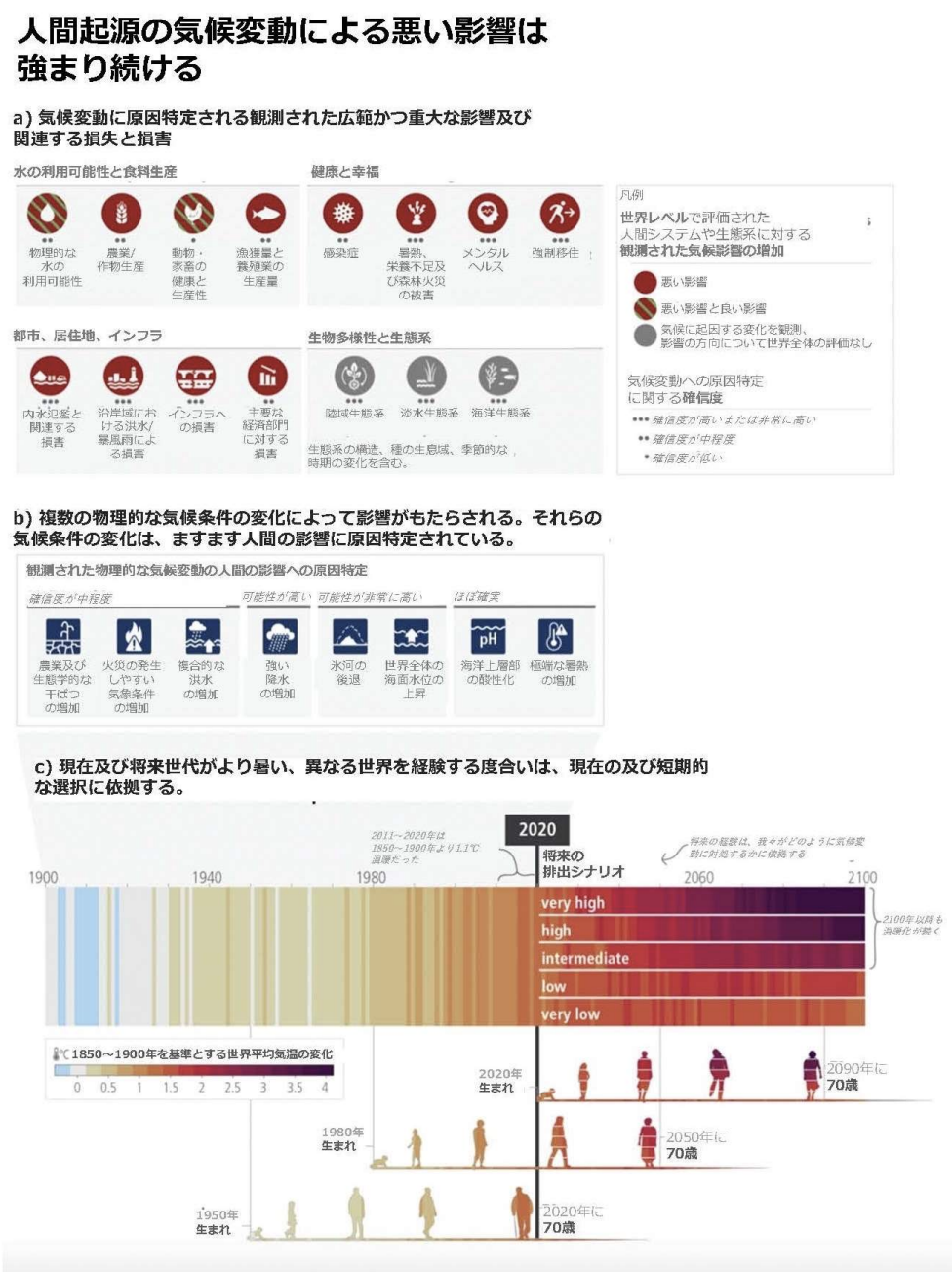
▲出典)IPCC 第 6次評価報告書 より
事案の概要
この訴訟では、日本政府に対して、気候変動対策の不十分さに関する責任を追及します。
気候変動の影響が年々明らかになっていることは、このページをご覧の皆様もお気づきだと思います。酷暑や豪雨、熱中症患者の増加や農作物の不作・・・これらの現象が人間の活動に起因していることは科学的に明らかとなっており、世界中で対策が必要です。日本も例外ではなく、日本政府を中心に一刻も早い効果的な対策が求められます。
気候変動は人権問題であり、気候変動によって人権が侵害されることのないよう、日本政府は対策を講じる義務があります。また、日本政府には、パリ協定などの国際的な枠組みの下で、世界の平均気温上昇を産業革命前と比べて1.5℃未満に抑えるとの目標(この目標は「1.5度目標」と呼ばれます。)を達成するために対策を講じる義務があります。
具体的には、2019年時点と比べて、温室効果ガス(温室効果をもたらす二酸化炭素などの気体)を 2030 年までに 43%、2035 年までに 60%、2040 年までに 69%、削減するとの義務です。しかし、日本政府が掲げる数値目標や政策は、これらの義務に沿っていません。
気候変動を政治の場ではなく、裁判所で取り上げることに違和感を覚える方もいらっしゃるかもしれません。しかし、世界に目を向けると、アメリカを含む世界中で裁判が提起されており、特に2019年以降、オランダ、ドイツ、韓国といった各国の最高裁判所や憲法裁判所において、1.5度目標に整合しない数値目標に関して、憲法違反、違法といった判断が相次いでいます。
また、2025年7月には国際司法裁判所が気候変動に関する国家の義務についての勧告的意見を公表し、世界各国が気候変動対策を講じる義務を負うことについての意見が述べられました。ここでいう世界各国には日本も含まれます。
このように、各国の裁判所に加えて、国際的な司法機関でも気候変動に関して国の責任を重く受け止める判断が下されています。日本で世界に続く画期的な判断を得ることは、この訴訟の大きな目標です。
これまでの経緯
提訴に先立ち、全国各地から気候変動の深刻さを痛感する計452人が原告として名乗りをあげました。
原告の中には、熱中症で命を脅かされた人、農業や漁業といった一次産業の就業者、将来を担う子どもたちなど様々な背景の方々がいます。
また、原告とは別に、アーティストや著名人を含む多数の方々に呼びかけ人・賛同人としてご協力いただけることとなりました。
代理人を務める弁護士も全国各地から結集しました。この訴訟は国に対して気候変動対策の違法性を問う日本で初めての裁判であるだけに、弁護団一同、膨大な時間と労力をかけて、調査、意見交換、訴状を中心とする裁判資料の作成・準備に取り組みました。
そして、私たちは、2025年12月18日、東京地方裁判所に提訴しました(第一次提訴)。
また、2026年4月2日にも、新たに454名の原告が東京地方裁判所に提訴しました(第二次提訴)。
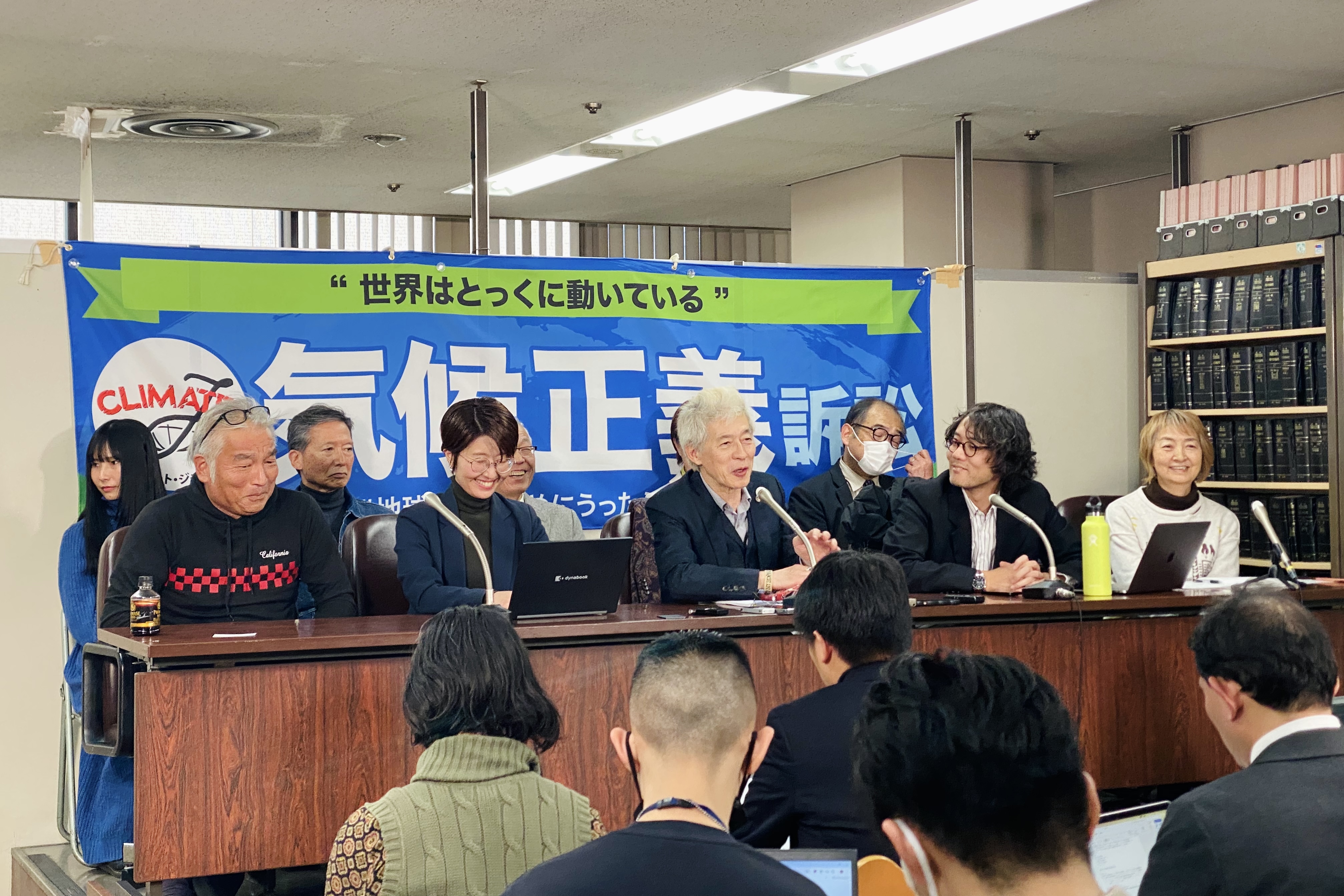
▲第一次提訴時の記者会見の様子
裁判の争点
この訴訟の大きな争点は、①・②の2つですが、その前提となる国の義務について、⓪として、併せてご説明します。
⓪ 前提:国の義務
気候変動に関する国際的な法的枠組み(条約)として、パリ協定があります。日本もパリ協定の締約国です。そのパリ協定では、1.5度目標が定められており、日本政府は1.5度目標を達成すべく、温室効果ガスを削減する義務があります。
また、気候変動の科学に関する権威のある政府間の機関として、気候変動に関する政府間パネル(IPCC)があります。IPCCは2021年から2023年までに出した第6次評価報告書において、1.5度目標を達成するためには、温室効果ガスについて、世界全体において、2019年比で、2030 年までに 43%削減、2035 年までに 60%削減、2040 年までに 69%削減が必要であると報告しました。これらの削減目標は、日本政府も参加するパリ協定の締約国会合においても、排出量削減に必要な数値であることが確認されています。
加えて、パリ協定などの国際的な法的枠組みでは、先進国が発展途上国と比べて重い責任を負うことも定められています。
以上より、日本は、1.5℃目標を達成するべく、少なくとも2019年比で、2030 年までに 43%削減、2035 年までに 60%削減、2040 年までに 69%削減との水準を上回る温室効果ガス排出削減義務を負います。
① 1.5度目標に整合しない削減目標を定めたことの違法性
日本政府が策定した最新の削減目標は、2025年2月に策定したNDC(*)及び第7次地球温暖化対策計画で定められているものです。その内容は、2019 年比で 、2030 年までに 39%削減、2035 年までに 52%削減、2040 年までに 67%削減というものです。つまり、日本の削減目標は、IPCCが示す数値に及ばず、ましてや先進国としての責任を果たすものではありません。
このようなNDC・温暖化対策計画を定めたことの違法性が、1つ目の争点です。
*パリ協定の締約国が5年毎に提出・公表する温室効果ガスの削減目標のこと
② 1.5度目標を達成するための実効的な立法を行わないことの違法性(違憲性)
⓪でも触れたとおり、日本政府には、1.5度目標を達成すべく温室効果ガスを削減する義務があり、それは立法府にとっても同じです。しかしながら、現在の日本では、2030年や2035年といった時点での温室効果ガス削減目標を定める法律が存在せず、また、法的拘束力を伴った排出基準が何ら存在しません。
命・健康・財産を害される不安を抱くことなく安定した気候の下で平穏に生活する権利は、憲法上保障されるべき人権です。1.5度目標を達成するための適切な法律がないことは憲法上保障されるべき平穏に生活する権利を害するものであるため、法律がないことは違憲ではないかというのが2つ目の争点です。
社会的意義
原告906名が受けている気候変動の被害は人それぞれですが、どの被害もこのままでは将来確実に悪化し、それゆえにどの原告の方も既に平穏な生活を送ることが困難となっています。
気候変動の影響は、この訴訟の原告に限らず、誰しもが経験しているはずです。この訴訟で、国による気候変動対策が不十分と判断されれば、日本の気候変動対策の転換点となります。
そして、日本の気候変動に関する数値目標や政策が1.5度目標に整合した内容となれば、少なくとも世界第5位を占める日本の温室効果ガス排出が抑えられ、この訴訟の原告のみならず、全ての方々の平穏な生活の確保に大きく繋がります。
気候変動の進行はすさまじく、これを抑えるために人類に残された時間は多くありません。ある時点を越えてしまえば、気候変動による人権侵害は命、健康、財産といったより具体的な権利の侵害へと進行してしまいます。
この訴訟を通じて、国に気候変動対策が不十分であることを認識させ、原告の皆様はもちろん全ての方々の人権侵害の抑止にも繋げてまいりたいというのが私たちの思いです。
資金の使途
・広報活動費用(集会開催、ホームページ作成・維持、チラシ・リーフレット等作成、頒布等)
・訴訟事務費用(印紙代、郵便費用、印刷費等)
・交通費
・通信費
・弁護士費用
・事務局経費
・通訳・翻訳費
・その他(訴訟に関連するもの)
※最終的にお金が余った場合には、環境保護活動を行う団体へ寄付し、当事者が利益を得ないようにいたします。
原告の思い
原告 斎藤 幸平さん(東京大学大学院准教授)
私がこの訴訟を提起したのは、気候変動がもはや「将来の問題」ではなく、すでに私たちの生活と人権を脅かしていると強く感じたからです。猛暑や豪雨は日常化し、その影響は子どもや高齢者、社会的に弱い立場にある人々ほど重くのしかかっています。一方で、気候危機を引き起こしてきた責任と、被害の受け方は著しく不均等です。にもかかわらず、日本政府の対策は科学的にも人権の観点からも不十分なままです。
この不作為を前に沈黙することは、将来世代への責任放棄だと思いました。裁判は社会を一気に変える魔法ではありません。それでも、市民が声を上げ、法の場で問い続けることに意味があると信じ、この訴訟に参加しました。一緒に大きなうねりにしていきましょう!
原告 Aさん(女性)
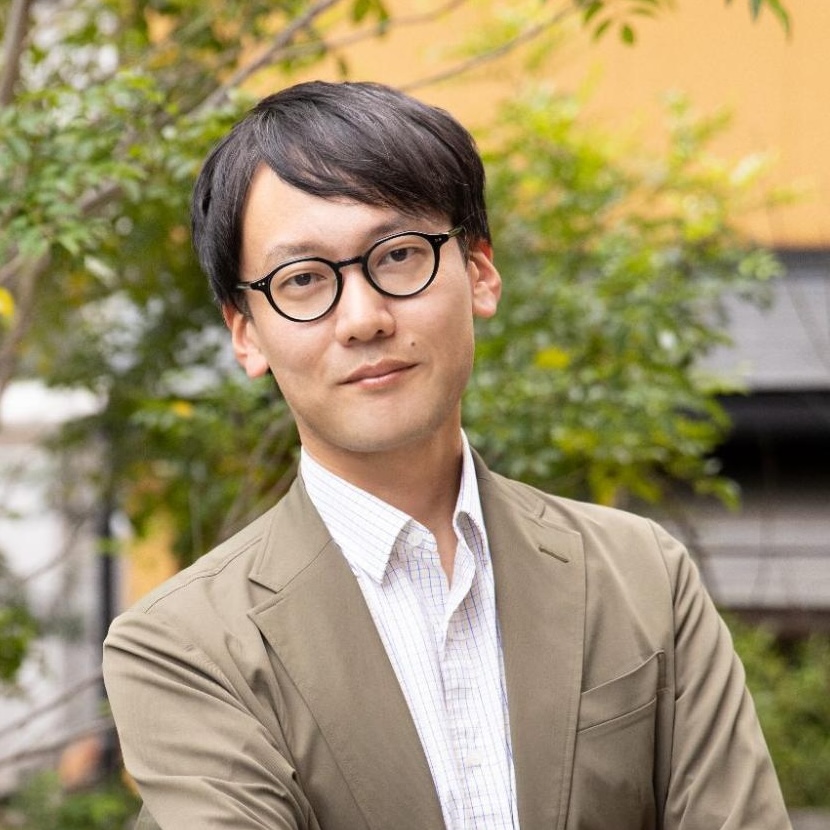
この訴訟に参加したのは、正直に言えば、面白そうだと思ったからです。人生でこのような大きな裁判に原告として参加できる機会なんて、そうそうないだろうと思い、わくわくしました。
恥ずかしながら、私は、この訴訟に参加するまで気候変動や人権の問題を、どこか人ごとのように捉えて過ごしてきました。この活動に寄り添いながら、これからは自分なりのライフスタイルを選んでいきたいと思っています。この訴訟に参加したことがきっかけで、地球にお世話になって生きている私は、何を選び、何を選ばないのかということも考えるようになりました。
目を覆いたくなるような現実もありますが、他人と比べることなく、自分に矢印を向け、地球に対して謙虚に、日々を豊かに生きることを大切にしたいと思っています。そして、あわよくば、小学生の息子に「ママ、かっこいい」と思ってもらえたら、最高だと思っています。
原告 Bさん(20代男性)
国際的にも気候変動は国の責任だと主張する訴訟や、それを認める判決が増えています。なぜ、このような訴訟や、判決は増えているのでしょうか。私はその理由の一つとして、将来世代に対する被害の大きさなのではないかと思います。
気候変動に苦しむのは現役世代だけではありません。いわゆる将来世代、私たちの子供たちの世代も(もしかすると私たち以上に)苦しむことになるのです。今回の訴訟は国の責任を問うものですが、同時に私たち自身が将来世代、自分の子供たちに対して気候変動問題をどのように渡していくのか、再考の機会にもなるのではないでしょうか。
私たちの後ろの世代に対して、気候変動を変えたと胸を張って言うためにも、今動き出してみませんか?
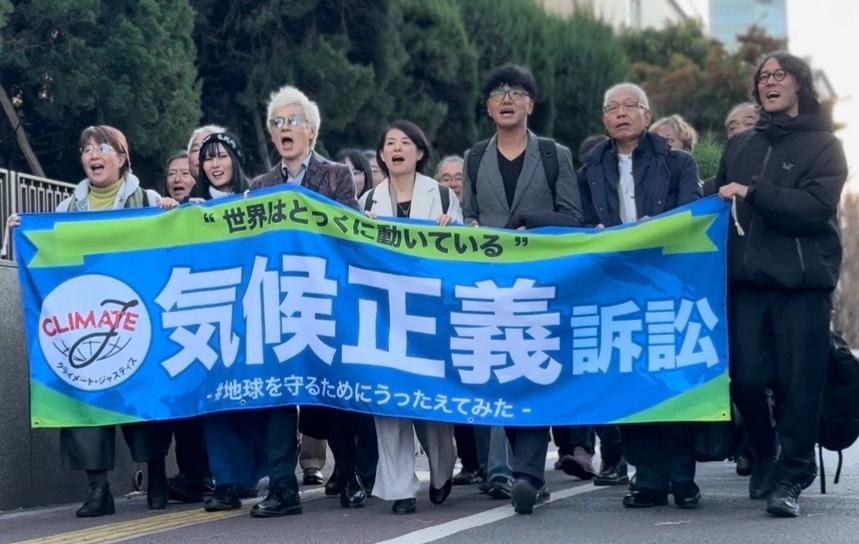
▲2025年12月18日・東京地裁にて
担当弁護士のメッセージ
関口速人弁護士
21世紀に入った2001年、私は13歳でした。当時から地球温暖化という言葉は社会の授業やテレビなどで見聞きして知っていました。高校・大学で環境問題について興味を持ち、21世紀は「環境の世紀」になると思いました。2011年に福島第一原発事故が起き、他の先進国のように自然エネルギーが普及していくと思いましたが、日本が行っていたのは火力発電の新設や輸出でした。1997年に京都議定書を採択し、省エネや太陽光事業が花開き世界の先端を行っていた日本は、気づけば国別の排出量で世界5位、一人あたりの排出量で中国を抜いて世界4位という大量の二酸化炭素排出国になっていました。
この何十年もの間、日本は望ましい方向へ進むチャンスを自ら手放してきてしまったのです。気候変動は、どのような立場であれ確実に社会生活において悪影響を受ける事象ですし、また、悪影響をもたらす側にもなります。しかも、その影響は、将来の何世代先にもわたって続き、深刻化していってしまいます。
弁護団の紹介
◼︎東京弁護士会
島 昭宏 (弁護団代表・JELF理事長)
吉田理人
◼︎第二東京弁護士会
寺田伸子
足立 悠
神田 麻
◼︎愛知県弁護士会
中根祐介
福田 凜
◼︎滋賀弁護士会
関口速人
◼︎福井弁護士会
笠原一浩
おわりに
気候変動は、遠い未来の話ではありません。暑さで外に出られない日、食料や電気代の値上がり、豪雨や災害への不安。私たちはすでに、その影響を日常の中で感じています。
この訴訟は、「仕方がない」で終わらせず、今の気候対策で本当に十分なのかを、司法の場で問いかける挑戦です。未来の世代に「なぜ何もしなかったの?」などとは聞かれないような社会をつくりたいと考えています。
しかし、この裁判を続けるには、どうしても多くの準備や専門的な作業が必要で、支えが欠かせません。もしこの想いに少しでも共感してもらえたら、無理のない形で応援してもらえると嬉しいです。
小さな一歩でも、集まれば大きな力となります。あなたの応援が、この声を社会に広げる一助となります。是非、応援よろしくお願いいたします。
※気候正義訴訟については以下のウェブサイトもご覧ください
|
気候正義訴訟 -Climate Justice- あなたも原告の1人になって一緒に私たちの ‘国’の背中を押しませんか?(気候正義訴訟のホームページ) |
*Translated by Google Translate
Introduction
Climate change is destroying the foundations of society.
It is said that the global average temperature has already risen by 1.1°C compared to the pre-industrial era (around 1850-1900) due to the effects of greenhouse gases.
Extreme heat and torrential rains not only threaten lives and health, but also severely impact agriculture and fisheries, leading to soaring food prices and widespread anxiety about daily life. We are becoming a society where we cannot live without air conditioning, and the burden on living conditions and household finances is only increasing. This is not a problem that can be overcome by individual ingenuity alone. The effects of climate change will undoubtedly worsen further in the future.
However, Japan's climate change measures are not aligned with the globally shared 1.5°C target (see the case summary for details).
The government's failure to take necessary measures is destroying the peaceful lives of society as a whole.
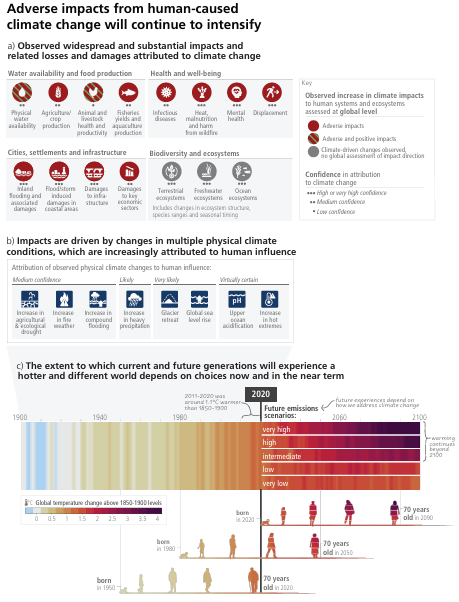
▲Source) IPCC Sixth Assessment Report twist
Summary of the case
This lawsuit will hold the Japanese government accountable for its inadequate climate change measures.
As you, the readers of this page, have likely noticed, the effects of climate change are becoming clearer year by year. Extreme heat, torrential rains, an increase in heatstroke cases, and crop failures—it is scientifically clear that these phenomena are caused by human activity, and countermeasures are needed all over the world. Japan is no exception, and the Japanese government, in particular, is required to take effective measures as soon as possible.
Climate change is a human rights issue, and the Japanese government has an obligation to take measures to ensure that human rights are not violated as a result of climate change. Furthermore, the Japanese government has an obligation to take measures to achieve the goal of limiting the rise in global average temperature to less than 1.5°C above pre-industrial levels (this goal is called the "1.5°C target") under international frameworks such as the Paris Agreement.
Specifically, the obligation is to reduce greenhouse gas emissions (gases such as carbon dioxide that cause the greenhouse effect) by 43% by 2030, 60% by 2035, and 69% by 2040 compared to 2019 levels. However, the numerical targets and policies set forth by the Japanese government do not align with these obligations.
Some may find it strange that climate change is being addressed in court rather than in the political arena. However, looking at the world, lawsuits are being filed all over the world, including in the United States, and especially since 2019, Supreme Courts and Constitutional Courts in countries such as the Netherlands, Germany, and South Korea have ruled that numerical targets that are not consistent with the 1.5-degree target are unconstitutional or illegal.
Furthermore, in July 2025, the International Court of Justice published an advisory opinion on the obligations of states regarding climate change, stating that all countries worldwide have an obligation to take measures to address climate change. Japan is included in this list of countries worldwide.
Thus, in addition to courts in various countries, international judicial bodies have also made rulings that take seriously the responsibility of nations regarding climate change. A major goal of this lawsuit is for Japan to achieve a groundbreaking ruling that follows in the footsteps of the rest of the world.
Background
Prior to the filing of the lawsuit, a total of 452 people from all over the country, who deeply felt the severity of climate change, came forward as plaintiffs.
The plaintiffs come from diverse backgrounds, including people whose lives were threatened by heatstroke, workers in primary industries such as agriculture and fishing, and children who will shape the future.
In addition to the plaintiffs, we have also received cooperation from many other individuals, including artists and celebrities, who have agreed to act as initiators and supporters.
The lawyers representing the plaintiffs gathered from all over the country. As this lawsuit is the first in Japan to question the legality of the government's climate change countermeasures, the entire legal team dedicated an enormous amount of time and effort to research, exchanging opinions, and preparing court documents, primarily the complaint.
Then, on December 18, 2025, we filed a lawsuit with the Tokyo District Court (first lawsuit).
Furthermore, on April 2, 2026, 454 additional plaintiffs filed a lawsuit with the Tokyo District Court (second lawsuit).
▲Scene from the press conference at the time of the first lawsuit filing
Issues in the trial
The two main issues in this lawsuit are ① and ②, but I will also explain the underlying obligations of the state as point ⓪.
⓪ Premise: National obligation
The Paris Agreement is an international legal framework (treaty) concerning climate change. Japan is also a signatory to the Paris Agreement. The Paris Agreement sets a target of 1.5 degrees Celsius, and the Japanese government has an obligation to reduce greenhouse gas emissions in order to achieve this target.
Furthermore, the Intergovernmental Panel on Climate Change (IPCC) is an authoritative intergovernmental body on climate change science. In its Sixth Assessment Report, published between 2021 and 2023, the IPCC reported that in order to achieve the 1.5°C target, greenhouse gas emissions worldwide need to be reduced by 43% by 2030 compared to 2019 levels, by 60% by 2035, and by 69% by 2040. These reduction targets have also been confirmed as necessary figures for emission reductions at the Paris Agreement Conference of the Parties, in which the Japanese government also participates.
In addition, international legal frameworks such as the Paris Agreement stipulate that developed countries bear heavier responsibilities than developing countries.
Based on the above, Japan is obligated to reduce greenhouse gas emissions by at least 43% by 2030, 60% by 2035, and 69% by 2040 compared to 2019 levels, in order to achieve the 1.5°C target.
① The illegality of setting reduction targets that are not consistent with the 1.5-degree target.
The latest reduction targets set by the Japanese government are outlined in the NDC (*) and the 7th Global Warming Countermeasures Plan, both formulated in February 2025. These targets aim for a 39% reduction by 2030, a 52% reduction by 2035, and a 67% reduction by 2040 compared to 2019 levels. In other words, Japan's reduction targets fall short of the figures set by the IPCC, and certainly do not fulfill its responsibilities as a developed country.
The first point of contention is whether the establishment of such NDCs (Nationally Determined Contributions) and climate change mitigation plans was illegal.
*This refers to the greenhouse gas reduction targets that signatory countries to the Paris Agreement submit and publish every five years.
② The illegality (unconstitutionality) of failing to enact effective legislation to achieve the 1.5-degree target.
As mentioned in point ⓪, the Japanese government has an obligation to reduce greenhouse gas emissions in order to achieve the 1.5°C target, and the same applies to the legislature. However, currently in Japan, there are no laws that set greenhouse gas reduction targets for 2030 or 2035, nor are there any legally binding emission standards.
The right to live peacefully in a stable climate without fear of harm to one's life, health, or property is a human right that should be guaranteed by the Constitution. The second point of contention is whether the lack of appropriate legislation to achieve the 1.5-degree target is unconstitutional, as it infringes upon the constitutionally guaranteed right to live peacefully.
Social Significance
The damage caused by climate change suffered by the 906 plaintiffs varies from person to person, but if things continue as they are, all of these damages will undoubtedly worsen in the future, and therefore, it is already difficult for any of the plaintiffs to live a peaceful life.
The effects of climate change are something that everyone, not just the plaintiffs in this lawsuit, has experienced. If this lawsuit determines that the government's climate change measures are insufficient, it will mark a turning point in Japan's climate change response.
Furthermore, if Japan's climate change targets and policies are aligned with the 1.5-degree target, it will at least reduce Japan's greenhouse gas emissions, which currently rank fifth in the world, and will significantly contribute to ensuring peaceful lives for everyone, not just the plaintiffs in this lawsuit.
Climate change is progressing at an alarming rate, and humanity has little time left to curb it. Beyond a certain point, human rights violations caused by climate change will escalate to infringements on more specific rights such as life, health, and property.
Through this lawsuit, we hope to make the government recognize that its climate change measures are insufficient, and to deter human rights violations against the plaintiffs and all other individuals.
Use of funds
• Public relations expenses (holding meetings, creating and maintaining a website, creating and distributing flyers and leaflets, etc.)
• Litigation fees (stamp duty, postage, printing costs, etc.)
• Transportation expenses, communication expenses, legal fees, administrative expenses, interpretation and translation fees, and other expenses (related to the lawsuit)
*If any money remains after the end of the project, it will be donated to an organization that engages in environmental protection activities, and the parties involved will not receive any profit.
Plaintiff's thoughts
Plaintiff: Kohei Saito (Associate Professor, Graduate School of the University of Tokyo)
I filed this lawsuit because I strongly felt that climate change is no longer a "future problem," but is already threatening our lives and human rights. Extreme heat and torrential rains have become commonplace, and their effects weigh heavily on children, the elderly, and socially vulnerable people. Meanwhile, the responsibility for causing the climate crisis and the way in which people suffer the consequences are remarkably unequal. Despite this, the Japanese government's measures remain insufficient, both from a scientific and human rights perspective.
I felt that remaining silent in the face of this inaction would be an abdication of responsibility to future generations. A trial isn't a magic bullet that instantly changes society. Nevertheless, I believe there is meaning in citizens raising their voices and continuing to question the truth in the legal arena, and that's why I joined this lawsuit. Let's create a powerful movement together!
Plaintiff A (female)
To be honest, I joined this lawsuit because I thought it would be interesting. I was excited because I figured I wouldn't get another chance in my life to participate as a plaintiff in such a major trial.
To my shame, until I joined this lawsuit, I had always viewed climate change and human rights issues as something that didn't concern me. Now, while supporting this movement, I want to choose my own lifestyle. Participating in this lawsuit has made me think about what I should choose and what I should not choose, given that I am dependent on the Earth to live.
There are realities that are hard to bear, but I want to focus on myself without comparing myself to others, be humble towards the planet, and cherish living each day to the fullest. And, if I'm lucky, it would be wonderful if my elementary school-aged son could think, "Mom, you're cool."
Plaintiff B (male, in his 20s)
Internationally, there has been an increase in lawsuits and court rulings asserting that climate change is the responsibility of governments. Why are such lawsuits and rulings increasing? I believe one reason is the magnitude of the damage to future generations.
It's not just the current generation that suffers from climate change. Future generations, our children's generation, will also suffer (perhaps even more than we do). This lawsuit holds the government accountable, but at the same time, it should also be an opportunity for us to reconsider how we will pass on the problem of climate change to future generations, our own children.
Let's start taking action now so that we can proudly tell future generations that we have changed climate change.
▲December 18, 2025, at the Tokyo District Court
Message from the assigned attorney
Attorney Hayato Sekiguchi
I was 13 years old in 2001, at the start of the 21st century. Even back then, I was familiar with the term "global warming" from social studies classes and television. In high school and college, I became interested in environmental issues and thought the 21st century would be the "century of the environment." In 2011, the Fukushima Daiichi nuclear disaster occurred, and I thought that renewable energy would become widespread like in other developed countries, but what Japan was doing was building new thermal power plants and exporting them. Japan, which adopted the Kyoto Protocol in 1997 and was at the forefront of the world in energy conservation and solar power projects, had before we knew it had become the world's fifth largest emitter of carbon dioxide in terms of national emissions and the fourth largest in per capita emissions, surpassing China.
For decades, Japan has let go of the opportunity to move in the right direction. Climate change is an event that will undoubtedly have a negative impact on social life, regardless of one's position, and will also be a source of that negative impact. Moreover, these effects will continue for generations to come and will only worsen.
We believe that our lives should not be solely about our own satisfaction. The meaning of our existence in this era lies in how we leave behind a rich global environment and Japan's four seasons for our children, grandchildren, and their grandchildren. With a firm resolve to ensure that we do not lose a sustainable planet in our generation, we intend to proceed with this lawsuit.
Introduction of the legal team
◼︎ Akihiro Shima, Tokyo Bar Association (Representative of the Legal Team, Chairman of JELF)
Rihito Yoshida
◼︎ Second Tokyo Bar Association: Nobuko Terada, Yu Adachi, Asa Kanda
◼︎Aichi Prefectural Bar Association: Yusuke Nakane, Rin Fukuda
◼︎Shiga Bar Association, Hayato Sekiguchi
◼︎Kazuhiro Kasahara, Fukui Bar Association
In conclusion
Climate change is not a distant future issue. We already feel its effects in our daily lives: days too hot to go outside, rising food and electricity prices, and anxieties about heavy rains and natural disasters.
This lawsuit is not meant to end with a simple "it can't be helped," but rather to challenge the legal system to question whether current climate action is truly sufficient. We want to create a society where future generations won't be asked, "Why didn't you do anything?"
However, continuing this trial requires a great deal of preparation and specialized work, and support is absolutely essential. If you can sympathize with our situation even a little, we would be grateful for any support you can offer in any way that is convenient for you.
Even small steps, when combined, can become a great force. Your support will help spread this voice throughout society. We would greatly appreciate your support.
*Please also see the following website for more information on climate justice lawsuits.
|
気候正義訴訟 -Climate Justice- あなたも原告の1人になって一緒に私たちの ‘国’の背中を押しませんか?(気候正義訴訟のホームページ) |

気候正義弁護団
日本初の国を相手とする気候正義訴訟を提起した弁護士で構成される弁護団です。
ご連絡先:
〒104-0045 東京都中央区築地3-9-10 築地ビル3F アーライツ法律事務所内
Tel 03-6264-7330 /e-mail info@climate-j.com
ご連絡先:
〒104-0045 東京都中央区築地3-9-10 築地ビル3F アーライツ法律事務所内
Tel 03-6264-7330 /e-mail info@climate-j.com
あなたにおすすめのケース Recommended case for you


- 外国にルーツを持つ人々 Immigrants/Refugees/Foreign residents in Japan
- ジェンダー・セクシュアリティ Gender/Sexuality
- 医療・福祉・障がい Healthcare/Welfare/Disability
- 働き方 Labor Rights
- 刑事司法 Criminal Justice
- 公正な手続 Procedural Justice
- 情報公開 Information Disclosure
- 政治参加・表現の自由 Democracy/Freedom of Expression
- 環境・災害 Environment/Natural Disasters
- 沖縄 Okinawa
- 個人情報・プライバシー Personal information/Privacy
- アーカイブ Archive
- 全てのケース ALL