婚外子国籍訴訟 —国籍法3条1項は違憲—【アーカイブ】 Lawsuit on Nationality for Out-of-Wedlock Children: Article 3, Paragraph 1 of the Nationality Act is Unconstitutional
#外国にルーツを持つ人々
#Immigrants/Refugees/Foreign residents in Japan
#アーカイブ
#Archive
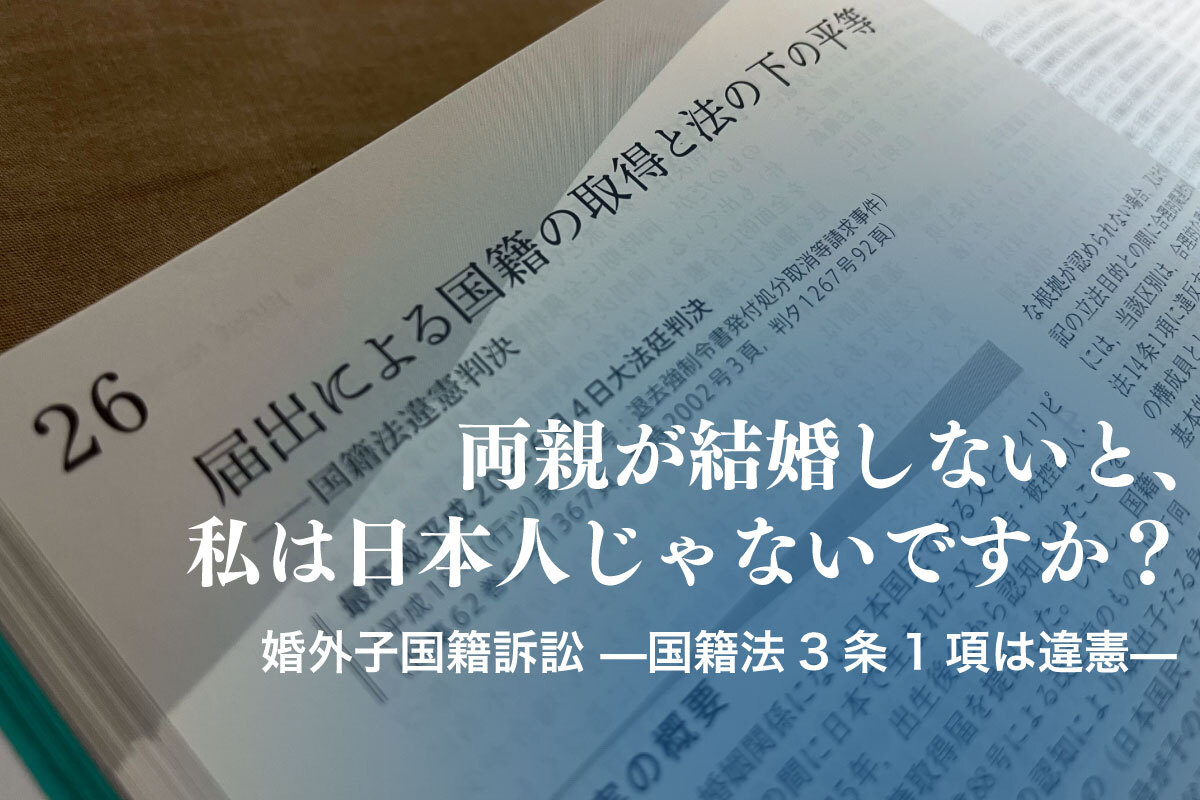


結婚していない日本人の父親と日本人ではない母親との間に生まれた子どもは、生まれた後に日本人の父親から認知されたとしても、両親が結婚をしなければ日本国籍を取得することができませんでした。日本国籍を与える条件として両親の結婚を定めた国籍法旧3条1項の違憲性を争った事件です。
※この事件は、訴訟資料アーカイブプロジェクトの対象事件です。訴訟はすでに終結しています。
A child born to an unmarried couple between a Japanese father and a non-Japanese mother was not eligible to acquire Japanese nationality unless they get married, even if the father legally acknowledged paternity after the child’s birth. This case challenged the former Nationality Act (Article 3, Paragraph 1), arguing it was unconstitutional to require parents’ marriage as a condition for nationality.
【アーカイブプロジェクトNo.0006】
事件の概要
本訴訟は、日本人男性とフィリピン人女性の間に生まれた9人の子どもたちが日本国籍の確認を求めて東京地裁に提訴したものです。
当時の国籍法3条1項は、日本国籍の父親と日本国籍を持たない母親の婚外子は、日本国籍の父親から生まれた後に認知を受け、さらに両親が結婚すれば、届出によって日本国籍を取得できる、という内容でした。
原告になったいずれの子も出生後に父親から認知を受けていましたが、両親は結婚していませんでした。そのため9人は国籍取得届を法務大臣に提出するも、国籍法旧3条1項を理由にこれを認められず、本訴訟を起こしました。
争点
原告団は、両親が結婚しているかに関わらず日本人の父親から認知された子どもたちには等しく日本国籍が与えられるべきとして、日本国籍の取得に両親の結婚を条件としている国籍法は法の下の平等を定めた憲法14条1項に違反すると主張しました。
判決
第1審は原告の請求を認めましたが、第2審は第1審の判決を取り消し、原告の請求を棄却しました。
しかし2008年、最高裁判所は、父母の婚姻という子ども自身には左右できない事情によって区別を設ける国籍法旧3条1項は憲法14条1項に違反すると判断し、原告らの日本国籍取得を認めました。
この判決は、最高裁による戦後8件目の法令違憲判決となりました。
判決後の変化
最高裁判決を受けて同年に国籍法が改正され、出生後に日本人の父親から認知を受けた子どもは、両親が結婚していない場合であっても、届出によって日本国籍を取得できるようになりました。
記録提供について
本件訴訟記録は、当時原告代理人を務められた 近藤博徳 氏(TOKYO大樹法律事務所)よりご提供いただきました。この場を借りて深く御礼申し上げます。
関連サイト:
[Archive Project No. 0006]
Summary of the incident
This lawsuit was filed in the Tokyo District Court by nine children born to a Japanese man and a Filipino woman, seeking confirmation of their Japanese nationality.
Article 3, Paragraph 1 of the Nationality Act at the time stipulated that a child born out of wedlock to a Japanese father and a foreign mother could acquire Japanese nationality by filing a notification if the father acknowledged paternity after birth and the parents subsequently married.
All of the children who became plaintiffs had been acknowledged by their fathers after birth, but their parents were not married. As a result, the nine children submitted applications to the Minister of Justice to acquire nationality, but these were not approved on the grounds of the former Article 3, Paragraph 1 of the Nationality Act, leading them to file this lawsuit.
Issues
The plaintiffs argued that children acknowledged by a Japanese father should be granted Japanese nationality equally, regardless of whether their parents are married, and that the Nationality Act, which requires parental marriage to acquire Japanese nationality, violates Article 14, Paragraph 1 of the Constitution, which guarantees equality under the law.
judgment
The first instance court granted the plaintiff's claim, but the second instance court overturned the first instance judgment and dismissed the plaintiff's claim.
However, in 2008, the Supreme Court ruled that Article 3, Paragraph 1 of the former Nationality Act, which made distinctions based on circumstances beyond the child's control, such as the marriage of their parents, violated Article 14, Paragraph 1 of the Constitution, and recognized the plaintiffs' acquisition of Japanese nationality.
This ruling marked the eighth Supreme Court decision in the postwar era to declare a law unconstitutional.
Changes after the verdict
Following the Supreme Court ruling, the Nationality Act was amended that same year, allowing children who are acknowledged by a Japanese father after birth to acquire Japanese nationality by filing a notification, even if their parents are not married.
Regarding the provision of records
The court records for this case were kindly provided by Mr. Hirotaka Kondo (TOKYO Taiki Law Office), who served as the plaintiff's attorney at the time. We would like to express our sincere gratitude to him.
Related site:


アーカイブ管理者(CALL4)
CALL4アーカイブプロジェクトチームです。
司法における議論は、私たちの社会を形づくるものです。
提供いただいた公共訴訟の資料を公開しています。
司法における議論は、私たちの社会を形づくるものです。
提供いただいた公共訴訟の資料を公開しています。
あなたにおすすめのケース Recommended case for you


- 外国にルーツを持つ人々 Immigrants/Refugees/Foreign residents in Japan
- ジェンダー・セクシュアリティ Gender/Sexuality
- 医療・福祉・障がい Healthcare/Welfare/Disability
- 働き方 Labor Rights
- 刑事司法 Criminal Justice
- 公正な手続 Procedural Justice
- 情報公開 Information Disclosure
- 政治参加・表現の自由 Democracy/Freedom of Expression
- 環境・災害 Environment/Natural Disasters
- 沖縄 Okinawa
- 個人情報・プライバシー Personal information/Privacy
- アーカイブ Archive
- 全てのケース ALL